Why Compare CU10 Car Insurance?
Specialist Brokers Who Accept CU10
Clean Green Cars introduces you to specialist brokers who understand vehicle defect codes and may accept CU10 convictions where standard car insurance comparison sites often decline.
All Cover Levels Compared
Clean Green Cars connects you with providers offering comprehensive, third party fire and theft, and third party only quotes for drivers with 3-point construction and use endorsements.
Your Premium Could Reduce Over Time
a CU10 stays on your licence for 4 years, and each clean year may help bring your price down at renewal.
CU10 Car Insurance At A Glance
- CU10 means you were convicted of using a vehicle with defective brakes under Section 41A of the Road Traffic Act 1988.
- The penalty is 3 points on your licence. Fines can reach up to £2,500, or unlimited for goods vehicles.
- A CU10 stays on your driving record for 4 years from the date of the offence. Most insurers ask about convictions from the last 5 years.
- Click the green button above to compare CU10 quotes from specialist convicted driver brokers.

What Is A CU10 Conviction?
CU10 is a statutory offence under Section 41A of the Road Traffic Act 1988 - using a vehicle with defective brakes on a public road. Here's how the law defines it:
- Who it applies to - Any driver or person in charge of a motor vehicle on a road that fails to comply with the Construction and Use Regulations covering brakes (Regulation 18), which require working service and secondary braking systems.
- What counts as defective brakes - Worn brake pads, leaking brake fluid, seized callipers, faulty brake lines, an inoperative handbrake, unbalanced braking between wheels, or any failure that compromises stopping performance below the legal minimum.
- How the duty arises - Automatically, the moment you take the vehicle onto a public road. Ignorance of a defect is not usually a defence; the driver is expected to check the vehicle before use and respond to warning signs like pulling, spongy pedal feel, or extended stopping distances.
| Penalty | Details |
|---|---|
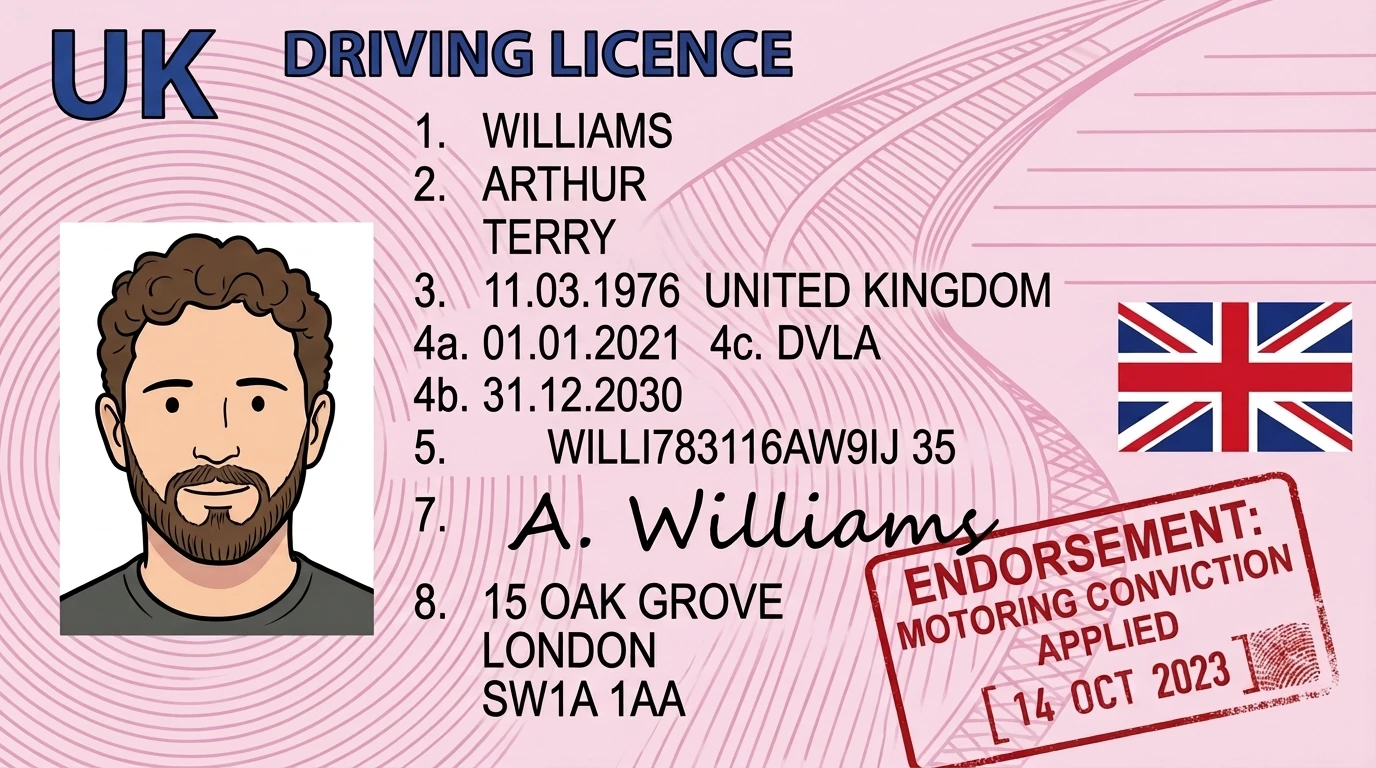
| Penalty Points | A CU10 carries 3 penalty points. These points are endorsable, meaning they are added to your driving licence for the duration of the endorsement period. If a driver accumulates 12 or more points within a 3-year period, they could face a totting-up disqualification under a separate TT99 code. |
| Driving Ban | A driving ban for CU10 is discretionary, not mandatory. Most first-time offenders receive points and a fine without a ban. However, if the case goes to court, the magistrate may impose a discretionary disqualification depending on the circumstances, particularly if the brake defect was severe or contributed to an accident. |
| Maximum Fine | The maximum fine for a CU10 offence is £2,500 for private vehicles. For goods vehicles, the maximum fine rises to unlimited. The actual fine imposed depends on the severity of the defect, the circumstances of the offence, and whether the case is dealt with by fixed penalty or at court. |
| Time on Licence | A CU10 endorsement stays on your driving licence for 4 years from the date of the offence. Most insurers ask you to declare convictions from the last 5 years. This means you may need to tell your insurer about your CU10 for up to 5 years from the offence date, even after the endorsement disappears from your licence. |
| Spent After | Under the Rehabilitation of Offenders Act 1974, a CU10 conviction resulting in a fine (with no custodial sentence) becomes spent after 1 year. Once spent, you do not need to disclose it for most purposes such as job applications, unless the role is exempt. |
The information above reflects our understanding of current UK motoring law at the time of writing. Penalties and endorsement rules may change and can vary depending on individual circumstances. This content is provided as general guidance only and should not be taken as legal advice.
 CU10
CU10Can You Get Insurance With A CU10?
Typically, yes, but the market is narrower than for a standard policy, and you may need a specialist broker. Here's what to know before you compare CU10 insurance quotes:
- Points and ban - 3 penalty points are added to your licence, with a possible discretionary driving ban depending on the severity of the brake defect and circumstances.
- Time on your record - 4 years on the DVLA endorsement, and most insurers ask about convictions in the last 5 years.
- When it's spent - A fine-only CU10 is spent 1 year after conviction under the Rehabilitation of Offenders Act 1974.
- Disclosure still matters - Non-disclosure could invalidate the policy and may lead to a claim being declined even though CU10 is a mechanical defect rather than a behavioural offence.
- Treated less harshly than behavioural codes - Insurers generally apply a moderate loading rather than declining, particularly for a first-time defect on an otherwise clean licence.
Clean Green Cars introduces you to specialist brokers experienced with Construction and Use convictions. If you need short-term cover while comparing, temporary car insurance with convictions may bridge the gap.
Availability, premiums and acceptance criteria vary between insurers and depend on individual circumstances.
Who Needs CU10 Car Insurance?
Standard insurers often load your price or decline cover after a vehicle defect conviction. Here are some examples of who typically benefits most from comparing CU10 car insurance quotes.
Bought A Used Car With A Hidden Brake Fault
The previous owner said nothing, the test drive felt fine, and weeks later a check revealed worn pads or a leaking cylinder. You are dealing with someone else's neglect on your record.
MOT Passed But Brakes Degraded Since
Your MOT was clean months ago. Brakes deteriorated in the time between tests, and a roadside stop caught what your next MOT would have found. The timing can feel unfair.
Warned By A Garage But Could Not Afford The Repair Yet
The mechanic flagged the issue. You knew it needed doing but the bill was beyond reach that month. Continuing to drive while saving for repairs turned a financial problem into a legal one.
Fleet Driver Blamed For A Company Vehicle
The van belongs to your employer and maintenance is their responsibility, yet the conviction lands on your licence. You are carrying points for a vehicle you do not control.
New Driver Overwhelmed By Maintenance Responsibilities
Nobody teaches you what to check between MOTs. A brake fault you did not even know how to spot has put your fresh licence at risk before you have had a chance to build experience.
Worth Knowing: A brake fault you did not know about does not necessarily reflect your driving behaviour. Clean Green Cars can introduce you to brokers who already arrange cover for drivers with CU10 endorsements and recognise the difference between an unexpected maintenance issue and careless use of a vehicle.
What CU10 Car Insurance Covers
A CU10 on your licence does not change what your policy is designed to cover. It changes how much you pay and which insurers will quote you. Some standard insurers may decline, but specialist brokers may usually find you cover at every level.
Here is what each level of cover could typically include. Please note that policy features, benefits, terms and conditions vary among insurers, so always check the policy wording.
| Feature | Comprehensive | Third Party, Fire & Theft | Third Party Only |
|---|---|---|---|
| Damage to your vehicle | Yes | No | No |
| Fire and theft protection | Yes | Yes | No |
| Damage to other people's property | Yes | Yes | Yes |
| Injury to other people | Yes | Yes | Yes |
| Windscreen cover | Often included | Rarely | No |
| Courtesy car | Sometimes included | Rarely | No |
Cover Tip: A worn brake pad and a deliberate decision not to maintain your vehicle both produce the same CU10 endorsement. Specialist brokers may take the circumstances into account, and comprehensive cover can sometimes cost less than third party only even after a 3-point endorsement, depending on the insurer and individual risk profile.
What CU10 Car Insurance May Not Cover
A single exclusion could mean your whole claim gets declined. Here's what CU10 car insurance usually does not cover.
Standard Exclusions
- Undeclared Convictions - If you do not tell your insurer about your CU10, they could invalidate your policy and may decline all claims.
- Known Vehicle Defects - If you cause an accident while knowingly driving with defective brakes or other unsafe components, your insurer could decline your claim.
- Driving Under the Influence - If you cause an accident while impaired by drink or drugs, your insurer could decline your claim regardless of your CU10.
- Wear and Tear - Gradual damage to your car, like worn tyres or rust, is not covered by any motor policy.
Important Limitations
- Higher Excess - Your insurer may set a higher compulsory excess because of your CU10. The excess is the amount you agree to pay towards a successful claim before your insurer contributes. A higher compulsory excess after a CU10 means you would pay more yourself if you make a claim. Example: if your excess is £500 and the repair costs £1,200, the insurer would pay £700. Check your policy documents before you agree.
- Named Driver Restrictions - Some policies may limit who else can drive your car after a construction and use conviction.
- Vehicle Value Cap - Some convicted driver policies may cap the value of car they will insure.
- Mileage Limits - Some specialist policies may impose annual mileage caps as a condition of cover.
Optional Extras Worth Adding
Your standard policy is designed to cover the basics. These extras fill the gaps that matter most after a construction and use conviction.
May help cover roadside assistance if your car breaks down, subject to policy limits and conditions.
May help cover your legal costs if you need to dispute fault after an accident, depending on your policy terms. Claim limits apply.
May help you recover losses from a non-fault crash, subject to policy limits and conditions.
May pay a set amount (up to set limits) if you are hurt in a crash and cannot work, depending on your policy terms.
May be needed if you have built up years of no claims and want to keep your discount safe after a claim, subject to insurer acceptance criteria.
May help cover the difference between what your insurer pays out and what you originally paid for the car, depending on your policy terms.
What Affects The Cost Of Car Insurance With A CU10 Conviction?
Your quote depends on your penalty points, your overall driving history, and whether you have any other convictions. A CU10 tells insurers you were caught driving with defective brakes, which they treat as a vehicle maintenance risk.
| Key Factor | Impact on your price |
|---|---|
| Points on your licence | A CU10 carries 3 penalty points. This is a relatively low endorsement, but it still signals a vehicle safety issue to insurers. |
| Time since your CU10 | Your price could drop each year. A CU10 from 3 years ago may cost less to insure than a recent one. |
| Other convictions | A CU10 on top of other motoring convictions could push your price up sharply. Multiple active codes suggest a pattern to insurers. |
| Vehicle type | Goods vehicle operators may face an unlimited maximum fine (Level 5) and potentially greater scrutiny from insurers due to commercial vehicle safety obligations. |
| Your age | Younger drivers often pay more after a conviction. If you are under 25, the increase could be bigger. |
| Your car | Higher insurance group cars cost more to insure, with or without convictions. |
| Where you live | Your postcode affects your base price before your CU10 loading is added. |
| Claims history | A clean claims record could offset some of your CU10 loading. |
Price Insight: A CU10 carries just 3 points, making it one of the lower-scoring endorsements. If the brake fault was genuinely unknown to you, specialist brokers can present that context to insurers who understand vehicle defect convictions.

Ways To Help Cut Your Car Insurance Cost
A CU10 could push your premium up, but there are steps you could take to potentially bring it down. Here are some ideas ...
Compare Quotes Every Year
Do not auto-renew. Your loading could reduce as your CU10 ages. Get quotes above to check what is available now.
Wait It Out
A CU10 stays on your licence for 4 years. Each clean year shows insurers the brake issue was a one-off, which could help reduce your loading.
Increase Your Voluntary Excess
A higher excess could cut your premium. Only offer what you could genuinely afford if you needed to claim.
Keep Service Receipts
Regular servicing with documented brake checks shows insurers you have addressed the issue. Some specialist brokers look favourably on drivers who can prove ongoing maintenance.
Pay Annually
Monthly payments include interest. Paying upfront could reduce what you pay overall - especially helpful when a conviction has already pushed your price up.
Choose A Lower Group Car
Cars in lower insurance groups cost less to insure, even with a CU10. If you are changing vehicles, checking the group first could offset some of the loading.
Build A Clean Record
Every conviction-free year after your CU10 strengthens your position. Brokers can often use a clean recent record to negotiate better terms with their panels.
Saving Tip: Your car let you down, but your insurance does not have to. Compare quotes above - Clean Green Cars introduces you to brokers who handle construction and use convictions every day.
How To Compare CU10 Car Insurance Quotes
Getting quotes after a CU10 does not take long. Clean Green Cars connects you with brokers who cover convicted drivers regularly. Get started above when you are ready.
Enter Your Vehicle Details
Add your registration, make, model, and where you park overnight.
Declare Your CU10
Select the CU10 conviction code, enter the date of offence, and the number of points. Declare any other endorsements too.
Add Your Driving History
Include any other convictions, claims, or no claims discount.
Choose Your Cover Level
Decide between comprehensive, third party fire and theft, or third party only.
Review Your Quotes
Specialist brokers send you quotes based on your details. Compare prices and cover levels, then pick the one that fits.
What Our Expert Says
You trusted your car was safe. The MOT passed, the brakes felt fine, and then a roadside check changed everything. That feeling of injustice - being punished for something you genuinely did not know about - is real.
CU10 covers driving with defective brakes, but the law does not distinguish between a driver who ignored a screaming warning light and one whose brake pads degraded silently between services. Both face the same conviction code. The offence can attract 3 penalty points and a fine, or in serious cases a court appearance with higher points and disqualification.
What matters now is that insurers see CU10 frequently enough to price it fairly when the full picture is presented. Many standard car insurance providers decline convicted driver applications automatically, but specialist brokers know which insurers look at the circumstances behind the code rather than the code alone.
Insurance Expert & Co-founder of Clean Green Cars

Common CU10 Car Insurance Questions
What Is A CU10 Conviction Code?
CU10 is a DVLA endorsement code meaning "using a vehicle with defective brakes." It is applied under Section 41A of the Road Traffic Act 1988 when a driver is convicted of using a vehicle on a public road with a braking system that is defective or inadequate.
How Long Does A CU10 Conviction Stay On Your Licence?
A CU10 endorsement stays on your driving licence for 4 years from the date of the offence. However, most insurers ask about convictions from the last 5 years. This means you may need to declare your CU10 even after it disappears from your licence until 5 years have passed since the offence date.
How Many Points Does A CU10 Conviction Carry?
A CU10 carries 3 penalty points. These points are added to your driving licence for 4 years from the date of the offence. If the 3 points take you to 12 or more within a 3-year period, you could face a totting-up disqualification under a separate TT99 code.
How Much Does CU10 Conviction Increase Car Insurance?
The increase depends on your insurer and your overall record. A CU10 carries 3 points and is treated as a vehicle maintenance offence rather than a behavioural risk. Some mainstream insurers may add a moderate loading, while specialists who handle convicted drivers may price it more favourably. The impact typically reduces with each clean year.
Can You Be Banned For Defective Brakes?
A driving ban for a CU10 offence is discretionary, not mandatory. Most first-time offenders receive 3 points and a fine without a ban. However, if the case goes to court and the brake defect was severe or contributed to an accident, the magistrate could impose a discretionary disqualification.
What Is The Fine For Driving With Defective Brakes?
The maximum fine for a CU10 is £2,500 for private vehicles. For goods vehicles, the maximum fine is unlimited (Level 5 on the standard scale, since March 2015). The actual amount depends on the severity of the defect, the circumstances of the offence, and whether the case is dealt with by fixed penalty or at court.
Is CU10 A Criminal Offence?
CU10 is a motoring endorsement, not a criminal offence in the traditional sense. It does not result in a criminal record. However, it is a conviction under road traffic law and must be declared to your insurer. Under the Rehabilitation of Offenders Act 1974, a fine-only CU10 becomes spent after 1 year.
What Is The Difference Between CU10 Conviction And CU20 Conviction?
CU10 specifically covers defective brakes, while CU20 covers causing danger by reason of an unsuitable vehicle or parts and accessories (excluding brakes, steering, or tyres) in a dangerous condition. Both carry 3 points and similar fines, but they relate to different vehicle components.
How Can I Avoid A CU10 Conviction?
Regular vehicle servicing and brake inspections are the most effective way to avoid a CU10. Ensure your brakes are checked during every service and MOT. If you notice any warning signs such as a soft brake pedal, grinding noises, or the vehicle pulling to one side when braking, have them inspected immediately before driving.
What Happens After I Submit?
After you submit your details, Clean Green Cars introduces you to specialist brokers who cover drivers with CU10 endorsements. They review your information and send you quotes. You are not committed to anything by submitting the form, and your details are handled in line with UK data protection rules.

Related Conviction Codes
CU10 sits within the wider construction and use offence codes group. It is closest to CU30 defective tyres and CU40 defective steering, because each code deals with vehicle condition. The related endorsements below can help you compare similar maintenance-related codes.
Causing or likely to cause danger by reason of use of unsuitable vehicle or parts in dangerous condition
Compare CU20 quotesUsing a vehicle with defective tyre(s)
Compare CU30 quotesUsing a vehicle with defective steering
Compare CU40 quotesCausing or likely to cause danger by reason of load or passengers
Compare CU50 quotesBreach of requirements as to control of the vehicle, mobile telephones etc
Compare CU80 quotesSearch & Compare Quotes From UK CU10 Car Insurance Providers

Useful Resources
- GOV.UK - Penalty Points and Endorsements - How the penalty points system works, including endorsement codes and expiry dates.
- GOV.UK - View Your Driving Licence - Check your licence online to see your current points and convictions.
- GOV.UK - If Your Vehicle Fails Its MOT - What happens when your vehicle fails its MOT test, including dangerous and major defects.
- DVSA - Driver and Vehicle Standards Agency - The agency responsible for roadside vehicle inspections and MOT standards.