Why Compare CU30 Car Insurance?
Specialist Brokers Who Accept CU30
Clean Green Cars introduces you to specialist brokers who understand defective tyre convictions, especially when multiple tyres mean stacked points and standard comparison sites may decline.
All Cover Levels Compared
Clean Green Cars connects you with providers offering comprehensive, third party fire and theft, and third party only quotes for drivers with vehicle defect endorsements.
Points Per Tyre Could Stack Up
3 points per defective tyre means a single stop could leave you with 6 or 12 points. Specialist brokers handle high-point records.
CU30 Car Insurance At A Glance
- Defective Tyre Conviction - CU30 means using a vehicle with defective tyres under Section 41A of the Road Traffic Act 1988. Points and fines apply per tyre.
- 3 Points Per Tyre - four defective tyres means 12 points and a potential totting-up ban. For new drivers, 12 points triggers automatic licence revocation.
- Loadings Depend on Total Points - a single tyre (3 points) is treated very differently from four (12 points). Specialist brokers can present the detail to insurers.
- Click the green button above to compare CU30 quotes from specialist convicted driver brokers.

What Is A CU30 Conviction?
CU30 is a statutory offence under Section 41A of the Road Traffic Act 1988 and the Road Vehicles (Construction and Use) Regulations 1986 - using a vehicle with defective tyres on a public road. Here's how the law defines it:
- Who it applies to - Any driver or person in charge of a motor vehicle on a road whose tyres fall below the legal minimum. The UK legal minimum tread depth is 1.6mm across the central three-quarters of the tyre, around the entire circumference.
- What counts as a defective tyre - Tread below 1.6mm, cuts or bulges in the sidewall, exposed cords or ply, incorrect pressure for the load, the wrong type of tyre for the axle, or any other condition that makes the tyre unfit for use.
- How the duty arises - Automatically, the moment the vehicle is used on a road. Points are applied per defective tyre, so two bad tyres could mean 6 points, three could mean 9, and four could mean 12 from a single stop.
| Penalty | Details |
|---|---|
| Penalty Points | A CU30 carries 3 penalty points per defective tyre. If the police find more than one defective tyre, each one attracts 3 points separately. This means two defective tyres could result in 6 points, three could mean 9 points, and four could mean 12 points from a single stop. For new drivers within their first 2 years, reaching 6 or more points triggers automatic licence revocation under the Road Traffic (New Drivers) Act 1995. |
| Driving Ban | A driving ban for CU30 is discretionary, not mandatory. Most first-time offenders receive points and a fine without a ban. However, if the points from multiple defective tyres take you to 12 or more within 3 years, you could face a totting-up disqualification under a separate TT99 code. |
| Maximum Fine | The fine for a CU30 is up to £2,500 per defective tyre for cars and light vehicles. For goods vehicles, the maximum fine per defective tyre is unlimited (Level 5 on the standard scale, since March 2015). A car with four illegal tyres could face fines totalling up to £10,000. |
| Time on Licence | A CU30 endorsement stays on your driving licence for 4 years from the date of the offence. Most insurers ask you to declare convictions from the last 5 years. This means you may need to tell your insurer about your CU30 for up to 5 years from the offence date, even after the endorsement disappears from your licence. |
| Spent After | Under the Rehabilitation of Offenders Act 1974, a CU30 conviction resulting in a fine (with no custodial sentence) becomes spent after 1 year. Once spent, you do not need to disclose it for most purposes such as job applications, unless the role is exempt. |
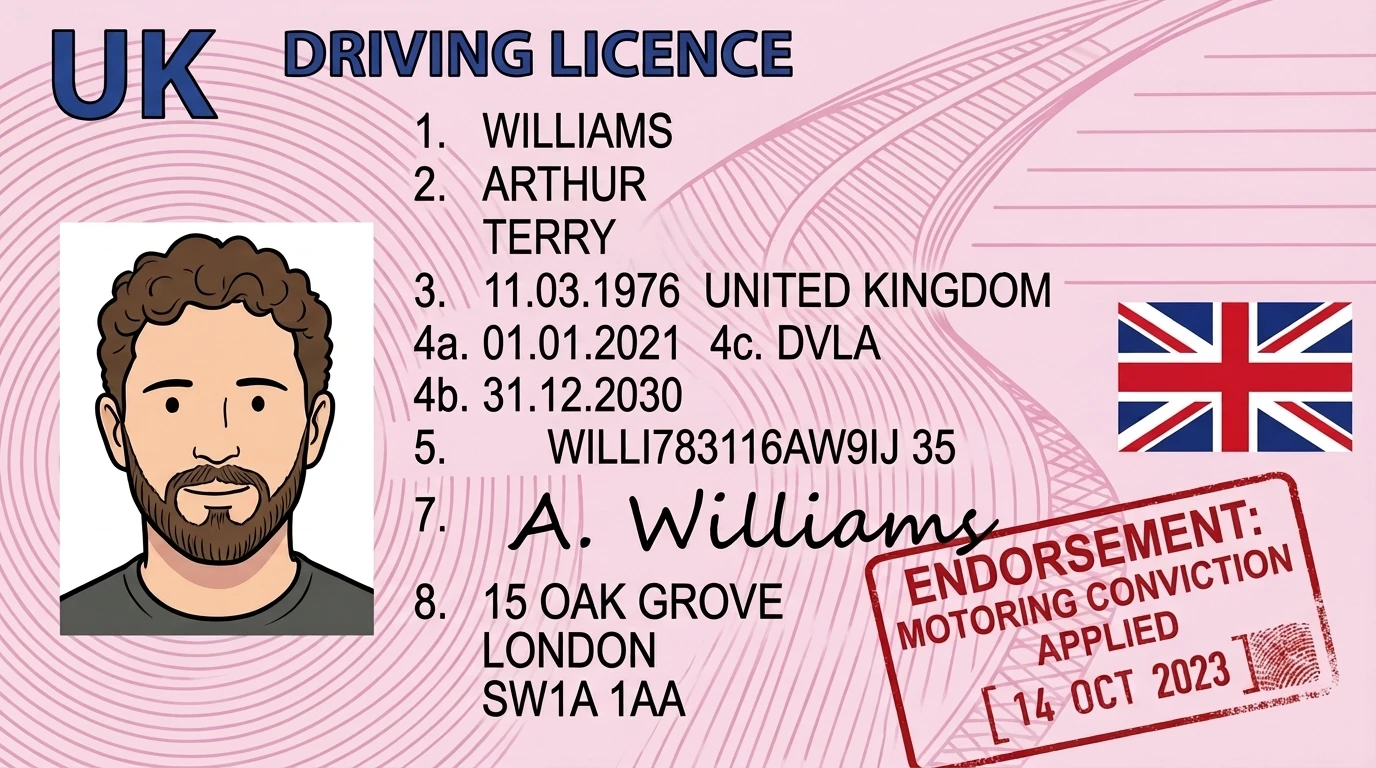 CU30
CU30Can You Get Insurance With A CU30?
Yes, but the market is narrower than for a standard policy, and you'll almost always need a specialist broker. Here's what to know before you compare:
- Points and ban - 3 penalty points per defective tyre, with a possible discretionary driving ban. Points from multiple tyres can add up quickly and may lead to a totting-up disqualification.
- Time on your record - 4 years on the DVLA endorsement, and most insurers ask about convictions in the last 5 years.
- When it's spent - A fine-only CU30 is spent 1 year after conviction under the Rehabilitation of Offenders Act 1974.
- Disclosure still matters - Non-disclosure can invalidate the policy and lead to a claim being declined, even though CU30 is a mechanical defect rather than a behavioural offence.
- Treated less harshly than behavioural codes - A single defective tyre on an otherwise clean licence typically results in a moderate loading rather than a refusal, though multiple defective tyres on one vehicle may be treated more seriously.
Clean Green Cars introduces you to specialist brokers experienced with Construction and Use convictions. If you need short-term cover while comparing, temporary car insurance with convictions may bridge the gap.
Who Needs CU30 Car Insurance?
Standard insurers often load your price heavily or decline cover after a defective tyre conviction. Here's who typically benefits most from comparing CU30 car insurance quotes.
Did Not Check Tread Depth In Time
You meant to look, or assumed the tyres had more life in them. A gauge or a roadside check proved otherwise, and now a moment of oversight sits on your licence.
One Tyre Caught At A Roadside Check
Everything else was fine. A single tyre on one axle was below the limit, and that was enough for 3 points and a fine. The penalty feels wildly disproportionate to the fault.
Multiple Tyres Found Defective — Facing 12 Points
More than one tyre failed the check, and the points are stacking up. The prospect of losing your licence over tyre wear is terrifying, especially if you depend on driving for work.
New Driver Who Cannot Afford Replacements
Quality tyres are expensive. You have been stretching them as far as possible on a tight budget, and now the cost of not replacing them is far higher than the tyres ever were.
Van Driver With Heavy Loads Wearing Tyres Fast
Commercial use puts extraordinary strain on tyres. They wear faster than the service intervals suggest, and a load-related blowout or check has put your livelihood at risk.
Worth Knowing: Most CU30 convictions come from gradual wear, not deliberate neglect. Clean Green Cars introduces you to brokers who understand this and work with insurers who price accordingly.
What CU30 Car Insurance Covers
A CU30 on your licence does not change what your policy is designed to cover. It changes how much you pay and which insurers will quote you. Some standard insurers may decline, but specialist brokers can usually find you cover at every level.
Here's what each level of cover could include. Please note that policy features, benefits, terms and conditions vary among insurers, so always check the policy wording.
| Feature | Comprehensive | Third Party, Fire & Theft | Third Party Only |
|---|---|---|---|
| Damage to your vehicle | Yes | No | No |
| Fire and theft protection | Yes | Yes | No |
| Damage to other people's property | Yes | Yes | Yes |
| Injury to other people | Yes | Yes | Yes |
| Windscreen cover | Often included | Rarely | No |
| Courtesy car | Sometimes included | Rarely | No |
Cover Tip: Tyres that wore down gradually and tyres that were neglected deliberately both produce the same CU30 code. Specialist brokers know the difference, and comprehensive cover could still cost less than third party only.
What CU30 Car Insurance May Not Cover
A single exclusion could mean your whole claim gets declined. Here's what CU30 car insurance usually does not cover.
Standard Exclusions
- Undeclared Convictions - If you do not tell your insurer about your CU30, they could invalidate your policy and may decline all claims.
- Accidents Caused by Vehicle Defects - If you cause an accident because of a known defect you failed to repair, your insurer could decline your claim.
- Driving Under the Influence - If you cause an accident while impaired by drink or drugs, your insurer could decline your claim regardless of your CU30.
- Wear and Tear - Gradual damage to your car, like worn components or rust, is not covered by any motor policy.
Important Limitations
- Higher Excess - Your insurer may set a higher compulsory excess because of your CU30. Check your policy documents before you agree.
- Named Driver Restrictions - Some policies may limit who else can drive your car after a construction and use conviction.
- Vehicle Value Cap - Some convicted driver policies may cap the value of car they will insure.
- Mileage Limits - Some specialist policies may impose annual mileage caps as a condition of cover.
Optional Extras Worth Adding
Your standard policy is designed to cover the basics. These extras fill the gaps that matter most after a construction and use conviction.
May help cover roadside assistance if your car breaks down, subject to policy limits and conditions.
May help cover your legal costs if you need to dispute fault after an accident, depending on your policy terms.
May help you recover losses from a non-fault crash, subject to policy limits and conditions.
May pay a set amount if you are hurt in a crash and cannot work, depending on your policy terms.
May be needed if you have built up years of no claims and want to keep your discount safe after a claim, subject to insurer acceptance criteria.
May be needed if you want to prove safe driving habits after your conviction. A black box tracks your speed, braking, and mileage, which could help reduce your renewal price.
What Affects The Cost Of Car Insurance With A CU30 Conviction?
Your quote depends on your penalty points, your overall driving history, and whether you have any other convictions. A CU30 tells insurers you were caught driving with defective tyres, which they treat as a vehicle maintenance risk.
| Key Factor | Impact on your price |
|---|---|
| Points on your licence | A CU30 carries 3 points per defective tyre. Multiple defective tyres on the same vehicle could mean 6, 9, or even 12 points from a single stop. |
| Time since your CU30 | Your price could drop each year. A CU30 from 3 years ago may cost less to insure than a recent one. |
| Number of defective tyres | Three points are applied per tyre. If the police found multiple defective tyres, the total points and fine could be significantly higher. |
| Other convictions | A CU30 on top of other motoring convictions could push your price up sharply. Multiple active codes suggest a pattern to insurers. |
| Your age | Younger drivers often pay more after a conviction. If you are under 25, the increase could be bigger. |
| Your car | Higher insurance group cars cost more to insure, with or without convictions. |
| Where you live | Your postcode affects your base price before your CU30 loading is added. |
| Vehicle type | Goods vehicles face an unlimited maximum fine (Level 5) per defective tyre, and insurers may reflect this in commercial vehicle premiums. |
Price Insight: The points-per-tyre rule means a single roadside stop could leave you with 6, 9, or even 12 points. If your CU30 involved gradual wear rather than neglect, specialist brokers can present that context when sourcing quotes.

Ways To Cut Your Car Insurance Cost
A CU30 could push your premium up, but there are steps you could take to bring it down. Here are some ways to cut what you pay.
Compare Quotes Every Year
Do not auto-renew. Your CU30 loading could reduce each year. Get quotes above to check.
Wait It Out
A CU30 stays on your licence for 4 years. Each clean year shows insurers the tyre issue was a one-off.
Increase Your Voluntary Excess
A higher excess could cut your premium. Only offer what you could genuinely afford if you needed to claim.
Check Your Tyres Monthly
A 20p coin test takes seconds. Keeping tyres above the legal minimum shows insurers you have addressed the issue, and it prevents a second CU30.
Pay Annually
Monthly payments include interest. Paying upfront could reduce what you pay overall.
Choose A Lower Group Car
Cars in lower insurance groups cost less to insure. This could help offset a CU30 loading, especially if multiple tyres pushed your points up.
Try Telematics Cover
A black box tracks your driving. Clean habits after your CU30 could show insurers you are a careful driver, which may help at renewal.
Saving Tip: Tyres wear down slowly - it is easy to cross the legal limit without realising. Compare quotes above and let specialist brokers find you a price that reflects the reality behind your CU30.
How To Compare CU30 Car Insurance Quotes
Getting quotes after a CU30 does not take long. Clean Green Cars connects you with brokers who cover convicted drivers every day. Get started above when you are ready.
Enter Your Vehicle Details
Add your registration, make, model, and where you park overnight.
Declare Your CU30
Select the CU30 conviction code, enter the date of offence, and the number of points. Declare any other endorsements too.
Add Your Driving History
Include any other convictions, claims, or no claims discount.
Choose Your Cover Level
Decide between comprehensive, third party fire and theft, or third party only.
Review Your Quotes
Specialist brokers send you quotes based on your details. Compare prices and cover levels, then pick the one that fits.
What Our Expert Says
The difference between a legal tyre and an illegal one is barely visible to the naked eye. Tread wears down gradually, a millimetre at a time, and one day you are on the wrong side of a line you never saw coming.
CU30 carries 3 points per defective tyre. That is the detail that makes this code so punishing — four tyres means a potential 12 points and an automatic totting-up disqualification from a single stop. The fine can reach £2,500 per tyre. For something that happens slowly and silently, the consequences arrive all at once.
Specialist brokers handle CU30 regularly and understand the difference between a driver who ignored warnings and one who simply did not check in time. That distinction shapes which insurers will offer reasonable terms.
Insurance Expert & Co-founder of Clean Green Cars

Common CU30 Car Insurance Questions
What Is A CU30 Conviction Code?
CU30 is a DVLA endorsement code for using a vehicle with defective tyre(s). It is applied under Section 41A of the Road Traffic Act 1988 when a driver is convicted of driving with tyres that do not meet the legal minimum tread depth of 1.6mm or are otherwise defective. The penalty is 3 points per defective tyre.
How Long Does A CU30 Conviction Stay On Your Licence?
A CU30 endorsement stays on your driving licence for 4 years from the date of the offence. However, most insurers ask about convictions from the last 5 years. This means you may need to declare your CU30 even after it disappears from your licence until 5 years have passed since the offence date.
How Much Does CU30 Conviction Increase Car Insurance?
The increase depends on your insurer, the number of points, and your overall record. A single 3-point CU30 may result in a moderate loading, while multiple defective tyres attracting 6 or more points could push costs up further. Specialist brokers who handle convicted drivers may price this more fairly. The increase typically reduces with each clean year.
How Many Points Do You Get For Defective Tyres?
You receive 3 penalty points per defective tyre. If the police find two defective tyres, that is 6 points. Three defective tyres means 9 points, and four means 12 points. For new drivers within their first 2 years, reaching 6 or more points triggers automatic licence revocation under the Road Traffic (New Drivers) Act 1995.
What Is The Fine For Defective Tyres?
The fine for a CU30 offence is up to £2,500 per defective tyre for cars and light vehicles. For goods vehicles, the maximum fine per tyre is unlimited (Level 5 on the standard scale, since March 2015). A car with four illegal tyres could face fines totalling up to £10,000.
What Is The Legal Minimum Tyre Tread Depth?
The legal minimum tyre tread depth in the UK is 1.6mm across the central three-quarters of the tyre, around the full circumference. Tyres must also be free from cuts, bulges, and other damage that could make them unsafe. Driving with tyres below this standard is an offence under the Road Vehicles (Construction and Use) Regulations 1986.
Can You Be Banned For Defective Tyres?
A driving ban for CU30 is discretionary, not mandatory. Most first-time offenders receive points and a fine without a ban. However, if the points from multiple defective tyres take you to 12 or more within 3 years, you could face a totting-up disqualification under a separate TT99 code.
Does CU30 Apply To Goods Vehicles?
Yes. CU30 applies to all motor vehicles including goods vehicles. However, the maximum fine for goods vehicles is unlimited (Level 5) per defective tyre compared to £2,500 (Level 4) for cars. Goods vehicle operators may also face additional action from the Traffic Commissioner, which could affect their operator licence.
Do I Need To Declare CU30 Conviction To My Insurer?
Yes. You must answer your insurer's questions truthfully about your CU30 to your insurer for as long as they ask about it. Most insurers ask about convictions from the past 5 years. Failing to declare a motoring conviction could invalidate your policy and mean your insurer declines any claims you make.
What Happens After I Submit?
After you submit your details, Clean Green Cars introduces you to specialist brokers who cover drivers with CU30 endorsements. They review your information and send you quotes. You are not committed to anything by submitting the form, and your details are handled in line with UK data protection rules.

Related Conviction Codes
CU30 sits within the wider construction and use offence codes group. It is closest to CU10 defective brakes and CU40 defective steering, because each relates to the condition of the vehicle. The related endorsements below can help you compare similar defect codes.
Using a vehicle with defective brakes
Compare CU10 quotesCausing or likely to cause danger by reason of use of unsuitable vehicle or parts in dangerous condition
Compare CU20 quotesUsing a vehicle with defective steering
Compare CU40 quotesCausing or likely to cause danger by reason of load or passengers
Compare CU50 quotesBreach of requirements as to control of the vehicle, mobile telephones etc
Compare CU80 quotesSearch & Compare Quotes From UK CU30 Car Insurance Providers

Useful Resources
- GOV.UK - Penalty Points and Endorsements - How the penalty points system works, including endorsement codes and expiry dates.
- GOV.UK - View Your Driving Licence - Check your licence online to see your current points and convictions.
- GOV.UK - Vehicle Safety Standards - Information on vehicle roadworthiness requirements including tyre standards.
- TyreSafe - The UK charity dedicated to tyre safety, with guides on checking tread depth and tyre condition.