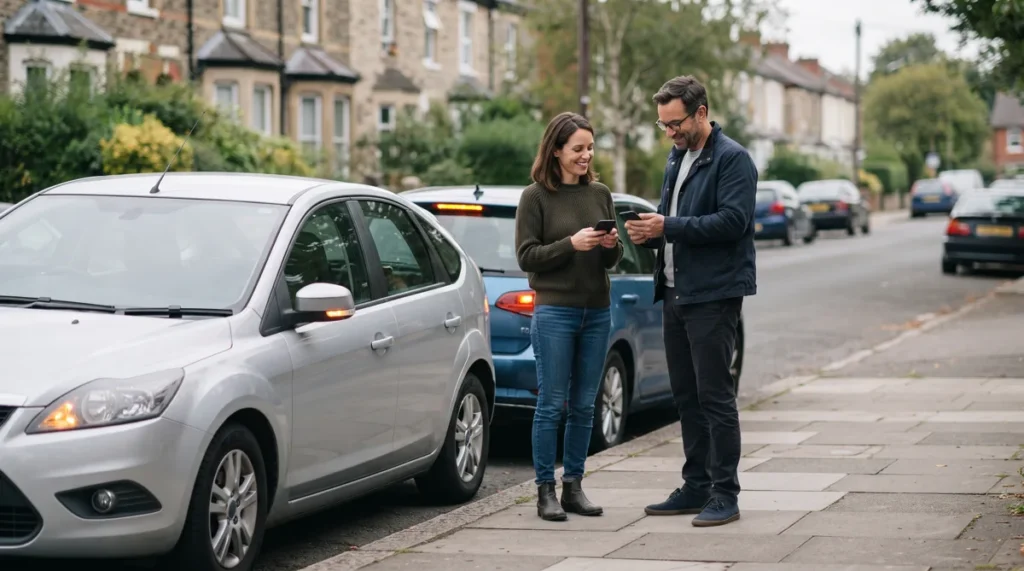
Why The Scene Matters For Your Insurance
Some of what you do in the first few minutes is the law, and some is good practice. Stopping, giving your details and telling the police when you haven't are legal duties. The rest is advice from the Highway Code and the Motor Insurers' Bureau (MIB), the body that deals with claims involving uninsured and untraced drivers.
The advice isn't law, but it protects you when you lean on the car insurance you pay for to sort out the damage. Here's the order to work through, starting with the one that can't wait.
1. Stop
You must stop. The Highway Code rules on incidents say that if you're involved in a collision that causes damage or injury to any other person, vehicle, animal or property, you must stop. The legal duty covers accidents on a road or other public place. It applies to every driver involved, whoever caused it. It covers damage to another vehicle, an animal or roadside property, not just injuries.
Failing to stop is a criminal offence. It's endorsement code AC10, which carries 5 to 10 penalty points, and an AC10 on your licence is something insurers usually ask about when you quote. Pull over where it's safe, switch off the engine and stay at the scene.
2. Check For Injuries And Call 999
Call 999 if anyone is hurt. The Highway Code advises you to contact the emergency services on 999 and give full details of the location and any casualties.
It also says not to move injured people from their vehicles unless they're in immediate danger. This is Highway Code advice rather than a separate legal duty, but it's what the emergency services will expect. Stay with anyone who's hurt until help arrives. Once everyone is safe, carry on with the rest of this list.
3. Give Your Details To Anyone Entitled To Ask
You must give your details to anyone with reasonable grounds to ask for them. GOV.UK's guide to accidents and insurance lists your name and address and the vehicle registration number. You also need to give the owner's name and address if the car isn't yours.
Your insurer's details aren't on that legal list unless someone is injured. Then you must show your insurance certificate at the scene, or report to the police within 24 hours and show it to them within seven days. Even when nobody's hurt, the MIB suggests swapping contact and insurance details too, and it makes it easier to work out whose insurance to call afterwards.
Write the other driver's details down rather than relying on memory, and check the registration matches the car in front of you. If they won't give their details, note their registration, the time and the place, and tell your insurer.
4. Report To The Police If You Didn't Give Your Details
If you didn't give your name and address at the scene, you must report the accident to the police. That applies to any accident where you had to stop, including damage-only ones, not just crashes where someone is hurt.
The law says to report it as soon as is reasonably practicable and in any case within 24 hours. Twenty-four hours is the outer limit, not a grace period. Missing it is code AC20, failing to give particulars or report an accident within 24 hours, with 5 to 10 points, so it's worth knowing what an AC20 means for your cover. GOV.UK also says you should tell the police if the other driver isn't insured. Your insurer may ask for the police reference, so keep a note of it.
5. Take Photos Once It's Safe
Take photos, but only once everyone is safe. The MIB's advice after an accident says photos are useful for capturing vehicle positions, damage, road layout and any relevant signs or markings.
Note the time, date and exact location, and get the names and contact details of any witnesses. Photos and witness details can also help if someone later tries to make a false claim against you. Never stand in live traffic to get a shot.
6. Don't Admit Fault At The Scene
Do not admit fault. The MIB advises you not to admit fault or speculate about the cause of the accident at the scene.
You can be polite, check the other driver is OK and swap details without saying whose fault it was. Many policies also ask you not to admit liability, so check your policy wording. Fault is usually worked out later from the evidence. If the other driver was to blame, motor legal protection on your car insurance may help you recover losses your policy doesn't pay, such as your excess. Check your schedule to see whether you have it.
7. Tell Your Insurer, Even If You're Not Claiming
Tell your insurer about the accident, even if you don't plan to claim. GOV.UK says you must, and the MIB says to do it as soon as possible.
Your policy wording sets out how quickly it expects to hear from you, so check it. Reporting late can put a claim at risk. That said, FCA rules on handling claims say it's unreasonable for an insurer to reject a claim for breaking a policy condition unless the claim is connected to the breach. You'll also be asked about the accident when you next quote, so it helps to know how long you have to declare accidents.
When you call, have your policy number, the other driver's details, any witness details and your photos ready. It saves time and gives your insurer what it needs to start.
What To Do Next
Save the checklist below on your phone, and keep a pen and paper in the glovebox with your insurer's name and claims number.
Sue's note: Phones die or crack at the worst moment. A scrap of paper with your registration, your insurer and your policy number does the same job and never runs out of battery.
If you're reviewing your cover after an accident, you can compare car insurance quotes when you're ready.
At The Scene: Your Checklist
What the law requires and what the Highway Code, GOV.UK and the MIB advise.
The Law Says You Must
- Stop if the collision causes damage or injury to any other person, vehicle, animal or property
- Give your name and address and the registration to anyone with reasonable grounds to ask
- Give the owner's name and address if the car isn't yours
- If you didn't give your details, report to the police as soon as reasonably practicable, within 24 hours at most
- If someone is injured and you don't show your insurance certificate, report to the police within 24 hours and show it within seven days
Advice To Follow
- Tell your insurer, even if you're not claiming (GOV.UK says you must)
- Call 999 with the location and any casualties
- Don't move injured people unless they're in immediate danger
- Photograph vehicle positions, damage, road layout, signs and markings
- Don't admit fault or speculate about the cause
- Tell the police if the other driver isn't insured
From the Road Traffic Act 1988, the Highway Code (rules 274 to 287), GOV.UK and the MIB, checked 21 October 2026. Failing to stop is AC10 and failing to report is AC20, each 5 to 10 points.
FAQs
Do I Have To Report Every Accident To The Police?
No. You must report it if you didn't give your name and address at the scene, as soon as reasonably practicable and within 24 hours. In injury cases you must also report it if you didn't show your insurance certificate.
Do I Have To Give My Insurance Details At The Scene?
Not by law, unless someone is injured. The legal list is your name and address, the owner's details and the registration. In injury cases you must show your insurance certificate or report to the police within 24 hours.
Should I Tell My Insurer If I'm Not Making A Claim?
Yes. GOV.UK says you must report the accident to your insurer even if you're not planning to claim. The MIB says to do it as soon as possible. Check your policy for how quickly it expects to hear from you.
What Are The Penalty Points For Failing To Stop After An Accident?
Five to 10. Failing to stop is code AC10. Failing to give your details or report the accident within 24 hours is a separate code, AC20, which also carries 5 to 10 penalty points.