Why Winter Checks Matter For Your Insurance
Most of these checks are the law, not just good advice. The Highway Code and the rules on vehicle condition set out what your car needs before you drive in frost and snow.
The Financial Ombudsman's guidance on vehicle theft claims says most motor insurance policies have a reasonable care exclusion, which asks you to take reasonable care to protect your car from loss or damage. Some checks carry points if you skip them, such as worn tyres, and many policies ask you to take reasonable care. The seven checks below each pair a winter job with the rule behind it.
1. Clear Every Window Of Snow And ICE
You must be able to see before you set off. The Highway Code rules for driving in bad weather say you must clear all snow and ice from all your windows, not just a peephole in the windscreen.
The law also says all glass must be kept so it doesn't block your view while you drive. Nobody may drive without a full view of the road and traffic ahead. If you crash because you couldn't see properly, an insurer may look at whether you took reasonable care, so check your policy wording. Scrape every window, mirror and the rear screen, and wait until the glass is fully clear.
2. Brush The Snow Off Your Roof
Clear the roof too, not just the glass. The Highway Code advises you to remove all snow that might fall off into the path of other road users.
The Association of British Insurers (ABI) gives the same advice, saying snow left on your car could be a hazard to road users around you. Use a soft brush on the roof, bonnet and boot before you move off, and check your policy if you're unsure how a claim like this would be treated.
3. Never Leave The Engine Running Unattended
Don't leave the car ticking over to defrost while you go back inside. The Highway Code general rules for drivers say you must not leave a parked vehicle unattended with the engine running on the road.
The ABI's cold weather insurance advice warns that thieves steal cars left defrosting every winter. The insurance risk applies on your driveway too. In one Financial Ombudsman case about a car left running, a car was stolen from a driveway while its owner was upstairs, with the keys in the ignition and the engine running to de-ice. The exclusion had been clearly highlighted, so the Ombudsman said the insurer acted fairly in rejecting the claim.
Many policies exclude theft when the car is left unattended with the key in it, so your claim can be refused. Stay with the car while it warms up, or use de-icer and a scraper instead.
4. Check Your Tyre Tread Before The Cold Sets In
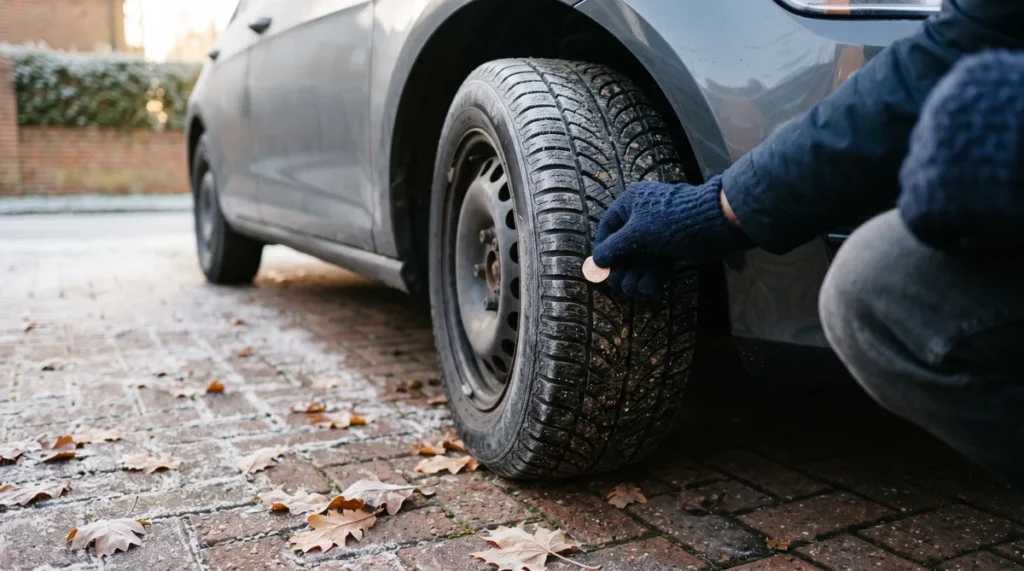
Your tyres must be legal before the roads turn icy. The Highway Code says cars must have at least 1.6mm of tread across the central three-quarters of the tyre and around the whole circumference.
Using a car with defective tyres carries the CU30 endorsement code and 3 penalty points. On the insurance side, the Road Traffic Act says your insurer still has to pay other people for injury or damage you cause, even if the car was in poor condition. But it can then recover that money from you, and your own damage claim may be declined. Check the tread with a gauge and replace any tyre close to the limit.
5. Make Sure Every Light Works And Is Clean
Every required light has to work. The law says you can't use a car on the road unless every lamp it needs, including headlamps, brake lights and indicators, is in good working order and clean.
The Highway Code adds that in winter you must make sure lights are clean and number plates are clearly visible and readable. If you're an older driver and darker evenings change when you'd rather drive, see how cover works for older drivers.
If you've swapped halogen headlamp bulbs for LEDs, there's a newer MOT rule on LED bulbs. DVSA's MOT special notice 05-26 on LED replacement bulbs says that from 14 October 2026, MOT testers must accept ECE approved LED replacement bulbs in compatible halogen headlamp units, with the approval sticker permanently fixed where the tester can see it. Without a proper sticker, the headlamp fails. There's no approved list to check. The sticker is what counts.
6. Use Winter Screen Wash And Check Your Wipers
Top up with a winter mix before the first frost. The Highway Code's winter advice is to have suitable anti-freeze in your radiator and windscreen bottle.
The law says every wiper and washer must work properly whenever the car is on the road, and windscreens and windows must be kept clean and free from anything that blocks your view. The ABI also says to check that your front and back wipers are working properly. Replace split wiper blades.
7. Stay Out Of Flood Water
Don't drive into flood water. The ABI warns that it may be deeper than it looks, may hide hazards and could damage your car.
Most motor policies ask you to take reasonable care to protect your car from loss or damage. So if you drive into water you could see, your claim for the damage can be refused. Turn round and find another route, and check your policy's wording before a winter journey if you're not sure how it treats flood damage.
What To Do Next
Run through the list below on the first cold morning, then keep an emergency kit in the boot. The Highway Code suggests de-icer and an ice scraper, a torch, warm clothing and boots, a first aid kit, jump leads and a shovel.
Ian's note: Set your alarm ten minutes earlier on frosty mornings.
You can compare car insurance quotes when you're ready.
Your Winter Car Checklist
Seven checks from the Highway Code, the ABI and the law on vehicle condition.
Before You Set Off
- Clear all snow and ice from all your windows
- Remove snow that might fall off into the path of other road users
- Don't leave the car unattended while it's defrosting
Car Condition
- At least 1.6mm of tread across the central three-quarters of each tyre
- Every lamp in good working order and clean
- Number plates clearly visible and legible
- Anti-freeze in your windscreen bottle and wipers working properly
On The Road
- Don't drive through flood water
From the Highway Code, the ABI's cold weather advice and the Road Vehicles Lighting Regulations, checked 20 October 2026.
FAQs
Can My Insurer Refuse A Claim If I Left The Car Running To Defrost?
It can. Many policies exclude theft when the car is left unattended with the key in it. The Financial Ombudsman backed an insurer that refused a claim for a car stolen from a driveway while it was de-icing, because the exclusion was clearly highlighted.
Is It Illegal To Drive With Snow On Your Car?
It depends where the snow is. The Highway Code says you must clear all snow and ice from all your windows. For snow on the roof it advises removing anything that might fall into the path of other road users.
Is My Car Insurance Valid In A Red Weather Warning?
Yes. The ABI says your insurance will still be valid if you're driving during a red weather alert. Check your policy for anything it says about travel in severe weather.
What Is The Legal Tyre Tread Depth In The UK?
1.6mm. Cars must have at least 1.6mm of tread across the central three-quarters of the tyre and around the whole circumference. Using a car with defective tyres carries the CU30 code and 3 penalty points.
Can I Use My Fog Lights In Snow?
Only if visibility is seriously reduced. The Highway Code says you must not use front or rear fog lights unless it is, which generally means you can't see more than 100 metres.