Why Compare AC20 Car Insurance?
Mainstream Insurers Decline AC20 Risks
Failing to report an accident within 24 hours is treated as a breach of legal duty by insurers. Standard comparison sites typically decline. Clean Green Cars introduces you to specialist brokers with panels of insurers prepared to quote on AC20 convictions.
The Reporting Failure Needs Context
Many AC20 convictions involve drivers who thought they had reported correctly but had not met the strict 24-hour requirement. Clean Green Cars connects you with brokers who place the full circumstances with insurers who weigh the detail.
Your Cover Options Are Still Open
Comprehensive, third party fire and theft, and third party options remain available after an AC20 through specialist brokers. Clean Green Cars introduces you to brokers who can talk through all three cover levels.
Car Insurance With An AC20 Conviction At A Glance
- AC20 is the DVLA endorsement code for failing to give particulars or report an accident within 24 hours under Section 170 of the Road Traffic Act 1988.
- Summary-only offence carrying 5 to 10 penalty points, up to 6 months in custody, an unlimited fine, and a discretionary driving ban at the court's discretion.
- The endorsement stays on your driving record for 4 years from the date of the offence, and insurers typically ask about convictions in the last 5 years.
- Specialist brokers who handle convicted driver insurance can quote on AC20 cases that mainstream comparison sites decline.
- Fill in the form above to compare quotes from specialist brokers who understand AC20.

What Is An AC20 Conviction?
AC20 is a statutory offence under Section 170 of the Road Traffic Act 1988 - failing to give particulars or failing to report an accident to the police within 24 hours. Here's how the law defines it:
- Who it applies to - Any driver involved in a reportable accident who could not exchange name, address, and vehicle details at the scene and then failed to report the accident to the police as soon as reasonably practicable and in any case within 24 hours.
- When the 24-hour clock starts - The duty to report kicks in automatically when particulars could not be exchanged at the scene. "As soon as reasonably practicable and in any case within 24 hours" is the strict wording of the statute.
- What satisfies the duty - Reporting to the police in person as soon as reasonably practicable, and always within 24 hours of the accident. A late report is still an AC20, but typically sentences more leniently than a complete failure to report.
| Penalty | Details |
|---|---|
| Penalty Points | 5 to 10 (set by court) |
| Driving Ban | Discretionary |
| Maximum Fine | Unlimited (in force from March 2015) |
| Maximum Prison | 6 months |
| Offence Type | Summary only (magistrates' court) |
| Time on Licence | 4 years from date of offence |
| Spent After | Depends on sentence. Fine: 1 year. Community order: last day of order. Custody up to 6 months: 1 year after end of sentence. |
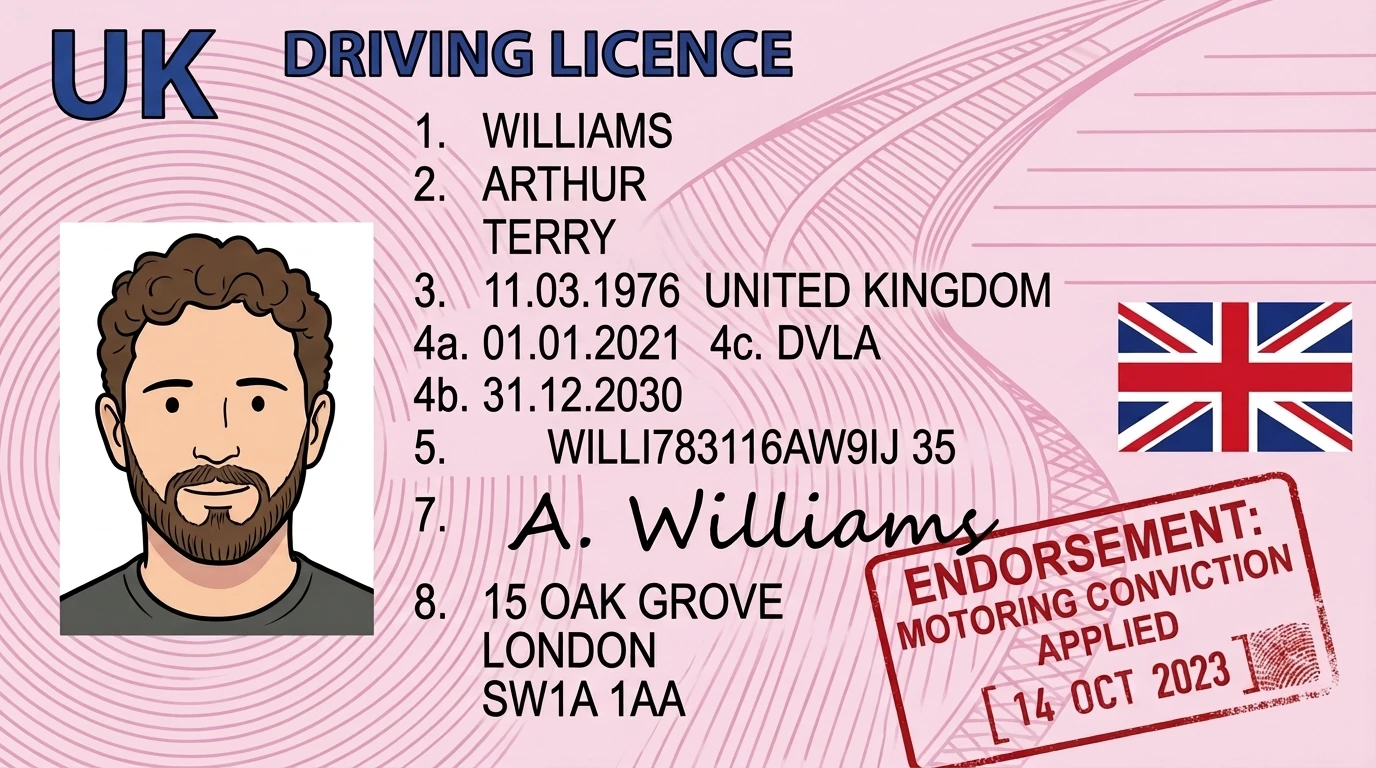 AC20
AC20Can You Get Insurance With An AC20 Conviction?
Yes, but the market is narrower than for a standard policy and you will almost always need a specialist broker. Here's what to know before you compare:
- Points and ban - Between 5 and 10 penalty points plus a possible discretionary driving ban. An AC20 that involved a late-but-made report is often sentenced more leniently than a complete failure to report.
- Time on your record - 4 years on the DVLA endorsement, and most insurers ask about convictions in the last 5 years.
- When it's spent - A fine is spent 1 year after conviction. Custody of up to 6 months is spent 1 year after the end of the sentence under the Rehabilitation of Offenders Act 1974.
- Disclosure is critical - AC20 must be declared truthfully to your insurer. Non-disclosure can invalidate the policy and lead to any claim being declined, which matters even more for a conviction that sits on a statutory reporting duty.
- Circumstances shape the price - Whether you did stop at the scene, whether a report was filed late rather than never, whether injury was involved, and the clean period since the conviction all influence which insurers will quote and at what level.
Clean Green Cars introduces you to specialist brokers experienced with Section 170 Road Traffic Act 1988 cases. If you need short-term cover while comparing, temporary car insurance with convictions may bridge the gap.
Who Needs AC20 Car Insurance?
Anyone insuring a vehicle with an AC20 conviction on their record will usually need specialist cover - many mainstream insurers decline failure-to-report cases. Here are the situations where comparing specialist AC20 quotes usually helps most.
AC20 After Stopping At The Scene
You did stop, but could not exchange details with the other party and did not realise you had to report to police within 24 hours. Specialist brokers know this pattern and can place the case with underwriters who weigh it differently.
AC20 From Late Reporting
You reported the accident to police, but outside the 24-hour window. Specialist brokers argue that a late report is materially different to no report at all, and insurers who understand Section 170 price accordingly.
AC20 Involving Property Damage Only
Your conviction involved damage to a parked car or property with no injury. Specialist brokers flag this as lower-risk than an injury AC20 and match you to insurers who look at the full circumstances.
AC20 Plus Further Convictions
Your record has an AC20 alongside other motoring codes. Specialist brokers with wide panels can still place the combined record where mainstream insurers decline.
Current Insurer Non-Renewal
Your existing insurer has declined to renew after the AC20 came through. A specialist broker has access to insurers who handle accident offence codes.
Worth Knowing: An AC20 on your driving record does not close every door. Specialist brokers place cover for drivers in every one of these situations every day. Start with an honest conversation about the circumstances at the scene.
What AC20 Car Insurance Covers
An AC20 on your licence does not change the types of cover a specialist broker can arrange. It changes which insurers will quote you and how much the policy will cost. All three standard cover levels remain available through specialist convicted driver brokers.
Cover features depend on insurer terms, driver eligibility, and how the vehicle is used.
| Feature | Comprehensive | Third Party, Fire & Theft | Third Party Only |
|---|---|---|---|
| Third-party liability | Designed to cover | Designed to cover | Designed to cover |
| Fire and theft protection | Designed to cover | Designed to cover | Not included |
| Accidental damage to your vehicle | Designed to cover | Not included | Not included |
| Personal injury cover | Often included | Sometimes included | Not included |
| Windscreen cover | Often included | Rarely included | Not included |
| Courtesy car | Sometimes included | Rarely included | Not included |
| Legal expenses | Often included | Sometimes included | Rarely included |
| Uninsured driver cover | Sometimes included | Rarely included | Not included |
Cover Tip: Comprehensive cover is often the sensible choice after an AC20, especially if the original accident involved damage to another vehicle or property. A specialist broker can help you weigh the cost of comprehensive against the risk of carrying your own damage under third party only.
What AC20 Car Insurance May Not Cover
Accuracy on your application is critical after an AC20. Any undisclosed information can invalidate the policy and lead to a claim being declined. Here are the exclusions and limitations that apply to most AC20 policies.
Standard Exclusions
- Undeclared Convictions - If you do not declare your AC20 conviction, your policy may be invalidated and any claim declined. Declare all motoring convictions when asked, even if you think they are minor. Honesty on the application is critical.
- Driving Without Valid Insurance - If points from an AC20 push you past 12, the court may disqualify you. Driving while disqualified or uninsured is a separate criminal offence and no policy can cover you during that period.
- Racing or Track Use - Standard motor policies are designed for normal road use. Track days, competitive events, and any use outside everyday road driving generally fall outside cover.
- General Wear and Tear - Gradual damage like worn tyres, rust, or engine wear is not covered. Insurance is designed for sudden and unexpected events.
- Undeclared Additional Convictions - If you have other motoring convictions alongside the AC20, every one must be declared. Failure to disclose any endorsement on your licence can invalidate the policy.
Important Limitations
- Higher Compulsory Excess - Insurers usually apply a higher compulsory excess on AC20 policies. Check your policy schedule so you know the amount before you need to claim.
- Named Driver Restrictions - Some AC20 policies limit who else can drive the vehicle, or exclude named drivers with their own convictions. Additional drivers may need to be declared individually.
- Mileage Restrictions - Specialist convicted driver policies often cap annual mileage. Going over the limit without telling the insurer can invalidate the cover, so the declared mileage needs to be realistic.
Exclusion Warning: The single biggest cause of an AC20 claim being declined is non-disclosure of the AC20 itself or any other motoring conviction on the record. Declare every conviction the insurer asks about, honestly and in full.
Optional Extras Worth Considering
Your base policy covers the essentials. These optional extras fill gaps that matter more after an AC20 - especially around legal protection and rebuilding an insurer's confidence.
A black box tracks your driving and helps rebuild an insurer's confidence after a AC20 extended ban. Evidence of careful driving may help reduce renewal premiums over time.
Once you start building no claims again, protecting the discount keeps the price reduction even if you later need to claim.
Helps with legal costs if you need to dispute fault or pursue a claim after a non-fault incident. Often inexpensive and worth considering.
Roadside assistance for breakdowns. After a long ban the car may be older or less reliable, and this can be a useful add-on.
Pays a set amount if you are injured in an incident and unable to work. Terms vary by insurer.
Helps recover losses from a non-fault crash, including uninsured loss recovery. Subject to policy limits and conditions.
What Affects The Cost Of AC20 Car Insurance?
An AC20 is a significant loading for a motor insurer because it signals a breach of the statutory reporting duty. The price depends on the circumstances of the accident, whether injury was involved, and the rest of your driving record.
| Key Factor | Impact on your price |
|---|---|
| Time Since the AC20 Conviction | The longer it has been since your AC20 conviction, the lower the loading insurers tend to apply. Time is the single biggest factor. |
| Whether You Reported at All | An AC20 where the driver reported the accident late sits lower in the sentencing range than one where no report was made. Insurers who understand Section 170 price the distinction. |
| Whether Injury Was Involved | An AC20 that involved injury attracts higher premiums than a property-damage-only AC20. The underlying accident matters as much as the reporting failure. |
| Points Imposed (5 to 10) | Magistrates set the exact number of points based on the facts. A 5-point AC20 looks materially lower-risk than a 10-point AC20. |
| Other Motoring Convictions | An AC20 combined with drink, drug, or dangerous driving codes will push the price up sharply. A clean record around the AC20 helps. |
| Vehicle Choice | Lower-group vehicles, modest engine sizes, and older cars generally attract lower premiums after an AC20. |
| Annual Mileage | Lower realistic mileage often reduces the price. Be truthful - going over the declared mileage without telling the insurer can invalidate the policy. |
| Telematics Option | A telematics policy provides evidence of safe, accountable driving after the conviction and may help reduce renewal premiums over time. |
Price Insight: The first renewal after an AC20 conviction is almost always the most expensive. Each clean year after that tends to bring the price down. Comparing quotes through a specialist broker at every renewal is the best way to find out if the market has softened.

Ways To Reduce Your AC20 Car Insurance Cost
An AC20 pushes premiums up, but there are practical steps that can bring the cost down. Here are 7 ways to reduce what you pay.
If You Did Stop At The Scene
Many AC20 convictions come from drivers who stopped at the scene but could not exchange details because the other party was absent or uncooperative. A specialist broker can flag this to underwriters who distinguish a failure to report from a hit-and-run. Your case notes matter.
If You Reported Late Rather Than Never
An AC20 where the driver reported the accident to police 25 or 30 hours after the event looks materially different to an AC20 where no report was ever made. Make sure your specialist broker knows when the report was filed, because it affects the loading.
If It Is Your First Conviction
A first-time AC20 with an otherwise clean record is a very different risk to an AC20 stacked on top of other motoring convictions. A specialist broker argues the full history with underwriters who will take the clean period into account.
If No Injury Was Involved
AC20 convictions that involved property damage only sit at the lower end of the sentencing range. Make sure your specialist broker knows what the accident did and did not involve - it influences which insurers will quote.
Telematics To Rebuild Trust
A black box policy after an AC20 is particularly valuable. The conviction touches on statutory compliance, and telematics data is direct evidence that your everyday driving is careful and accountable.
Pay Annually If You Can
Monthly payment adds an interest charge that can be significant on an AC20-loaded premium. Paying annually avoids it.
Compare Every Renewal
Each clean year after an AC20 reduces the loading. Comparing with specialist brokers at every renewal is the only way to see whether the market has softened.
Saving Tip: The year after an AC20 conviction is the most expensive for insurance. Every clean year after that tends to reduce the loading. Comparing with specialist brokers at every renewal is the most reliable way to see whether the price is coming down.
How To Compare AC20 Car Insurance Quotes
Getting AC20 quotes through Clean Green Cars is straightforward. Here's how the process works. Get started above when you are ready.
Enter Your Vehicle Details
Registration number, make, model, and where the vehicle is kept overnight. Specialist brokers need the same basic vehicle information as any other quote.
Declare Your AC20 And Original Conviction
Enter the AC20 conviction details including the date, points received, and any fine or ban imposed. Declare any other motoring convictions honestly.
Add Your Driving History
Any other convictions, recent claims, years of no claims discount, and the date your extended ban ended. Accuracy matters.
Choose Your Cover Level
Decide between comprehensive, third party fire and theft, or third party only. A specialist broker can talk through the balance of cost and cover.
Compare The Quotes
Specialist brokers return quotes based on your full details. Compare the prices, the cover, the excess, and the policy terms before you commit.
What Our Expert Says
An AC20 is a conviction for failing to give particulars or report an accident within 24 hours. It sits under the same Section 170 Road Traffic Act 1988 framework as AC10, but it convicts a different failure - the reporting duty, not the duty to stop. And the unique feature that sets AC20 apart is the 24-hour clock that almost nobody outside the legal world knows exists.
Many AC20 convictions involve drivers who did stop at the scene, could not exchange details because the other party was not there or was uncooperative, and then assumed the accident had been handled. The law says otherwise: if particulars were not exchanged, the duty to report to police kicks in, and the 24-hour window is strict. Miss it, and an AC20 follows. Specialist brokers who deal with AC20 cases every day know that distinction, and they can place a good case with an underwriter who understands it too.
Mainstream comparison sites tend to decline AC20 outright. The specialist broker market is where these cases get placed, and those brokers work with the full circumstances - whether the driver stopped, whether the report was late rather than absent, whether there is an otherwise clean record. Comparing quotes at every renewal is the most reliable way to know whether the loading is coming down.
Insurance Expert & Co-founder of Clean Green Cars

Common AC20 Car Insurance Questions
What Is An AC20 Conviction?
AC20 is the DVLA endorsement code for failing to give particulars or failing to report an accident within 24 hours, under Section 170 of the Road Traffic Act 1988. It carries 5 to 10 penalty points, up to 6 months in custody, and a possible discretionary driving ban.
What Is The 24-Hour Reporting Rule?
Under Section 170(3) Road Traffic Act 1988, if a driver involved in a reportable accident cannot exchange name, address, and vehicle details at the scene, they must report the accident to the police as soon as reasonably practicable and in any case within 24 hours. Missing that window is what AC20 convicts.
If I Stopped At The Scene, Can I Still Get An AC20?
Yes. AC20 is about the reporting duty, not the stopping duty. If you stopped but could not exchange details - for example because the other party was absent or uncooperative - the duty to report to police kicks in, and the 24-hour clock starts running. Not knowing about the rule is not a defence.
How Long Does An AC20 Stay On My Driving Licence?
Under the DVLA endorsement rules, an AC20 stays on your driving record for 4 years from the date of the offence. Most insurers then ask about convictions in the last 5 years.
What Is The Maximum Sentence For An AC20?
6 months in custody or an unlimited fine, or both. AC20 is a summary-only offence tried in the magistrates' court. The court can also impose a discretionary driving ban on top of the penalty points.
Will The Court Impose A Ban For An AC20?
A ban is discretionary, not automatic. Courts are more likely to impose one where the accident involved injury or where the driver made no attempt to report at all. A first-time AC20 involving property damage and a late-but-made report can often be sentenced with points only.
Can You Get Car Insurance After An AC20 Conviction?
Through the specialist broker market, yes. Many mainstream insurers decline AC20, but specialist brokers have insurer panels that will quote on accident offence codes. Comparing those quotes is how you find the right price.
When Does An AC20 Become Spent Under The Rehabilitation Of Offenders Act?
It depends on the sentence. A fine is spent 1 year after conviction. A community order is spent on the last day it has effect. A custodial sentence of up to 6 months is spent 1 year after the end of the sentence.
How Is AC20 Different From AC10?
AC10 is failing to stop at the scene of the accident. AC20 is failing to give particulars or report within 24 hours. Both sit under Section 170 Road Traffic Act 1988 and both carry 5 to 10 points, but they cover different failures of duty.
What Happens After I Submit My Details?
Your details are passed to specialist brokers who handle AC20 cases. They return quotes based on your information. Compare the quotes, cover levels, and policy terms before choosing.

Related Accident Offence Conviction Codes
AC20 sits within the wider accident offence endorsement codes group. It is closest to AC10 failing to stop, because both involve post-accident duties under Section 170. You can also compare AC30 undefined accident offences if the exact endorsement is less specific.
Search & Compare Quotes From UK AC20 Car Insurance Providers

Useful Resources
- GOV.UK - Endorsement Codes and Penalty Points - The official DVLA list showing all endorsement codes, penalty points, and how long each stays on your record.
- Legislation.gov.uk - Road Traffic Act 1988, Section 170 - The statute creating the duty to stop, exchange particulars, and report within 24 hours.
- GOV.UK - How Long Endorsements Stay on Your Driving Record - The official rule on AC endorsement retention.
- GOV.UK - Report an Accident - How to report a road traffic accident to the police, and the rules on when you must do so.
- Sentencing Council - Fail to Stop After Accident - The magistrates' court sentencing guideline for Section 170 offences, including the reporting element.