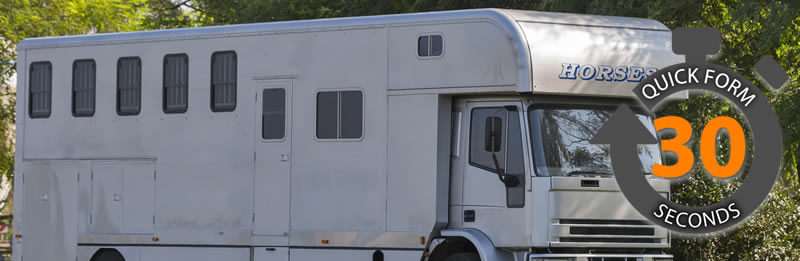










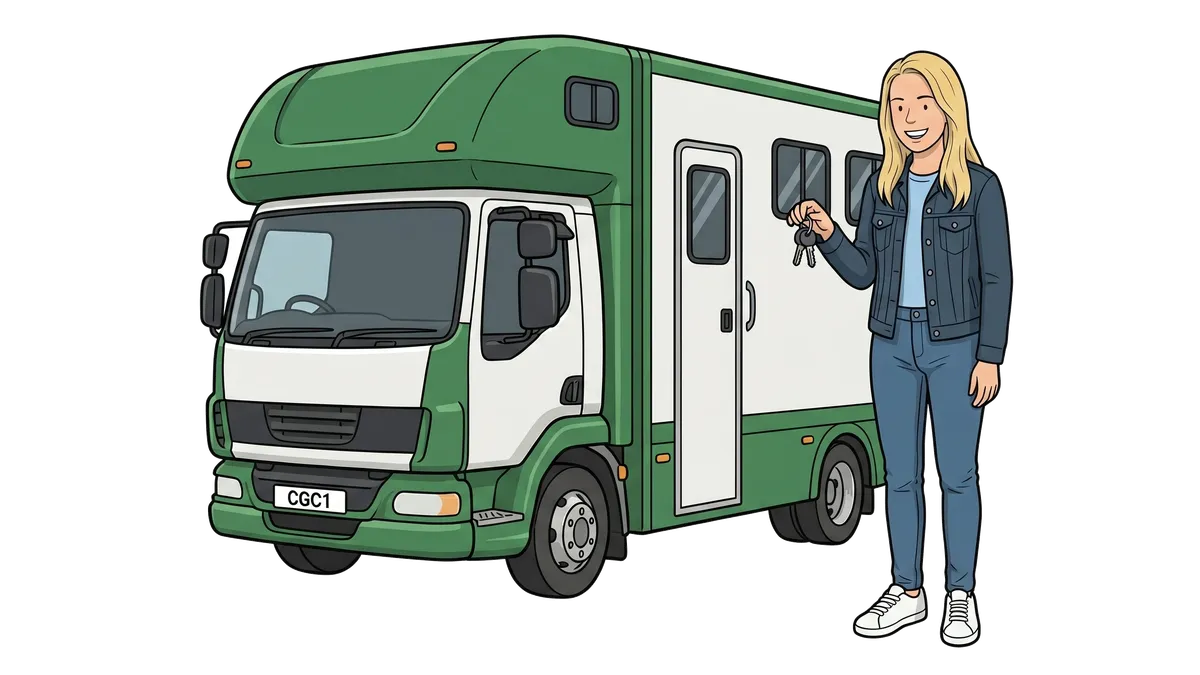
Why Compare Thorpe Horsebox Insurance?
From Colt To HGV
A 3.5 ton Colt and an 18 ton HGV build sit in very different insurance markets. Comparing helps you reach the providers who quote your Thorpe's weight.
Refurbished Boxes Hold Value
A refurbished Thorpe can be worth more than its chassis age suggests. Some providers offer agreed value, which settles a total loss on a sum set at the start.
One Form For Any Weight
Clean Green Cars introduces you to UK insurance providers covering horseboxes from 3.5 tonnes upward, so you can compare Thorpe quotes in one go.
Thorpe Horsebox Insurance At A Glance
- Thorpe Specifics - Thorpe Horseboxes builds driven horseboxes on Tendring Road, Thorpe-le-Soken, Essex. It's a family firm formed by Brian and Sue Smith, with Darren and Jason now involved in every part of it, and it marks 50 years in 2027. See horsebox insurance for other makers.
- Four Weight Ranges - The line-up runs from the 3.5 ton Thorpe Colt through the 6.5 ton Thorpe Prospect and a 7.5 ton range to HGV builds from 12 to 18 ton.
- Licence Follows The Range - A Colt fits a car licence. The Prospect and the 7.5 ton boxes need C1, and the 12 to 18 ton builds need a full category C licence.
- Chassis Chosen Per Build - Thorpe advises the chassis size and weight from the spec you want, so there's no single make. Your V5C tells a provider what yours is.
- Refurbished Bodies Too - Thorpe repairs and refurbishes existing bodies and sells pre-owned boxes, so the bodywork on an older Thorpe may be newer than its chassis.
- Compare Quotes - Note the Thorpe range, the plated weight, the chassis make and year, and any refurbishment work, then compare quotes from UK providers.
Does Your Thorpe Horsebox Need Insurance?
Yes, as soon as it goes on the road. By law you need at least third party insurance to drive a horsebox on a road or other public place, and the Road Traffic Act makes no exception for weight, age or a short trip down the lane.
- Third Party Is Only The Floor - third party cover pays for injury or damage you cause to other people. It pays nothing towards your own box, so on a valuable horsebox it makes sense to price fire and theft or comprehensive cover too.
- Driving Uninsured Costs Points - GOV.UK says police can give a £300 fixed penalty and 6 penalty points (an IN10 endorsement), and they can seize the vehicle. A court can go further, with an unlimited fine and possible disqualification.
- SORN Means No Legal Duty - declare a horsebox SORN and keep it off the road, and the law no longer requires insurance. Laid-up fire and theft cover is still worth keeping on a box that stands idle over the winter.
- Your V5C Has To Match The Box - convert or rebuild the box and DVLA has to be told, so the V5C body type matches the vehicle. DVLA chooses the description and may inspect it, and your insurer needs exactly the same details.
Which Licence Do You Need For Your Thorpe Horsebox?
Welfare In Transport Rules For Thorpe Owners
Your policy covers the vehicle. How the horses travel falls under separate welfare rules: The Welfare of Animals (Transport) (England) Order 2006 and Council Regulation (EC) No 1/2005. They apply when a journey is linked to an economic activity. A leisure trip with your own horse is outside them, but professional riders, liveries and anyone who is paid to move horses are inside.
Type 1 And Type 2 Authorisation
Carry horses more than 65km (about 40 miles) in connection with an economic activity and you need APHA transporter authorisation. Type 1 is for journeys of up to 8 hours, and type 2 is for anything over that. The driver and any attendant need a certificate of competence, and trips over 8 hours need a certificate of vehicle approval.
Journey Logs Are For Long Trips Abroad
You only need a journey log for a journey from Great Britain to another country that lasts over 8 hours with unregistered horses. Section 1 must reach APHA (the Animal and Plant Health Agency) at least 2 working days before you set off. Send the completed log back within one month.
What Registered Horses Skip
A registered horse belongs to an EU-recognised studbook or to a national branch of an international racing or competition organisation. Registered horses are exempt from journey logs and the journey-time, rest and feeding rules. Their transporter still needs authorisation and an animal transport certificate when the journey is in scope.
Horsebox Cover Levels Side By Side
Choose third party only and a horsebox lost to fire or theft pays you nothing back. Here's how the three levels of cover usually compare.
| Feature | Comprehensive | Third Party, Fire & Theft | Third Party Only |
|---|---|---|---|
| Injury or damage to other people and property (legal minimum) | Yes | Yes | Yes |
| Fire and theft of the horsebox | Yes | Yes | No |
| Accidental damage to the horsebox | Yes | No | No |
| Living area fixtures and fittings | Often included | Provider-dependent | No |
| Agreed value settlement on the whole build | Often available on request | Provider-dependent | No |
| Tack and contents in transit (saddles, rugs, bridles) | Often included up to a policy limit | Provider-dependent | No |
| Windscreen and window damage | Typically yes | Provider-dependent | No |
| Replacement keys and locks after theft | Often included | Provider-dependent | No |
| Minimum legal cover when driving in Europe | Usually yes | Usually yes | Usually yes |
| Full European cover for shows and studs abroad | Often for a set trip limit | Provider-dependent | No |
| Breakdown and horse-capable recovery | Often add-on | Add-on | Add-on |
Features, limits and terms differ from one insurance provider to the next, so read the policy wording before you buy.
Cover Tip: A coachbuilt horsebox with living can be hard to value after a total loss, because few identical boxes ever come up for sale. Agreed value fixes the payout figure when the policy starts. Ask for it, and keep photos and receipts for the build, the fit-out and every later upgrade.
What A Horsebox Policy May Not Cover
One missed condition can turn a claim on a stolen or damaged horsebox into a refusal. These are the gaps to check in a standard policy.
Standard Exclusions
- Theft Without The Stated Security - If the policy names a tracker, immobiliser or approved lock as a condition, a theft claim may be refused when it was not fitted or working. Some providers want an active tracker subscription on higher-value boxes, so keep it paid and file the receipts.
- Driving Beyond Your Licence Category - A claim may be refused if the driver did not hold the right category for the plated weight. Taking a 7,500kg box out on only a car licence, with no C1 and no pre-1997 rights, is outside DVLA entitlement. Check every named driver online first.
Important Limitations
- Undeclared Uprating Or Conversion Work - An uprate, a new living area, a ramp change or an extra stall all alter the vehicle and the risk. If the V5C and the quote form still describe the old box, the policy may not respond. Declare each change and update the V5C with DVLA.
- Commercial Use On A Private Policy - A private policy usually excludes paid transport of other people's horses and hiring the box out. Prize money and indirect payment count as commercial for DVSA, and commercial use over 3,500kg usually needs a goods vehicle operator licence as well as business cover.
- Tack Above The Contents Limit - Contents cover for saddles, bridles and rugs has a limit set in the policy wording. Items above it, such as made-to-measure saddles or competition kit, need listing separately or a dedicated tack policy, or the payout may be capped.
- Wear, Tear And Mechanical Failure - A worn clutch, a corroded floor, tired ramp springs or bald tyres are maintenance, not accidental damage. A claim for a soft floor on an older box is usually turned down as wear and tear, so keep service and annual test records up to date.
Optional Extras For Horsebox Owners
Break down on the motorway with two horses on board and ordinary roadside help may not be able to move them. These extras may be worth adding to your Thorpe horsebox policy.
Roadside help and recovery set up for horseboxes, including a second vehicle that can carry the horses on if the box can't be fixed at the roadside. A car breakdown service may not send anything big enough for a box over 3,500kg.
Raises the contents limit for saddles, bridles, rugs and competition kit carried in the living area or tack locker. It suits riders whose saddlery is worth more than the standard limit, and high-value items are usually listed by name.
Covers your legal liability if a horse in your care, but owned by someone else, is hurt while it travels with you. Check it if you share lifts to shows or take a friend's horse along, as a standard policy may only cover your own horses.
Extends full cover for trips to competitions or studs on the continent beyond what the policy includes as standard. Check the trip limits in the wording, and remember that taking horses to the EU also needs an export health certificate.
What Sets The Price Of Horsebox Cover?
Plated weight, storage and the value of the build all move the price of horsebox cover. Here are the main things providers look at.
| Key Factor | Impact on your price |
|---|---|
| Thorpe range and plated weight | A 3.5 ton Colt, a 6.5 ton Prospect and a 12 to 18 ton HGV build carry very different values, repair bills and driver pools, so the range you own may shape the quote more than the badge. |
| Chassis age and build year | An older chassis may cost more to repair and be harder to find parts for, while a newer build carries a higher rebuild value. Quote using the chassis year on the V5C. |
| Driver age and licence history | Experienced drivers with clean records often pay less, while younger drivers and newly qualified C1 holders tend to see higher quotes. Every named driver's category has to match the plated weight. |
| Home or yard postcode | Theft and claim rates differ by area, so the postcode where the horsebox stays overnight feeds straight into the price. A quiet rural yard can rate differently from a gated site in town. |
| Overnight storage | A locked, gated yard or secure compound usually prices lower than a driveway, and open roadside parking often prices highest. Declare where the box is kept most nights. |
| Security fitted | A tracker, an immobiliser and approved locks on the groom and tack doors may help bring the quote down. Some providers make approved security a condition on higher-value boxes. |
| Annual mileage and type of use | Horseboxes often cover fewer miles than a daily car. Give an honest yearly figure for shows, hunting, clinics and vet trips, and say whether any of the use is commercial, including prize money. |
| Plated weight and annual test | The MAM decides the licence, the test and the kind of vehicle being rated. A box over 3,500kg takes the HGV annual test every year, the first one 12 months after first registration. |
| Agreed value and living area | A bigger living area, a kitchen and shower, or an awning and generator all raise the sum insured. The price usually rises with it, and so does the payout after a write-off. |
| No-claims discount | Many providers accept a no-claims discount (NCD) earned on a horsebox or another vehicle, with proof from your last insurer. Ask how your years will be counted before you buy. |
Your own details and the horsebox you enter shape every quote you see.
Price Insight: Two horseboxes with the same badge can price a long way apart, because the chassis, plated weight and fit-out are rarely identical. Quote on the exact V5C details and the real build value, then look at the spread across providers instead of letting the policy roll over at renewal.

Ways To Help Lower What You Pay
Let a horsebox policy renew without a fresh comparison and you may pay more than you need to. These steps can help bring the price down.
Declare Refurbishment Work With Receipts
If your Thorpe has had a body refurbishment, give the work and its date when you quote and keep the invoices. That record supports the value you set if you ever need to claim.
Fit A Tracker And Lock Every Door
Fit a tracker and an immobiliser, and use approved locks on the groom's door, tack locker and ramp. Good security may help reduce the quote, and some providers set it as a condition on higher-value boxes.
Keep The V5c In Step With The Box
Update the V5C after any uprate, downplate or conversion, then quote on exactly what it shows. A policy that matches the paperwork is far easier to rely on if you ever claim.
Set An Honest Agreed Value
Add up the chassis, the body and the fit-out, and set the agreed value from that total. Under-insuring to trim the price tends to leave you short after a total loss.
Give A Realistic Mileage
Count the shows, hunting days and vet trips in a normal year and declare that figure. Accurate low mileage often prices below a guessed high number. Underestimating could cause problems at claim time.
Pay Annually If You Can Afford It
Paying for the year in one go avoids the interest (APR) often added to monthly instalments. Only do it if the lump sum fits your budget, and make sure the excess on a claim is affordable too.
Saving Tip: Secure overnight storage, a working tracker and a V5C that matches the box tend to move a horsebox quote more than any single discount. Add an agreed value built from real receipts and an honest mileage, and the quotes you compare are far more likely to hold up when you need them.
How To Compare Horsebox Quotes
Comparing quotes for your Thorpe horsebox takes a few minutes once the V5C is to hand. Get started above.
Enter The Horsebox Details
Add the chassis make and year, the plated weight, the build value and the postcode where the box is kept overnight.
Add Drivers And Licences
List each driver with their licence categories, so the provider can check B, C1 or C entitlement against the plated weight.
Line Up The Cover Levels
Put third party only, third party fire and theft and comprehensive side by side, then go through the theft, contents and agreed value terms.
Choose Your Extras
Pick the add-ons that fit how you travel, such as horse-capable breakdown recovery, tack in transit or European cover.
Pick A Start Date
Choose the day cover begins. The provider sends your certificate and policy documents once you've paid.
What Our Expert Says
Thorpe's range spans every licence band. A Colt is a 3.5 ton box, the Prospect and the 7.5 ton range are C1 boxes, and the HGV builds go up to 18 ton. So two Thorpe owners can face very different quotes, simply because of the plate.
The practical point is about repairs. Thorpe runs its own repair workshops, spray shop and GRP (glass fibre) moulding, and says its accident repairs are approved by major insurance companies. If you'd want the box fixed where it was built, read the claims section of a policy before you buy. Some policies let you choose the repairer, while others send you to an approved network first.
For buyers of a refurbished or pre-owned Thorpe, ask for the history of any body work and keep the invoices. That record helps a provider see why the box is worth more than its chassis year alone suggests.
Insurance Expert & Co-founder of Clean Green Cars

Common Thorpe Horsebox Questions
Which Licence Do I Need For Each Thorpe Range?
It depends on the plated weight. The Thorpe Colt is a 3.5 ton box, so a car licence covers it. The 6.5 ton Prospect and the 7.5 ton range need C1, which drivers who passed before 1 January 1997 usually already hold. The 12 to 18 ton HGV builds need a full category C licence. Go by the weight on the plate, not the range name.
Can A Young Driver Be Insured On A Thorpe Colt?
Often, yes. Thorpe says the Colt suits young drivers because of their licence limits, and at 3.5 tons it fits a car licence. Providers set their own minimum ages for horseboxes, so prices and acceptance for younger drivers can vary widely. Comparing several quotes shows which providers take on drivers your age.
Can Thorpe Repair My Horsebox After An Accident?
Often, yes. Thorpe runs its own repair, spray and glass fibre workshops, and says its accident repairs are approved by major insurance companies. Whether your insurer lets you pick the repairer depends on the policy wording, so check the claims section before you book any work in.
Does My Thorpe Horsebox Need An MOT Or An HGV Annual Test?
It depends on the plated weight. Up to 3,000kg a horsebox takes a class 4 MOT, and from 3,000kg to 3,500kg a class 7 MOT. Over 3,500kg it needs the HGV annual test every year instead, with the first one due 12 months after the vehicle was first registered. The body type on the V5C has no say in which test applies, so an uprated 3.5t box moves to the annual test once its plated weight goes up.
Do I Need An Operator Licence Or Tachograph For My Horsebox?
Usually not, if your use is private leisure and the box is 7,500kg or less. Commercial horsebox use over 3,500kg usually needs a goods vehicle operator licence, and prize money or indirect payment counts as commercial. Drivers' hours and tachograph rules can apply over 3,500kg, but private leisure use up to 7,500kg is exempt. Above 7,500kg, or once the use is commercial, that exemption usually stops. Driver CPC is only needed for commercial driving.
Do I Need Transporter Authorisation To Take My Own Horse To A Show?
No, not if the trip is purely for leisure. The welfare-in-transport rules only cover journeys linked to an economic activity. Professional riders, livery yards and people who are paid to move horses fall inside them, and DVSA treats prize money as commercial when it comes to operator licences. Once a journey of more than 65km (about 40 miles) is in scope, you need type 1 authorisation for trips up to 8 hours or type 2 for longer ones.
Is Private HGV Tax The Same As Private Use Insurance?
No. They are separate, although both turn on the horsebox not being used for business. A horsebox over 3,500kg that is not used for business can be taxed as a Private HGV (tax class 10, £177 a year from July 2026), and business use moves it to a goods vehicle rate. Insurance is a separate contract, and a private policy usually excludes paid work as well. You change the tax class through vehicle tax, not by updating the V5C.
What Happens After I Submit My Details?
You'll see quotes from the UK insurance providers or regulated brokers that Clean Green Cars introduces you to. Each one is based on the chassis, plated weight, drivers, storage and use you entered for your Thorpe horsebox. Compare the cover, the price and the add-ons side by side, then carry on with the provider whose policy fits how you use the box.

Search & Compare Quotes From UK Thorpe Horsebox Insurance Providers

Useful Resources
- GOV.UK - Driving Licence Categories - every licence category and weight limit for B, C1 and C, including the 4,250kg car licence limit for zero-emission vehicles.
- GOV.UK - Old Driving Licence Categories - what a licence from before 1997 lets you drive, including C1 and C1E with restriction code 107.
- DVSA - Transporting Horses In Horseboxes And Trailers - DVSA's guidance for horsebox owners on licences, tachographs, operator licences, speed limits and what counts as commercial use.
- GOV.UK - HGV, Bus And Trailer Annual Test - when a horsebox over 3,500kg needs its yearly test and when the first one falls due.
- GOV.UK - Change Vehicle Details On A V5C - telling DVLA about a new body type after a conversion or a new weight after an uprate or downplate.
- GOV.UK / APHA - Transporting Animals In Great Britain - when a horse journey needs type 1 or type 2 authorisation, a certificate of competence or vehicle approval.