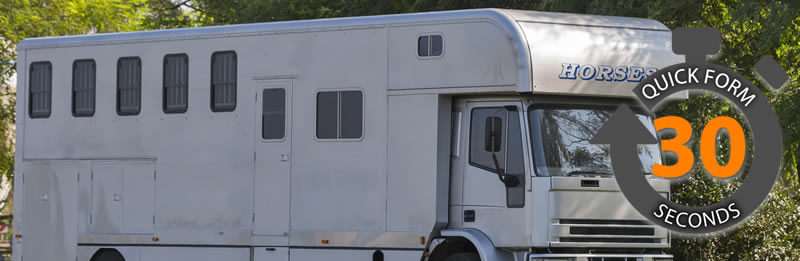










Reasons To Compare Quotes For Your Whittaker Horsebox
Weights From 3.5 To 26 Tonnes
A Compact and a Legend need different licences and often different providers. Comparing helps you reach those who quote your Whittaker's weight.
Living Space Adds Value
Slide-out living areas on a Legacy S or Legend S can lift the sum insured a long way. Some providers handle that kind of fit-out more readily than others.
Compare In One Form
Clean Green Cars introduces you to UK insurance providers covering horseboxes up to the heaviest weights, so you can compare Whittaker quotes in one place.
Whittaker Horsebox Owner's Checklist
- Whittaker Specifics - Whittaker Coach Builders was founded in 1992 and builds horseboxes at a 20,000 sq ft site on Gamston Airfield, near Retford in Nottinghamshire. Jayne has owned the business since 2007. Other makers sit under horsebox insurance.
- A Range Set By Weight - It runs from the 3.5t Compact, which can be driven on a car licence, through the 6.5 to 7.5t Crucial and the 10 to 16t Legacy to the 18 to 26t Legend.
- Slide-Outs Change The Box - The Legacy S and Legend S add slide-out living areas, with up to four on the Legend S. That living space adds to the value you insure.
- No Single Truck Chassis - Trade press shows Whittakers built on a 16 tonne Volvo FL and on a used Scania P320. Your V5C confirms what yours sits on.
- Every One Is Bespoke - Whittaker says every box is bespoke, so two Legacys of a similar year can differ a lot in spec and value. Its stock has included boxes from 2005 to 2017.
- Compare Quotes - List the model, plated weight, chassis make and year, and the living fit-out, then compare quotes from UK providers for your Whittaker.

Must Your Whittaker Horsebox Be Insured?
Yes. The Road Traffic Act says any horsebox used on a road or other public place must carry at least third party cover. Taking it off the road and declaring SORN is the only way round that.
- Third Party Is Only The Floor - it pays for injury to other people and damage to their property. It pays nothing towards your own box if it is stolen, burnt out or written off.
- Uninsured Driving Means Points - get stopped without cover and you face a £300 fixed penalty with 6 points, logged as IN10. The police can also seize the vehicle. In court the fine is unlimited and a ban is possible.
- SORN Takes Away The Legal Need - keep the box off the road with a SORN in place and the law no longer asks for a policy. Fire and theft are still risks in the yard, so think about laid-up cover.
- Your Use Shapes The Policy - private cover is written for leisure. If you ever move other people's horses for money or run your Whittaker horsebox for a business, tell your insurer, as a leisure policy may not stretch that far.
Which Licence Covers Your Whittaker Horsebox?
Welfare Rules For Moving Horses In Your Whittaker Horsebox
Welfare rules sit beside your insurance, not inside it. They come from The Welfare of Animals (Transport) (England) Order 2006 and Council Regulation (EC) No 1/2005. Whether they apply turns on why the horse is travelling, then on how far.
Leisure Or Economic Activity?
Taking your own horse out purely for pleasure sits outside these rules. Paid transport, livery yards and professional riders all fall within them. Once an in-scope trip goes past 65km (about 40 miles), the points in the next two cards apply.
Type 1, Type 2 And Competence
In-scope journeys over 65km need transporter authorisation from APHA (the Animal and Plant Health Agency). Type 1 is for trips up to 8 hours and type 2 is for anything longer. Anyone driving or attending the horses has to hold a certificate of competence. Trips longer than 8 hours add vehicle approval on top.
Journey Logs And Registered Horses
Journey logs only come into play when unregistered horses leave Great Britain for another country on a trip lasting more than 8 hours. Registered horses belong to an EU-recognised studbook or a national branch of an international racing or competition body. They skip the log and the journey-time, rest and feeding limits. Transporter authorisation and an animal transport certificate still apply to them.
Levels Of Cover Compared
Go third party only and a fire in the yard leaves the whole cost of the box with you. Here's what each level tends to include.
| Feature | Comprehensive | Third Party, Fire & Theft | Third Party Only |
|---|---|---|---|
| Third party injury and property claims (the legal minimum) | Yes | Yes | Yes |
| Fire and theft of the horsebox | Yes | Yes | No |
| Accidental damage to the horsebox | Yes | No | No |
| Living area fixtures and fittings | Often included | Provider-dependent | No |
| Agreed value settlement on the box as fitted | Usually on request | Provider-dependent | No |
| Tack and kit carried in the box | Often included up to a set limit | Provider-dependent | No |
| Windscreen and glass damage | Often included | Provider-dependent | No |
| Replacement keys and locks after theft | Often included | Provider-dependent | No |
| Minimum legal cover when driving in the EU | Yes | Yes | Yes |
| Full policy cover on trips abroad | Often for a limited period | Provider-dependent | No |
| Breakdown and recovery for horse and box | Often an add-on | Add-on | Add-on |
Features, terms and limits differ from one provider to the next. Check the wording of any policy before paying.
Cover Tip: Fit-outs vary a lot from box to box, so two horseboxes on the same chassis can be worth very different sums. With agreed value, you and the provider settle the payout sum at the start, which can make a total loss far easier to resolve. Ask for it, and read the living area, tack and security clauses before you pay.
Common Exclusions To Check
Miss one condition and a claim that looked safe can be turned down. These are the exclusions to look for on a standard horsebox policy.
Standard Exclusions
- Driving Without The Right Licence Category - Cover may not apply if the driver lacks the category for the plated weight. A box over 3,500kg needs C1 or pre-1997 rights, and one over 7,500kg needs C. Check the V5C weight against the licence of every new driver before they take the wheel.
- Paid Or Business Use On A Private Policy - A private policy is usually written for leisure only. Moving other people's horses for money, running a livery or competition business, or hiring the box out can fall outside it. Commercial use needs commercial cover, and over 3,500kg it usually needs an operator licence too.
Important Limitations
- Undeclared Uprating Or Conversion Work - An uprated plate, a new living area, a rebuilt ramp or extra stalls all change the risk. Leave them off the form and a claim may be cut or refused. A converted box also needs its V5C body type changed with DVLA, which picks the description and may inspect.
- Theft Without The Stated Security - If the schedule lists a tracker, immobiliser or steering lock, it has to be fitted and working when the box is taken. A lapsed tracker subscription can give the provider grounds to refuse a theft claim. Keep proof of fitting and subscription somewhere other than the box itself.
- A Lapsed Test Or An Unroadworthy Box - Many policies expect the box to be kept roadworthy, and over 3,500kg that includes a current HGV annual test. A claim made while the test has run out, or with a known fault left unfixed, may be reduced or declined.
- Wear, Tear And Mechanical Failure - Worn tyres, tired brakes, a soft floor and weak ramp springs are maintenance jobs. Damage caused by wear rather than a sudden event is usually declined. Check the floor and ramp before each season starts.
Optional Extras
A breakdown with horses on board is a very different problem from a breakdown in a car. These optional extras may be worth adding to your policy.
Recovery and roadside assistance built around horseboxes, with onward transport for the horses if the box cannot be moved. A standard car breakdown service may not send a vehicle big enough for a loaded box.
Raises the contents limit so saddles, rugs, bridles and show kit in the box are insured for what they are worth. Useful when your saddlery and show gear are worth more than the base limit on the policy.
Cover for injury to the driver or passengers, plus legal liability if someone is hurt around the box. Handy at busy yards and shows, where horses are loaded and unloaded close to other people.
Lifts cover abroad from the legal minimum to the full policy level for trips to EU shows or breeding visits. Horses heading to the EU need an export health certificate (EHC) as well, so sort that alongside the policy.
What Moves The Price?
Plated weight, overnight storage and the way the box is used all move the price. These are the main things a provider looks at.
| Key Factor | Impact on your price |
|---|---|
| Whittaker model, weight and fit-out | A 3.5t Compact and an 18 to 26t Legend S with slide-outs sit far apart on value and repair cost, and a used truck chassis can be years older than the Whittaker body built on it. |
| Plated weight and licence band | A box over 3,500kg means C1 drivers, an HGV annual test and a bigger vehicle to repair. Providers usually rate a 7,500kg box differently from a 3,500kg one. |
| Chassis age and condition | An older chassis carrying a newer body is common on horseboxes. Providers may weigh the base vehicle's age, service history and parts supply alongside the coachwork. |
| Driver age and experience | Drivers with years of clean driving and time behind larger vehicles usually price more favourably. Younger drivers or those new to C1 may see higher quotes. |
| Home or yard postcode | Areas with more vehicle theft and quiet rural access tend to price above gated yards in lower-risk postcodes. Give the address where the box actually sleeps. |
| Overnight storage | A locked yard or secure compound usually prices lowest. A driveway with good security sits in the middle, and parking on the road tends to price highest. |
| Security fitted | A tracker, immobiliser, steering lock and CESAR marking may help the quote. Some providers make approved security a condition once the agreed value passes a set level. |
| Annual mileage and use | Most horseboxes cover fewer miles than a family car. A realistic figure for shows and training tends to price below a guessed high one, and accuracy matters if you claim. |
| Living area and fit-out | Living space, a kitchen, a shower or extra stalls all lift the rebuild cost. Declare the full specification so the value and the price reflect the actual box. |
| No-claims bonus | Many providers recognise a no-claims bonus earned on a car or another vehicle. Ask at quote stage whether yours can be carried across when the horsebox policy starts, and have proof ready. |
Your own quotes will depend on your details and on the box itself.
Price Insight: Providers tend to rate a horsebox as a valuable specialist vehicle rather than a big car. Where it sleeps at night, the security fitted and the agreed value often count for more than the miles. Two owners with similar boxes can see very different prices. So compare the full panel at each renewal instead of rolling over.

Tips To Help Lower Your Premium
Rolling over at renewal without a fresh look can leave you paying more than you need to. These steps may help bring the price down.
Insure The Fit-Out At Its True Value
List the slide-outs, living area and bespoke kit on your Whittaker when you quote. A sum insured that matches the spec can help you avoid a shortfall after a total loss.
Quote On The Plated Weight
Use the weight shown on the V5C and the plate, not a brochure figure. Getting it wrong can cause problems with a claim and may put a driver in the wrong licence band.
Fit Security And Declare It
Add a tracker, an immobiliser or a steering lock, then list each one on the form. Security that is not declared cannot be priced in, and some providers require it on higher-value boxes.
Set An Honest Agreed Value
Base the agreed value on the box as it stands, with the living area and fit-out included. Setting the figure low to shave the price usually backfires, because a total loss is then settled at that lower sum. Keep receipts for upgrades.
Give A Realistic Mileage
Add up your show, hunting and training trips for the year and declare that figure. Going too low can affect a claim, and the small saving is rarely worth it.
Pay Upfront If You Can
Pay for the year in one go to avoid the interest added to monthly instalments (the APR). On a higher-value horsebox policy that interest can add up.
Saving Tip: Secure storage, approved security and the correct plated weight usually shift a horsebox price further than anything else you control. Get those three right on the form first. Then keep the mileage honest and set a fair agreed value for the box as fitted. Every provider on the panel then prices the same clear picture.
Getting Quotes In Five Steps
Getting horsebox quotes from UK insurance providers takes a few minutes. Have your V5C to hand, then get started above.
Enter The Box Details
Add the chassis, year, plated weight, fit-out and the postcode where it lives overnight. It only takes a few minutes.
Add Drivers And Licences
List everyone who will drive, with the licence category each one holds. Make sure every driver is covered for the plated weight.
Say How You Use It
Choose leisure, competition or business use and give a realistic yearly mileage. Mention any paid work at all.
Compare Cover And Extras
Line up the three cover levels next to each other and read the key clauses. Then weigh up breakdown, tack and European extras.
Choose A Start Date
Pick the day the policy should begin. The provider sends your certificate and documents once you have paid.
What Our Expert Says
On a big Whittaker, the living fit-out can be worth more than the truck underneath it. A Legend S with slide-outs is part horsebox, part home, and a sum insured based on the chassis year alone could leave you well short after a total loss.
The chassis year needs care too. Whittaker has built on a used Scania P320, so the truck can be several years older than the body. Give the provider both dates and the spec sheet, and ask whether agreed value is available on a box of that size.
The Sportline is different. At 3.5 to 26 tonnes, it is built to carry competition vehicles, not horses. If yours carries a race car, say so, because a policy written around horses and tack may not fit what's in the back.
Insurance Expert & Co-founder of Clean Green Cars

Owner Questions Answered
Are The Slide-Outs On A Whittaker Legend S Covered?
Usually, as part of the vehicle, as long as you declare them. The Legend S has up to four slide-outs and the Legacy S has a slide-out too, and both add living space and value. Set the sum insured to include the full fit-out, because a box insured below its real value may see a smaller payout.
Is A Whittaker Sportline Insured As A Horsebox?
Not usually. Whittaker builds the Sportline, from 3.5 to 26 tonnes, to carry competition vehicles rather than horses. A horsebox policy is written around horses and tack, so tell the provider what it really carries. The licence still goes by plated weight, so a Sportline over 7,500kg needs category C, just as a horsebox of that weight would.
Can I Insure An Older Whittaker Like A 2005 Legacy?
Yes. Whittaker's own stock has included a 2005 Legacy alongside 2015 and 2017 boxes, so older ones are a normal part of the used market. Providers look at the chassis age, condition and test history, and some ask for photos or a survey on boxes past a certain age.
Does A Horsebox Over 3,500kg Need An MOT?
Not the usual MOT. A horsebox with a gross weight over 3,500kg takes the HGV annual test instead. It is due every year, and the first one falls 12 months after the box was first registered. Lighter boxes stay on the normal MOT. Up to 3,000kg is class 4, and from 3,000kg to 3,500kg is class 7. Keep the test current, as a lapsed one can complicate a claim.
Can I Tax My Whittaker Horsebox As A Private HGV?
Yes, if it is plated over 3,500kg and you never use it for hire, reward or business. Private HGV is tax class 10, listed by GOV.UK at £177 a year from July 2026. Any business use moves the box to a goods vehicle rate instead. You switch tax class through the vehicle tax service, not by updating the V5C.
Does Prize Money Make My Horsebox Commercial?
It can. DVSA counts prize money, and any direct or indirect payment for moving horses, as commercial use. Over 3,500kg that usually means you need an operator licence. Drivers' hours and tachograph rules may also come in. Tell your insurer, because a private leisure policy may not cover it. DVSA's guidance for horsebox owners sets out where the lines sit.
Is SORN The Same As Laid-Up Cover?
No. SORN is a DVLA declaration that the horsebox is off the road, and while it is in place the law does not require insurance. Laid-up cover is an insurance choice that keeps fire and theft protection while the box is parked up. You can have SORN without laid-up cover. A theft over the winter would then be your loss alone.
What Happens Once I've Sent My Details?
You'll see quotes within minutes. Clean Green Cars introduces you to UK insurance providers and regulated brokers that cover horseboxes, matched on plated weight, licence, storage and use. Compare price, excess and extras side by side. Nothing is arranged until you pick a policy with the provider you choose.

Search & Compare Quotes From UK Whittaker Horsebox Insurance Providers

Useful Resources
- GOV.UK - Driving Licence Categories - what categories B, C1 and C let you drive by weight, including the 4,250kg car licence allowance for zero emission vehicles.
- GOV.UK - Get An MOT For An HGV, Bus Or Trailer - the annual test for horseboxes with a gross weight over 3,500kg, including the timing of the first test.
- GOV.UK - Transporting Horses In Horseboxes And Trailers - DVSA's page for owners on HGV licences, operator licences, tachographs and the line between hobby and commercial use.
- GOV.UK - Transporting Animals In Great Britain - APHA rules on type 1 and type 2 authorisation, certificates of competence, vehicle approval and animal transport certificates.
- GOV.UK - Driving Without Insurance - the fixed penalty, points and seizure powers that apply when a vehicle is used without insurance.
- GOV.UK - Update Details On Your V5C Log Book - when you have to tell DVLA about a new weight or body type after uprating or converting a horsebox.