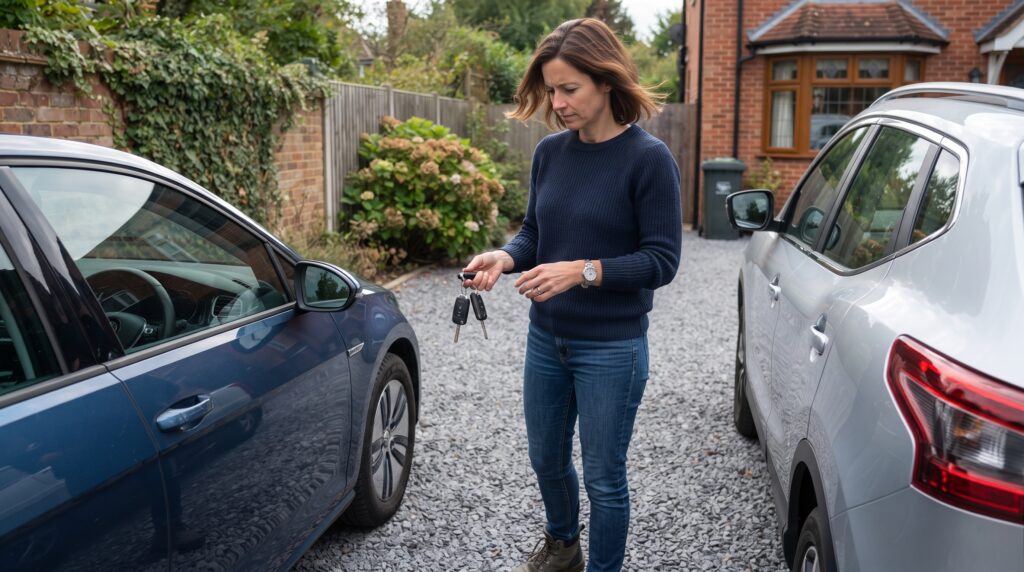









Why Compare Over 50s Car Insurance?
Heading Into A Calmer Pricing Band
Premiums often start to settle through your 50s before dipping further into the over-60s years. Compare several UK insurance providers in one short form.
Long No-Claims Recognised
Most over-50s drivers carry 9 or more years of NCD (no-claims discount), built up over a working career. Compare insurance providers that tend to reward long claim-free records.
Working Mileage Priced Fairly
A daily commute may push annual mileage above 10,000, which some providers price more sharply than others. Compare quotes that handle working mileage clearly.
Over 50s Car Insurance At A Glance
- Same Product, Shifting Pricing - over 50s car insurance is the same legal product, but you're entering the band where pricing tends to shift in your favour.
- NCD At Its Peak - many drivers in their 50s hold 9 or more years of NCD (no-claims discount), recognised by most UK insurance providers.
- Working Mileage Still Counts - a full commute typically prices higher than retirement mileage, but accurate declarations may keep the quote fair.
- Heading Toward The Dip - the calmest pricing band tends to sit between 60 and 75, and the over-50s years are the run-up.
- Named Drivers May Help - adding a clean-licence partner or considering multi-driver cover may help reduce the average risk score.

Is It Different For Drivers Over 50?
It's the same legal car insurance product, but you're entering the band where pricing tends to shift in your favour, IF your NCD and mileage are declared accurately:
- NCD Near Its Peak - most drivers in their 50s carry 9 or more years of NCD (no-claims discount)
- Working Mileage Still Applies - many over-50s are still in full-time work with a daily commute
- Teen Driver Decisions - some households are weighing whether to add a 17 or 18-year-old child as a named driver
- The Dip Is Ahead - the calmer pricing band typically arrives in the over-60s years, so it's worth comparing every renewal to track the trajectory
Cover Levels Explained
Pick third party only at 50+ and a single school-run shunt could leave a £4,000 repair bill outside your cover. Here's each level.
| Feature | Comprehensive | Third Party, Fire & Theft | Third Party Only |
|---|---|---|---|
| Liability to third parties (legal minimum) | Yes | Yes | Yes |
| Fire and theft of your vehicle | Yes | Yes | No |
| Accidental damage to your own car | Yes | No | No |
| Windscreen and glass cover | Often included | Provider-dependent | No |
| Personal accident benefit for driver | Typically yes | Provider-dependent | No |
| Audio and in-car entertainment | Often included | Provider-dependent | No |
| Courtesy car while yours is repaired | Often included | Add-on | Add-on |
| EU driving (third-party level) | Yes | Yes | Yes |
| EU driving (full UK cover level) | Provider-dependent | Add-on | No |
| Uninsured driver promise (no excess if not at fault) | Often included | Provider-dependent | No |
Please note that policy features, benefits, terms and conditions vary among insurance providers, so always check the policy wording.
Cover Tip: You might be tempted to drop to TPFT (third party fire and theft) now that you can afford a bigger excess hit, but at 50+ your assets are typically higher, the family car is often newer, and the gap to comprehensive at quote stage is often smaller than you'd expect. It's worth pricing all three tiers before assuming TPFT is the cheaper route.
What May Not Be Covered
A single exclusion can turn a commuter shunt into an unpaid repair. Here's what an over-50s policy typically doesn't cover.
Standard Exclusions
- Driving While Disqualified or Unlicensed - Cover may be declined if you drive while disqualified, unlicensed, or with a lapsed licence. Keep your photocard and any endorsements current.
- Wear and Tear or Mechanical Failure - Routine ageing of parts, mechanical breakdown, and gradual deterioration are not insured events under a standard motor policy.
- Undeclared Business Use - Using the car for business, hire or reward without declaring it may invalidate cover. If your job involves visiting client sites, declare business use.
Important Limitations
- Undeclared Named Drivers - Letting a family member or partner drive the car regularly without naming them on the policy may invalidate cover if they have a claim.
- Fronting on a Teen Driver Policy - Listing a parent as main driver when a teen child is actually the main user is fronting and may invalidate cover. Be honest about who drives most.
- Track Days and Competitive Driving - Use on a racing circuit, time trial or competitive event is excluded under standard policies and requires specialist track day cover instead.
Important: These are not exhaustive exclusions - every insurance provider sets its own terms, limits and conditions. Always check the full policy wording for the complete list of what is and is not covered.
Extras Worth Considering
Skip breakdown cover on a daily commute and a winter battery failure could cost £150 in callout fees. These extras may be worth adding.
Roadside assistance, recovery and home start can be useful on a daily commute or longer family trips. Compare standalone breakdown cover as well as bolt-on options.
Motor legal expenses may help with the cost of recovering uninsured losses, such as excess or personal injury, after a non-fault incident.
Protecting your NCD (no-claims discount) lets you keep your built-up record after a set number of fault claims, although the headline premium can still rise.
A standard small courtesy car can be upgraded to a like-for-like family model. Useful if you depend on a specific vehicle type for work or family use.
What Affects The Cost?
Over-50s pricing tends to reward a clean licence, low-risk postcode and a modest annual mileage. Here are the factors that shape an over-50s quote.
| Key Factor | Impact on your price |
|---|---|
| Vehicle insurance group | Family hatchbacks and mid-range estates, common over-50s choices, tend to price lower than higher-group performance cars. |
| Annual mileage | A full commute of 10,000 to 14,000 miles typically prices higher than a low-mileage profile, so declare your true figure rather than rounding up. |
| No-claims years held | Many over-50s carry long no-claims records, and most providers recognise around 9 years, which may help reduce premiums noticeably. |
| Home postcode | Quiet residential and rural postcodes often price lower than dense urban areas with higher claim rates. |
| Overnight storage | Parking on a driveway or in a garage usually prices lower than parking on the public road overnight. |
| Voluntary excess chosen | Raising voluntary excess may lower the headline premium, although you pay more towards any future claim. |
| Named drivers on the policy | Adding a clean-licence partner may help reduce the average risk score, while adding a teen child typically pushes the premium up - compare both versions. |
| Cover use class | Social, domestic and pleasure plus commuting is the most common over-50s declaration, and is usually priced lower than business use. |
| Advanced driver qualifications | Some providers recognise IAM RoadSmart or RoSPA advanced awards at quote stage, which may improve pricing. |
| Cover tier chosen | Comprehensive often prices similarly to third-party fire and theft for over-50s with long NCD, so always compare all three tiers. |
The quotes you get will depend on your own details.
Price Insight: The ABI Motor Premium Tracker put the average UK motor premium at £560 in Q1 2026 (as at March 2026). Drivers in their 50s with a clean record often sit close to that average, and may typically see it ease further as they move into over 60s car insurance pricing.

Ways To Help Cut Your Premium
Renew on autopilot and a long no-claims record can still drift £60-£120 higher year on year. Here are practical ways to cut what you pay.
Declare Your True Working Mileage
If you've shifted to hybrid working or moved closer to the office, update your annual mileage. Many over-50s now drive 8,000 to 11,000 a year rather than a pre-pandemic figure.
Compare Named Driver Vs Separate Policies For A Teen
If you're considering adding a 17 or 18-year-old child, get one quote with them as a named driver and one with them on their own cover - the more competitive route varies by provider.
Review Two-Car Households Together
If you and a partner each have a sole-named policy, it's worth pricing a multi-driver set-up across both cars. A second clean licence on each policy may help reduce the average risk score.
Raise Your Voluntary Excess Carefully
Accepting a higher voluntary excess (the amount you agree to pay yourself if you make a claim) may help reduce the premium. However, make sure the excess remains affordable if you ever needed to claim.
Pay Annually If You Can Afford It
Paying for the year upfront avoids the APR (the credit interest added when you pay monthly), which can quietly add a meaningful amount to the total cost over the policy year.
Quote 3 To 4 Weeks Before Renewal
Quotes priced 23 to 26 days before renewal tend to be more competitive than last-minute ones. It also gives you room to compare cover, not just price.
Saving Tip: If you're considering adding a 17 or 18-year-old child as a named driver, it's worth getting two quotes - one with them named, one without - and comparing the difference at each insurance provider. The named-driver loading varies widely between insurers, and the most competitive provider for you alone may not be the most competitive once a young driver is added.
How To Compare Quotes
Comparing over 50s car insurance from UK insurance providers takes only a few minutes. Get started above.
Share Your Details
Enter car, driving history, annual mileage and any named drivers. The form takes a few minutes.
See Provider Quotes
Quotes come back from UK providers that price drivers in the over-50s age band.
Compare Cover And Price
Check excess, named-driver rules, courtesy car and use-class settings in the policy wording.
Choose And Buy
Pick the quote that fits your cover and budget. Complete the purchase directly with the provider.
Receive Your Documents
The provider issues your certificate and policy wording. Check the details match what you declared.
What Our Expert Says
Drivers in their 50s are often in a strong position at quote stage. A long claim-free record and a steady working pattern tend to work in their favour, even before the calmer pricing band of the over-60s arrives.
A common scenario in shared two-car households is each partner being sole-named on one car and not on the other. A quick check often shows that naming both drivers on both cars, or moving to a multi-driver set-up, may help bring the average risk score down on at least one of the policies.
The other common pitfall is teen drivers. Adding a 17 or 18-year-old child as a named driver on a parent's policy can be a sensible step, but quotes vary widely between providers, and the most competitive insurer for one driver alone is rarely the most competitive once a young driver is added. It is worth running both versions at every renewal.
Insurance Expert & Co-founder of Clean Green Cars

Common Questions
Do Premiums Drop After 50?
Premiums often start to settle through the 50s for drivers with a long no-claims record, then tend to dip further between roughly ages 60 and 75. The over-50s years are typically the run-up to the calmer pricing band, rather than the band itself.
Why Is Over 50s Car Insurance Often Competitive?
Drivers in their 50s often combine a long claim-free record, a stable home postcode, and a settled working pattern. Most UK insurance providers price these factors favourably, even though the lowest-priced band typically arrives in the 60s.
How Does Age Affect Car Insurance Premiums In The UK?
Age sits alongside vehicle, postcode, mileage and claims history in the rating. The 50s tend to price well for drivers with long NCD, with a further easing into the over-60s years.
Should I Add My Teenage Child As A Named Driver?
Adding a 17 or 18-year-old child as a named driver on a parent's policy may be sensible if they share the car, but it must reflect real usage. Fronting (listing the parent as main driver when the teen is) may invalidate cover.
Are There Discounts On Car Insurance For Drivers Over 50?
There is no automatic over-50 discount, but a long no-claims record, honest mileage declarations and advanced driving qualifications can each help reduce a quote.
Does A No Claims Discount Help Over-50s Drivers Save?
Yes. Most UK insurance providers cap recognised NCD (no-claims discount) at around 9 years, and many over-50s drivers already carry the full allowance, which may help reduce premiums noticeably.
Do I Need To Tell My Insurer About Medical Conditions In My 50s?
Drivers must tell DVLA about any notifiable condition at any age and answer the insurer's medical questions honestly under CIDRA 2012. Non-disclosure may lead to a reduced or refused claim.
What Happens After I Submit My Details?
Clean Green Cars introduces you to UK insurance providers who price for the over-50s segment, including those that handle named-driver and multi-driver setups. You'll see quotes within minutes and can compare cover, price, and add-ons before choosing.

Search & Compare Quotes From UK Over 50s Car Insurance Providers

Useful Resources
- GOV.UK - Driving and Medical Conditions - which conditions must be told to the DVLA and how to report them.
- GOV.UK - Driving Eyesight Rules - the legal eyesight standard for driving and when to declare a change.
- IAM RoadSmart - Advanced Driver Course - structured advanced driving course recognised by some UK insurance providers at quote stage.
- RoSPA - Driver Advice - road safety guidance covering fitness to drive, fatigue and family driving habits.