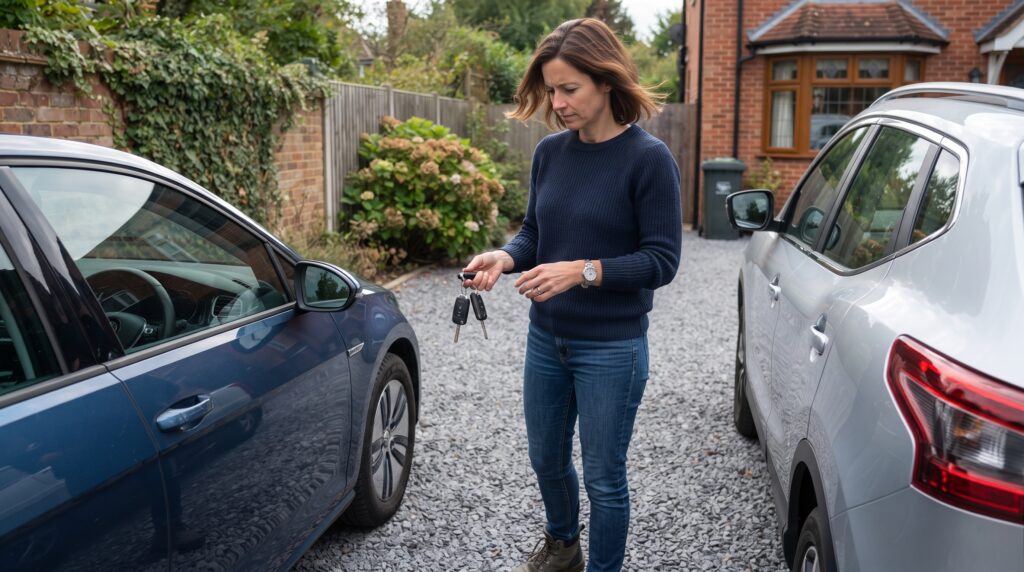









Why Compare Learner Driver Car Insurance?
Quotes Priced For Learners
Compare UK insurance providers who offer short-term learner cover from 1 to 30 days. Useful for practice runs in a parent's or partner's car alongside professional lessons.
Keep A Supervisor's NCD Safe
A separate learner policy in the learner's name may protect a parent's no claims discount if there's an at-fault bump. Compare insurance providers offering standalone learner cover.
Cover Built Around Practice
Many learners only need cover for a few weekends before the test. Compare 7-day, weekly and monthly options against being added as a named driver.
Learner Driver Car Insurance At A Glance
- Who It Helps - Provisional licence holders practising in a parent's, partner's or instructor's car between professional lessons. See the provisional driver car insurance options too.
- Short-Term Cover Options - Standalone learner policies typically run 1 to 30 days and may keep a supervisor's main policy untouched if there's an at-fault claim during practice.
- Named Driver Alternative - Being added to the supervising adult's policy is an option, but an at-fault claim could affect their NCD (no claims discount). Weigh both routes carefully.
- Supervisor Rules - The supervising driver must be 21 or over and have held a full UK licence for at least 3 years for the category of vehicle being driven.
- Compare Quotes - See UK insurance providers offering learner cover from 1 day upwards.
Is It Different For Learner Drivers?
It's the same legal car insurance product, but the supervising-adult rules and short-term cover options shape what you need:
- Provisional Licence Rules - Learners can only drive with a qualified supervisor aged 21+ who has held a full UK licence for the vehicle category for at least 3 years
- Short-Term Cover Is Common - Standalone learner policies (typically 1 to 30 days) suit intensive pre-test practice without committing to an annual premium
- Supervisor NCD Risk - Adding a learner as a named driver on a supervisor's policy means an at-fault claim could affect the supervisor's no claims discount (NCD)
- Post-Pass Gap - Learner cover typically ends the moment you pass, so arrange new driver car insurance for the drive home from the test centre
Cover Levels Explained
Pick third party only and a practice bump could leave a parent's car written off with nothing to replace it. Here's what each level includes.
| Feature | Comprehensive | Third Party, Fire & Theft | Third Party Only |
|---|---|---|---|
| Liability to third parties | ✓ | ✓ | ✓ |
| Fire and theft | ✓ | ✓ | ✗ |
| Accidental damage to practice car | ✓ | ✗ | ✗ |
| Windscreen cover | ✓ | Sometimes | ✗ |
| Personal accident benefit | Sometimes | ✗ | ✗ |
| In-car audio and entertainment | Sometimes | Sometimes | ✗ |
| Courtesy car after an accident | Sometimes | ✗ | ✗ |
| Cover for the supervising driver | ✓ | ✓ | ✓ |
| EU third-party cover | Sometimes | Sometimes | Sometimes |
| Uninsured driver promise | Sometimes | ✗ | ✗ |
Please note that policy features, benefits, terms and conditions vary among insurance providers, so always check the policy wording.
Cover Tip: If you're a parent letting your learner practise in your car, take out a short-term learner-cover policy in their name rather than adding them as a named driver on your main policy. An at-fault claim during practice may not invalidate your own NCD (no claims discount) under a separate learner policy, where it would on a named-driver setup.
What May Not Be Covered
A single exclusion can leave a quiet practice run uninsured. Here's what a learner driver policy typically doesn't cover.
Standard Exclusions
- Driving without a qualified supervisor - Cover does not apply if the learner drives without a supervisor who is 21+ and has held a full UK licence for the vehicle category for at least 3 years. This includes solo motorway use before passing.
- Wear, tear and mechanical breakdown - Routine wear, mechanical or electrical failure, and gradual deterioration are excluded. Mechanical breakdown cover is a separate optional add-on with its own terms.
- Driving the wrong vehicle category - A car learner policy doesn't extend to vans, minibuses or anything outside category B. Practising in a different vehicle class needs cover for that class and the appropriate provisional entitlement.
Important Limitations
- Driving alone after passing the test - Learner cover typically ends the moment you pass. Driving solo on the way home from the test centre may fall outside the policy. Have post-pass cover arranged before test day.
- Motorway practice with the wrong supervisor - Learners can practise on motorways since 2018, but only with an approved driving instructor in a dual-controlled car. Motorway practice with a parent supervisor falls outside many learner policies.
- Driving outside the policy territory - Learner cover is for the UK only on most short-term policies. Trips abroad fall outside standard learner cover, and learners cannot drive solo abroad on a UK provisional licence in any case.
Important: These are not exhaustive exclusions - every insurance provider sets its own terms, limits and conditions. Always check the full policy wording for the complete list of what is and is not covered.
Extras Worth Considering
Skip legal expenses cover and a non-fault practice bump could leave a parent paying their own excess. These optional extras could be worth adding.
Roadside help, recovery and home-start for unexpected mechanical or battery problems during practice. Useful when the supervising adult doesn't already have UK-wide breakdown membership for the same car.
Funds solicitor fees of up to about £100,000 to recover uninsured losses such as the excess, loss of earnings or injury costs after a non-fault practice bump. Useful when practising in a parent's higher-value car.
Pays a set amount if the learner or supervising driver is injured or killed in a covered accident during a practice run. Limits are modest, so check the schedule before relying on it.
A few learner policies offer a short top-up that runs through test day itself, covering the practical test drive. Check whether the test centre car or a parent's car will be used before adding it.
What Affects The Cost?
Practice mileage, supervisor age, vehicle group and home postcode all shape a provisional-licence premium. Here are the factors that shape a learner driver quote.
| Key Factor | Impact on your price |
|---|---|
| Learner age | A 17-year-old learner is typically quoted more than a 40-year-old learner taking lessons later in life. Providers price each year of age separately, even on short-term cover. |
| Policy length | Short-term learner policies often price per day, with weekly and monthly bundles available. A 7-day policy may sometimes cost less in total than two separate 3-day policies. |
| Practice car insurance group | Insurance groups run 1 to 50. A group 1-4 practice car (Hyundai i10, Fiesta 1.0, Corsa 1.0) typically attracts lower learner cover daily rates than a higher-group family car. |
| Supervising driver profile | Providers may ask about the named supervising driver. A supervisor with a long, clean full licence may help the daily learner rate. Supervisors aged under 25 with recent claims can lift it. |
| Postcode and overnight storage | Urban postcodes with higher theft or claim rates can lift the daily learner rate. Parking the practice car off-street or in a garage overnight may reduce the quote. |
| Driving lessons taken so far | Some providers ask how many professional lessons the learner has taken. A learner mid-way through a course may be quoted differently to a learner who's just started. |
| Named or main driver setup | Adding a learner as a named driver on a supervisor's annual policy works out cheaper short-term but exposes the supervisor's NCD. A standalone learner policy may ringfence that risk. |
| Voluntary excess | Raising voluntary excess on top of the compulsory excess (this is the first part of any claim you are liable for) can cut the daily premium, but only set it at a level the learner could realistically afford to pay after a claim. |
| Estimated practice mileage | Lower estimated practice mileage usually means a lower daily quote. Be honest: under-stating mileage may invalidate cover if a claim is investigated. |
| Cover tier chosen | Comprehensive learner cover is typically priced close to third party fire and theft because most learner pricing risk sits in the driver, not the tier. |
The quotes you get will depend on your own details.
Price Insight: Short-term learner policies are priced per day, not as a fraction of an annual premium, so a single weekend often costs less than buying a full month. The ABI all-driver average sat at £560 in Q1 2026 (as at March 2026), but learner cover for a few practice days typically falls well below that pro-rata. Picking a lower-group practice car and a modest daily mileage estimate can often soften the daily rate.

Ways To Help Reduce Your Premium
Renew on autopilot with a 30-day policy and you may pay for weeks of unused cover. Here are practical ways to cut what you pay.
Buy Weekly, Not Monthly, For Occasional Practice
If the test is weeks away and practice happens at weekends only, weekly 7-day learner policies may cost less in total than a single 30-day stretch. Pause cover during weeks when the car stays parked.
Use A Lower-Group Practice Car
Cars in insurance groups 1 to 4, such as a Hyundai i10, base Fiesta or Corsa 1.0, sit at the cheaper end of the Thatcham group rating scale and usually attract the lowest learner daily rates. The supervising adult's main family car may push the daily quote higher.
List An Experienced Supervisor
Naming a supervising driver with a long, clean full UK licence held well beyond the 3-year minimum may help the daily learner rate. Be accurate: the supervisor must genuinely be in the car for every practice session.
Take Out The Policy In The Learner's Name
A standalone learner policy in the learner's own name is designed to keep the supervising adult's annual policy and NCD untouched if there's an at-fault practice bump. The named-driver shortcut can cost more long-term.
Raise Voluntary Excess Carefully
Accepting a higher voluntary excess (the amount you agree to pay yourself if you make a claim) may help reduce the daily premium. However, make sure the excess remains affordable if a parent or learner ever needed to claim.
Plan Practice Around Lessons
Concentrating practice into a short block of weeks close to the test date typically costs less in total cover than spreading thin practice over months. Talk to the professional instructor about when extra practice helps most.
Saving Tip: If the test is more than a month away, weekly 7-day learner policies often work out more cost-effective than a single 30-day stretch for occasional practice. Buy a week at a time, only when intensive practice is happening, and pause cover during exam-revision weeks when the car stays parked.
How To Compare Quotes
Learner cover prices shift daily by policy length and car group. Comparing UK insurance providers in one short form puts you in control. Compare quotes.
Share Your Details
Enter learner, supervising driver, practice car, postcode and policy length. Have the provisional licence and the supervisor's full licence details ready.
See Provider Quotes
Quotes come back from UK providers offering short-term and named-driver learner cover. Daily, weekly and monthly options appear side by side.
Compare Cover And Price
Check excess, supervisor age rules, practice mileage limits and post-pass end times before picking the option that fits the practice plan.
Choose And Buy
Pick the policy that fits the budget and how often practice is happening. Confirm the start date and pay.
Receive Your Documents
The provider issues the certificate, schedule and policy wording. Keep digital copies on the supervisor's and learner's phones during every practice run.
What Our Expert Says
Many parents assume the simplest route is to add their learner as a named driver on the main household policy. In practice that often exposes the supervisor's NCD (no claims discount) to a claim risk that a separate learner policy is designed to ringfence.
A pattern that tends to work well is a 7-day learner policy in the learner's own name, bought week by week as test day approaches. GOV.UK guidance confirms learners practising in a private car still need their own insurance arrangement, and the supervisor must be 21+ with a full UK licence held for 3 years (as at March 2026).
The learners who tend to get the smoothest handover to a first full-licence policy are the ones who treat learner cover as temporary by design. A clean practice record does not build a no claims year, but it does mean no at-fault claim sitting on the supervisor's record when the first young drivers car insurance quote is run after passing.
Insurance Expert & Co-founder of Clean Green Cars

Common Questions
Can A Learner Driver Be Insured On A Parent's Car In The UK?
Yes. A learner with a provisional licence can be insured to practise in a parent's car through a standalone short-term learner policy in the learner's name or by being added as a named driver to the parent's annual policy.
Does Practising In A Parent's Car Affect Their No Claims Discount?
It depends on the route taken. A separate learner policy in the learner's own name is designed to keep the parent's NCD intact if there's an at-fault practice bump. Adding the learner as a named driver on the parent's annual policy means an at-fault claim may affect the parent's NCD.
How Long Can A Short-Term Learner Insurance Policy Last?
Standalone learner cover typically runs from 1 day up to about 30 days, with weekly bundles in between. Some providers may offer longer terms. Pick a length that matches the practice schedule rather than buying weeks that go unused.
What Are The Rules For A Supervising Driver In The UK?
The supervising driver must be at least 21 years old and must have held a full UK driving licence for the category of vehicle being driven for at least 3 years (GOV.UK, as at March 2026). They must be in the car and fit to drive throughout the practice session.
Can A Learner Driver Practise On The Motorway?
Since 2018, learners can practise on motorways in England, Scotland and Wales, but only with an approved driving instructor in a dual-controlled car. Motorway practice with a parent or partner supervisor isn't permitted, and learner policies typically reflect that.
Does Learner Driver Cover Continue After I Pass My Test?
No. Most learner policies typically end the moment the practical test is passed, often before the new full licence arrives in the post. Arrange a first full-licence policy to start at test centre departure, so the drive home is covered.
Is Learner Driver Insurance Cheaper Than Being A Named Driver?
It depends on how much practice is planned. Short-term learner cover may often be more cost-effective for occasional practice over a few weekends. Continuous practice for several months may price closer to a named-driver setup, but with the NCD-protection benefit of a separate policy.
What Happens After I Submit My Details?
Clean Green Cars introduces you to UK insurance providers offering learner driver cover, including standalone short-term policies and named-driver options for a parent or partner's car. You compare prices and policy terms on each insurance provider's site, then buy directly from the chosen insurance provider.

Search & Compare Quotes From UK Learner Drivers Car Insurance Providers

Useful Resources
- GOV.UK - Learner Drivers In Cars - the official rules on practising with a supervisor in a private car, including who qualifies as a supervisor.
- GOV.UK - Learning To Drive - provisional licence ages, supervisor rules, learner motorway conditions and the legal framework around practice.
- ABI - Motor Insurance Premium Tracker - quarterly average premium data including the £560 all-driver benchmark for Q1 2026.
- Thatcham Research - Insurance Group Rating - how cars are scored 1 to 50 for insurance, useful when choosing a practice car.