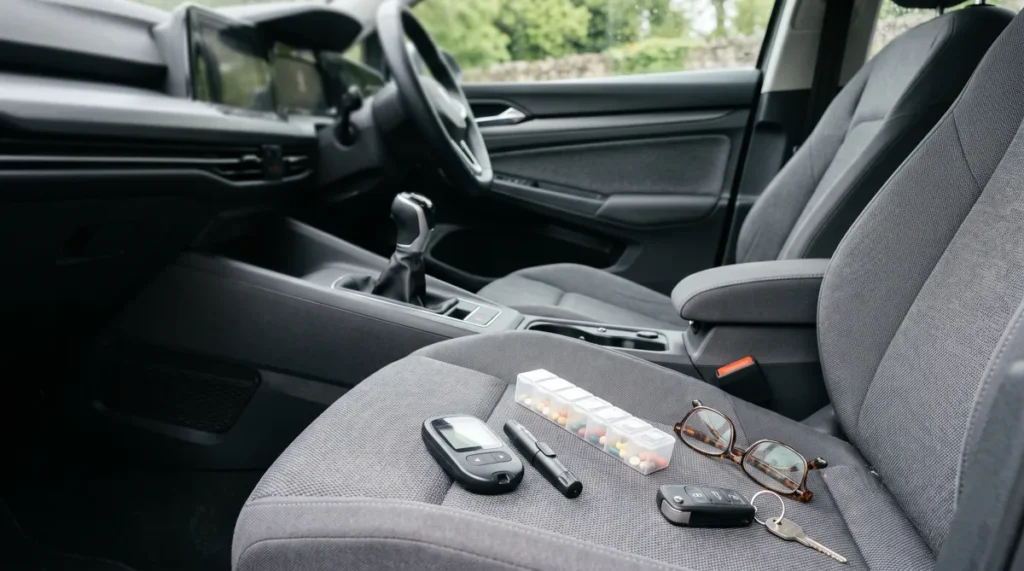
Why Your Health Matters For Your Car Insurance
It starts with your licence. You have to tell DVLA about a medical condition that could affect your driving, and you need valid insurance to drive on the road. GOV.UK's guide to medical conditions and driving says you could be fined up to £1,000 if you don't tell DVLA about a condition that might affect your ability to drive safely. You could also be prosecuted if you have an accident.
Your insurer is a separate question. By law, you have to take reasonable care not to give your insurer wrong information when you buy or renew. The Financial Ombudsman's guidance on misrepresentation says that if a wrong answer was deliberate or reckless, the insurer can cancel the policy as if it never existed, keep what you paid and refuse a claim. Other outcomes include charging more or paying only part of a claim. So answer your insurer's health questions honestly, and see how car insurance cover works if you're reviewing your policy.
1. Epilepsy, Seizures And Blackouts
Tell DVLA and stop driving straight away. GOV.UK's epilepsy and driving rules say you must tell DVLA if you've had any epileptic seizures or blackouts.
If you've had a seizure while awake and lost consciousness, your car licence is taken away. You can reapply once you've gone at least a year without a seizure. After a first ever seizure, you may be able to reapply after 6 months, if DVLA's medical advisers decide there isn't a high risk of another. Seizures only in your sleep, or ones that don't affect your consciousness, are handled differently, so check the page for your type.
2. Diabetes Treated With Insulin
It depends on your treatment. The GOV.UK rules on diabetes and driving say car drivers must tell DVLA if their insulin treatment lasts, or will last, over 3 months. You must also tell DVLA if you get disabling hypoglycaemia (low blood sugar), or a medical professional has told you you're at risk of it.
DVLA can license you for 1, 2 or 3 years if you meet its criteria, including having adequate awareness of hypoglycaemia. That means you notice a hypo coming in time to stop safely. If you lose that awareness, you must not drive and must tell DVLA. You can drive again once a GP or diabetes consultant confirms in a report that your awareness has come back.
3. Obstructive Sleep Apnoea
Yes, if it makes you excessively sleepy. The GOV.UK sleep apnoea guidance says you must tell DVLA if you have confirmed moderate or severe obstructive sleep apnoea syndrome (OSAS) with excessive sleepiness. The same applies to any sleep condition, including suspected or mild sleep apnoea, that has made you excessively sleepy for at least 3 months.
You must not drive until you're free from excessive sleepiness, or your symptoms are under control and you're strictly following any treatment you need.
4. Heart Conditions, Including Pacemakers
Some heart conditions need telling, and some don't. GOV.UK lists heart conditions, including atrial fibrillation and pacemakers, among the conditions you may need to tell DVLA about.
A heart attack is different for car drivers. The GOV.UK heart attack and driving rules say you don't need to tell DVLA after a heart attack or an angioplasty. You do need a break from driving: 1 week after a successful angioplasty, or 4 weeks after a heart attack without angioplasty or after an unsuccessful one. Bus and lorry drivers have stricter rules.
You don't need to tell DVLA about angina either, but you must stop driving until it's under control if it happens while resting, driving or with emotion. If you've had an operation too, see when you can drive after surgery.
5. Parkinson's Disease And Multiple Sclerosis
Yes for Parkinson's, and for MS if it will affect your driving. GOV.UK says you must tell DVLA if you have Parkinson's disease. DVLA's medical guidance says a licence may be issued subject to regular review. It's refused or taken away if the condition is disabling, or if your movement varies a lot.
For multiple sclerosis, GOV.UK says you must tell DVLA if your condition will affect your driving. DVLA may give you a licence for 1, 2, 3 or 5 years once its medical checks confirm your driving isn't impaired. It can also limit you to cars with certain controls. If that applies to you, here's how car insurance for disabled drivers and adapted cars works.
6. Dementia
Yes, you must tell DVLA if you have dementia. A diagnosis doesn't always mean giving up driving straight away. DVLA's medical guidance says that in early dementia, when enough skills are kept and it's progressing slowly, a licence may be issued subject to an annual review.
DVLA usually decides based on medical reports, so the outcome depends on how the condition affects you. If you're helping an older parent through this, here's how car insurance for drivers over 70 works. Keep their insurer up to date with any licence change.
7. Eyesight Problems
You must meet the eyesight standard every time you drive. The GOV.UK driving eyesight rules say you must be able to read a number plate from 20 metres away, about the length of 5 parked cars. You can wear your glasses or contact lenses if you use them for driving.
You also need a visual acuity of at least 6/12 on the Snellen scale, plus an adequate field of vision. You must tell DVLA about any eyesight problem that affects both eyes, or your remaining eye if you only have one. That doesn't include being short or long sighted, or colour blind. You could be prosecuted if you drive without meeting the standard.
What To Do Next
If you have one of these conditions, tell DVLA if the rules say you must, and follow any stop-driving rule for your condition. You can usually keep driving while DVLA considers your application, unless your condition's own rule says stop. If your doctor tells you to stop driving for 3 months or more, you must surrender your licence.
DVLA may give you a shorter licence, ask for adapted controls, or tell you to stop driving. Whatever it decides, check your policy wording and tell your insurer if your licence changes.
Sue's note: Keep DVLA's letter with your insurance documents, and jot down the date you told your insurer about any change. If you ever need to claim, that paper trail saves a lot of back and forth.
You can compare car insurance quotes when you're ready.
Medical Conditions And Driving: Your Checklist
For car licences, from GOV.UK and DVLA's medical guidance.
Tell DVLA, Or Check If You Need To
- Any epileptic seizures or blackouts: tell DVLA
- Insulin treatment lasting, or due to last, over 3 months: tell DVLA
- Confirmed moderate or severe sleep apnoea with excessive sleepiness: tell DVLA
- A heart condition such as atrial fibrillation or a pacemaker: you may need to tell DVLA
- Parkinson's disease or dementia: tell DVLA
- MS that will affect your driving: tell DVLA
- An eyesight problem affecting both eyes, or your remaining eye: tell DVLA
Stop Driving
- Straight away after a seizure or blackout
- Until you're free from excessive sleepiness, or it's under control
- For 4 weeks after a heart attack without angioplasty
Eyesight Standard
- Read a number plate from 20 metres, with glasses or lenses if you use them
- You could be prosecuted if you drive without meeting the standard
Your Insurer
- Take reasonable care to answer honestly when you buy or renew
From GOV.UK medical conditions guidance, DVLA's Assessing fitness to drive (November 2025), the Road Traffic Act 1988 on legislation.gov.uk and the Financial Ombudsman, checked 29 October 2026.
FAQs
Do I Have To Tell My Car Insurer About A Medical Condition?
It depends on what your insurer asks. You must take reasonable care to answer its questions honestly when you buy or renew. If a wrong answer was deliberate or reckless, the insurer can cancel the policy and refuse a claim. Tell them if your licence changes.
Can I Keep Driving While DVLA Looks At My Medical Condition?
Usually, yes. GOV.UK says you can usually keep driving while DVLA considers your application. That doesn't apply if your condition's own rule says stop, such as after a seizure, or with sleep apnoea causing excessive sleepiness.
What Happens If I Don't Tell DVLA About A Medical Condition?
You could be fined up to £1,000. GOV.UK says you could also be prosecuted if you have an accident. Under section 94 of the Road Traffic Act 1988, driving after failing to tell DVLA without a reasonable excuse is also an offence in its own right.
Do I Need To Tell DVLA After A Heart Attack?
No, not for a car licence. You don't need to tell DVLA, but you must stop driving for 1 week after a successful angioplasty, or 4 weeks after a heart attack without one. Bus and lorry drivers have stricter rules.