Start With The Details Behind The Conviction
If you have a driving conviction, a car insurance quote form may ask for the conviction code, the date it happened and what the court or DVLA record shows. It may also ask about the car, how it is used and your wider driving history.
The safest starting point is to check the exact wording of each question. Do not assume every insurer asks for the same period, the same level of detail or the same type of conviction information.
What Details Might Insurers Ask For?
Before comparing quotes, gather the details that help insurers understand the conviction clearly. The table below separates the information that may be requested from the practical reason it matters.
| Detail | Why It May Be Asked | Where To Check |
|---|---|---|
| Conviction code | The code shows the type of motoring offence, such as SP30 speeding, DR10 drink driving, drug driving or driving while disqualified. If the code is DG10, the DG10 insurance page explains the related cover route. | Driving licence record, court paperwork or DVLA information. |
| Conviction date | Insurers may use the date to decide whether it falls inside the period they ask about. | Court paperwork or licence record. |
| Offence date | Some records and questions distinguish the offence date from the conviction date. | Court paperwork or endorsement record. |
| Penalty points | Points can affect how the driving record is assessed. | GOV.UK driving licence record. |
| Ban length | A past disqualification may change the questions asked before a quote can be assessed. | Court paperwork and licence record. |
| Linked claims or incidents | A conviction and an insurance claim from the same incident may need to be answered separately where asked. | Insurer documents, claims history and court paperwork. |
Where Can You Find Your Conviction Details?
If you are unsure what is still on your record, use the official GOV.UK view or share your driving licence service. It can show your driving record, penalty points and disqualifications, and it can create a licence check code where one is needed.
GOV.UK endorsement guidance explains that endorsements can stay on a driving record for 4 or 11 years depending on the offence. The endorsement period is not always the same as the period an insurer asks about on a quote form.
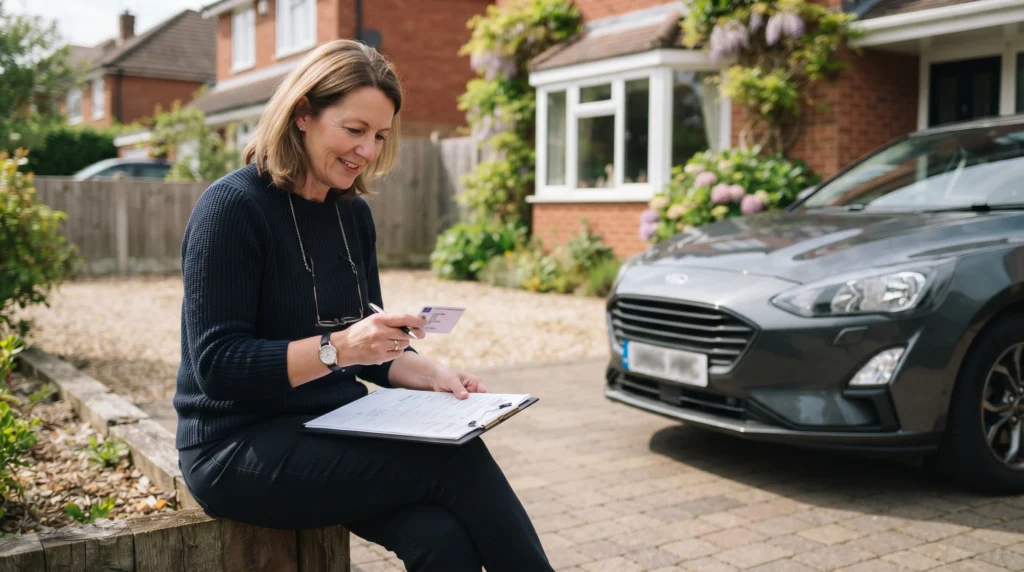
Susan's note: Write the details down before starting. Guessing a date or code can lead to inconsistent quotes, and changing the answer later may alter the result.
Conviction Code, Date, Points And Ban Length
Insurance questions can use different wording. Some may ask about motoring convictions in a set period. Others may ask about unspent convictions, bans, points or claims. Read the question carefully and answer the wording in front of you.
Some questions may also cover non-motoring criminal convictions as well as driving offences, so do not assume a motoring-only answer fits every form.
If spent or unspent status matters to your situation, check GOV.UK rehabilitation period guidance or get legal advice. Do not rely on a general insurance article to decide your individual legal disclosure position.
In practical insurance terms, the key point is to answer the question being asked. If the quote form asks about a detail that applies to you within the period requested, give accurate information.
Vehicle, Use, Mileage And Claims Details
A conviction is important, but it is only one part of a car insurance quote. Insurers may still ask about the car, driver, address, mileage, use and previous insurance history.
Have these details ready before comparing:
- Vehicle registration, make, model, value and modifications.
- Where the car is kept overnight.
- Annual mileage and whether commuting or business use is needed.
- Driver age, occupation, licence type and how long the licence has been held.
- Claims, cancellations, refused insurance or policy changes where asked.
- Named drivers and whether they also have points, claims or convictions.
Using the same details across each quote makes comparison cleaner. If you change the mileage, use or driver details halfway through, the final price and terms may change for reasons that are not only about the conviction.
Why Guessing Details Can Cause Problems
Do not guess if you can avoid it. Check your licence record, court paperwork, old insurer documents or any correspondence that confirms the code, dates and ban details.
If the quote form asks for something you cannot confirm, pause and check before submitting. Incorrect or incomplete information could affect the quote, policy terms or a later claim.
Where the question is legal rather than insurance-related, use official guidance or independent legal advice rather than relying on a quote form to make the decision for you.
When To Use The Convicted Driver Insurance Page
Once the conviction details, driving record and vehicle information are clear, you can compare with more confidence. For the wider quote journey after points, bans or motoring convictions, start with convicted driver insurance.
Keep the same details to hand as you move through the comparison. That makes it easier to spot whether a quote has changed because of the conviction, the vehicle, the driver details or the policy use.
FAQs
What conviction details do car insurers ask for?
They may ask for the conviction code, offence date, conviction date, penalty points, ban length and any linked claims or incidents. The exact questions can vary by insurer and quote form.
Where can I check my driving conviction details?
You can use the GOV.UK driving licence service to view your driving record, penalty points and disqualifications. Court paperwork and old insurer documents may also help with dates and ban length.
Do insurers ask about spent convictions?
Some quote forms ask about unspent convictions, while others ask different motoring-conviction questions. Read the exact wording. If you need a legal answer about spent status, check official guidance or get legal advice.
Do penalty points and a driving ban need separate details?
They can. A form may ask about points, endorsements, disqualifications or ban length separately. Check your licence record and court paperwork before answering.
Can wrong conviction details affect a car insurance quote?
Yes, incorrect or incomplete details could change the quote, policy terms or how a later claim is handled. Insurers may look at whether you took reasonable care to answer accurately, so use records rather than guessing.
Should named drivers include their convictions too?
If the quote asks about named-driver convictions, include accurate details for those drivers as well. The insurer is assessing everyone who may drive the car.