




























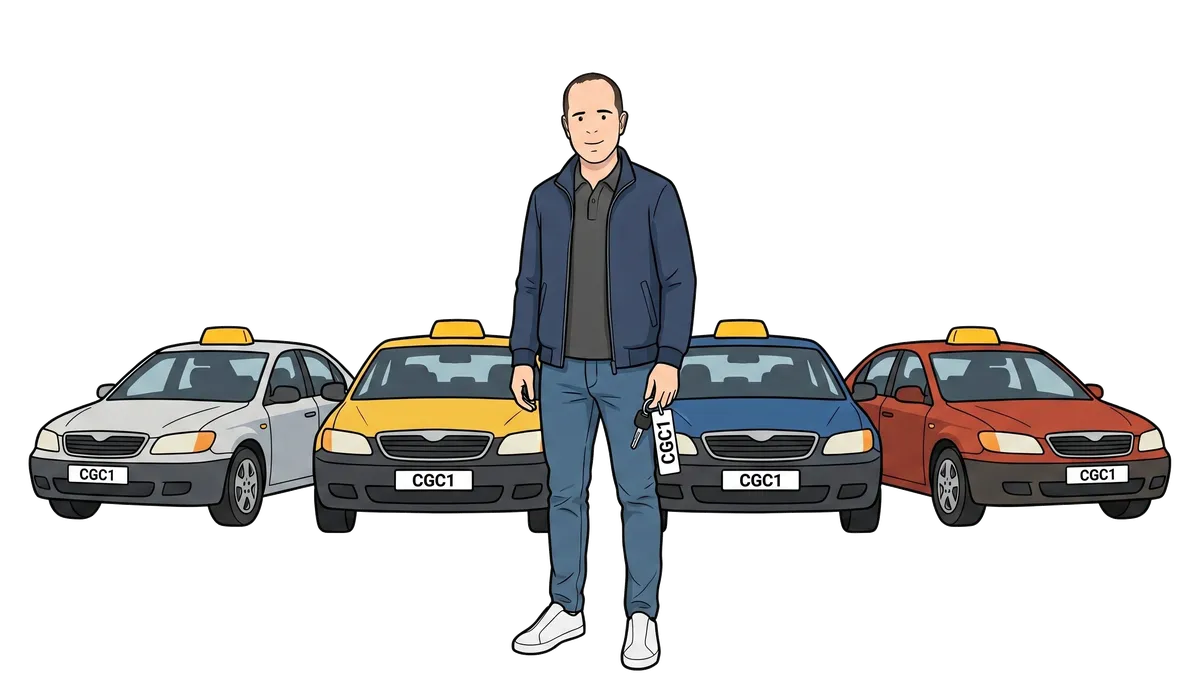
Why Compare Taxi Fleet Insurance?
Cut The Renewal Admin
Separate policies per cab mean scattered renewals and duplicated paperwork. Clean Green Cars introduces you to specialist brokers who can put the whole fleet on one schedule.
Cover Every Shift
Drivers swap cabs across day and night shifts, so a named-only policy can leave gaps. Clean Green Cars introduces you to specialist brokers who rate any-driver or named terms.
Stop Overpaying As Standard Cars
Hackney and private hire use is rated very differently from ordinary cover. Clean Green Cars introduces you to specialist brokers who price taxi fleets routinely.
Taxi Fleet Insurance At A Glance
- Hackney carriages and private hire vehicles can share one policy on a single renewal date.
- Specialist brokers can rate any-driver or named-driver terms for fleets running multiple shifts.
- A mixed fleet of saloons, MPVs and wheelchair-accessible vehicles can sit on one schedule.
- Public and private hire licensing use can be declared and matched to the right markets.
- Get taxi fleet quotes from specialist brokers above.

How Taxi Fleet Cover Works
Use Class
Cover is rated for hackney or private hire licensed use, not the social and commuting a standard motor policy assumes.
Driver Basis
Any-driver terms suit shift swaps across the fleet, while a named-driver list can cost less for a settled team of regular drivers.
Mixed Vehicles
Saloons, MPVs and wheelchair-accessible cabs can share one schedule. A single licensed car belongs on taxi insurance instead.
Parent Cover
The wider fleet insurance range covers other multi-vehicle businesses beyond licensed taxi work.
Setting Up Your Taxi Fleet Policy
Build The Vehicle Schedule - List every cab with registration, value, body type and whether it is hackney or private hire plated. Clear detail helps specialist brokers match the fleet to the right markets and avoids a query later.
Driver List And Claims Sit At The Centre - Insurers rate a taxi fleet on its overall driver profile and claims experience, so an accurate list of drivers, ages, licence history and three to five years of claims usually shapes the terms more than any single vehicle.
Does Your Licensing Paperwork Match Reality? - The fleets that get the worst terms are those whose operator or vehicle licences do not match the use declared, so keeping council licensing records current is worth doing before you compare.
Cover Levels Explained
Pick the lowest cover level and one written-off cab could stop a driver earning while you fund a replacement. Here's what each level could include.
| Feature | Comprehensive | Third Party, Fire & Theft | Third Party Only |
|---|---|---|---|
| Accidental damage to fleet vehicles | Included | Not included | Not included |
| Fire and theft of insured cabs | Included | Included | Not included |
| Injury or damage to third parties | Included | Included | Included |
| Hire and reward licensed use | Included | Included | Included |
| Any-driver or named-driver basis | Optional | Optional | Optional |
| Public liability for passengers | Optional | Optional | Optional |
| Windscreen and glass cover | Often included | Sometimes | Not included |
| Replacement vehicle while off road | Optional | Optional | Not included |
Please note that policy features, benefits, terms and conditions vary among insurance providers, so always check the policy wording.
Cover Tip: The hire-and-reward boundary is the taxi trap. A car rated for private hire licensed use is fine on booked jobs, but the moment it's used for an unrelated paid trip outside the licensed work, or street-hailed when it's only private hire plated, most taxi policies stop responding, so check the use definition and any plating condition before a driver takes a job that sits outside the licence.
What May Not Be Covered
A single exclusion can leave a damaged cab off the road and a driver without shifts. Here's what may not be covered.
Standard Exclusions
- Use outside the licence - A paid trip outside the licensed hackney or private hire work may not be covered.
- Undeclared drivers - A claim may be declined where a driver sat outside the agreed any-driver or named terms.
- Unroadworthy or unlicensed cabs - A claim is likely to be declined where a cab was not kept roadworthy or its licence had lapsed.
Important Limitations
- Wrong plating use - A claim may be queried where a private hire only car was street-hailed like a hackney cab.
- Passenger injury - Injury to a fare is usually a public liability matter, not a motor claim.
Extras Worth Considering
Skip the wrong extra and a stranded cab mid-shift could cost a full day of fares. Here's what's worth considering.
May be worth arranging separately, as motor cover does not extend to a passenger injury claim, subject to policy limits and conditions.
May help keep a driver earning by providing a like-for-like cab while one is off the road, subject to policy limits.
May be needed if a roadside failure could strand a working cab mid-shift, subject to policy terms.
May help cover lost fares where a cab is off the road after an insured incident, subject to policy conditions.
What Affects The Cost?
Underdeclare who drives at night or the real shift pattern and a future claim could be cut for misrepresentation. Here's what shapes the price.
| Key Factor | Impact on Your Price |
|---|---|
| Licensed use declared | Hackney and private hire use is rated differently, and matching it accurately usually helps the price. |
| Driver ages and history | Younger or newer drivers often push the price up, so an accurate driver list helps. |
| Driver basis chosen | Broad any-driver cover usually costs more than a settled named-driver list. |
| Vehicle mix and values | Higher-value MPVs and accessible cabs usually cost more, though a fleet can spread risk. |
| Claims history | Three to five years of fleet claims shape your terms. A clean record often eases renewal. |
| Shift pattern and mileage | Heavy night work and high annual mileage typically raise the premium if not declared properly. |
The quotes you get will depend on your own details, the vehicles on the schedule and your claims record. For context, the ABI average motor premium was around £560 (Q1 2026), though hackney and private hire use is rated very differently and diversified operators can also compare commercial fleet cover.
Price Insight: Taxi fleets that grow by adding younger or newer drivers without telling the broker often find renewal climbs sharply or a claim is queried. Telling a specialist broker as the driver list changes usually costs less than discovering the gap at claim time.

Ways To Cut Your Premium
Renew on autopilot and a taxi fleet can keep paying for drivers who left and cars long sold. Here's how to cut that back.
Keep The Driver List Current
Removing drivers who have left avoids paying a risk premium on people who no longer drive the fleet.
Match The Licensed Use
Confirming hackney or private hire use accurately rather than a vague taxi class often rates more keenly.
Choose The Right Driver Basis
A settled team can rate below broad any-driver terms, so review which basis the fleet actually needs.
Consolidate Renewals
Moving every cab onto one date avoids duplicate policies and scattered minibus fleet insurance renewals on larger vehicles.
Keep Claims Tidy
Accurate driver and use data prevents loadings that come from cautious assumptions at renewal.
Saving Tip: Keep the driver list and vehicle schedule current at renewal rather than carrying last year's. A taxi fleet still rating for two drivers who left and a cab that was sold is paying a risk premium on people and vehicles that no longer earn, across the whole schedule, every year.
How To Compare Quotes
A taxi fleet needs the vehicles, licensing use and driver list clear before an accurate premium. Get started above when it's ready.
List The Vehicles
Record every cab with registration, value, body type and hackney or private hire plating.
Set The Licensed Use
Confirm hackney or private hire use and the honest shift pattern and mileage.
Build The Driver List
Record drivers, ages and licence history so any-driver or named terms can be priced correctly.
Compare Specialist Brokers
Use the form above so Clean Green Cars can introduce you to specialist brokers for taxi fleets.
Check The Cover
Confirm the licensed use, driver basis, plating conditions and excess before you accept terms.
What Our Expert Says
Taxi fleets get caught in one predictable place. The driver and use match.
A common pattern is an operator insuring six private hire cars on sensible any-driver terms, then a car is street-hailed or used for a paid trip outside the booked private hire work and a claim is queried because that use sat outside the licence the policy was rated on. Hire and reward use is narrow on purpose. There's also the passenger trap: an injury to a fare getting into a cab is usually a public liability matter the motor policy never touches, so passenger liability needs to sit alongside the fleet rather than be assumed inside it. The licensing rules for taxi and private hire work are set out in GOV.UK taxi and private hire licensing guidance, and the insurance follows the same narrow use. A roadside failure can still strand a working cab mid-shift, where breakdown cover earns its place.
Insure the fleet for the licensed work the cars actually do, not what a standard motor policy assumes. That gap is where taxi operators lose claims.
Insurance Expert & Co-founder of Clean Green Cars

Common Questions
What Is Taxi Fleet Insurance?
It is one policy covering several council-licensed cabs, hackney or private hire, on a single schedule and renewal date instead of a policy per vehicle. Specialist brokers arrange taxi fleet cover from as few as 2 or 3 cabs.
How Many Vehicles Make A Taxi Fleet?
There is no fixed legal minimum, but most insurers treat 2 or 3 licensed cabs upward as a taxi fleet. Specialist brokers price small hackney and private hire fleets routinely from this size.
Can Hackney And Private Hire Cabs Share One Policy?
Yes. A mixed taxi fleet of hackney and private hire vehicles can share one schedule, provided each cab's council plating and licensed use is declared so the right markets apply.
What Is The Difference From Single Taxi Insurance?
Single taxi insurance covers 1 licensed cab. A taxi fleet policy groups several hackney or private hire vehicles on one schedule and renewal date, often on any-driver terms across day and night shifts.
Should I Choose Any-Driver Or Named-Driver Cover?
Any-driver terms suit a taxi fleet where drivers swap cabs across day and night shifts. A named-driver list can cost less for a settled team, often with a minimum driver age of 25 on any-driver cover.
Does Taxi Fleet Cover Include Passenger Injury?
Not automatically. Injury to a fare in a hackney or private hire cab is usually a public liability matter arranged alongside the taxi fleet motor policy, which covers the vehicle on the road, not the passenger claim.
How Much Does Taxi Fleet Insurance Cost?
It depends on the driver list, cabs, hackney or private hire use and claims, so there is no single figure for a taxi fleet. For context only, the ABI average motor premium was around £560 (Q1 2026), though taxi use is rated very differently.
What Happens After I Submit My Details?
Clean Green Cars introduces you to specialist brokers for taxi fleets, who may contact you to confirm the vehicle schedule, MID entries, council plating and driver list before quoting your hackney or private hire fleet. You are under no obligation to buy.

Search & Compare Quotes From UK Taxi Fleet Insurance Providers