





Why Compare Learner Driver Practice Insurance?
Build Hours Between Lessons
Around 45 hours of professional lessons plus roughly 22 hours of supervised private practice is the figure widely cited by driving schools to reach test standard. Clean Green Cars introduces you to Go Shorty for short-term cover designed to help you log those private hours alongside your paid lessons.
Lower Practice Costs
A full annual policy or named-driver add-on rarely makes sense when you only practise a few hours a week. Clean Green Cars introduces you to Go Shorty for cover in hourly, daily, or weekly blocks, so the price tracks the hours you actually drive.
Stay Test-Ready Faster
A wet weekend or a missed session can leave a yearly policy half-used. Clean Green Cars introduces you to Go Shorty for flexible blocks designed to match your real practice plan, so an unused weekend does not cost you a full year of premium.
Learner Driver Practice Insurance At A Glance
- Short-term cover sized for private practice between paid lessons, sitting inside the wider temporary learner driver insurance hub.
- Every learner practice policy from Go Shorty's UK insurers is typically fully comprehensive (the highest cover level, including damage to the car you drive), so you and your supervisor are protected from minute one.
- Your practice cover sits separately from the owner's annual policy, so a knock during a Sunday-morning run is designed to stay off their no-claims record.
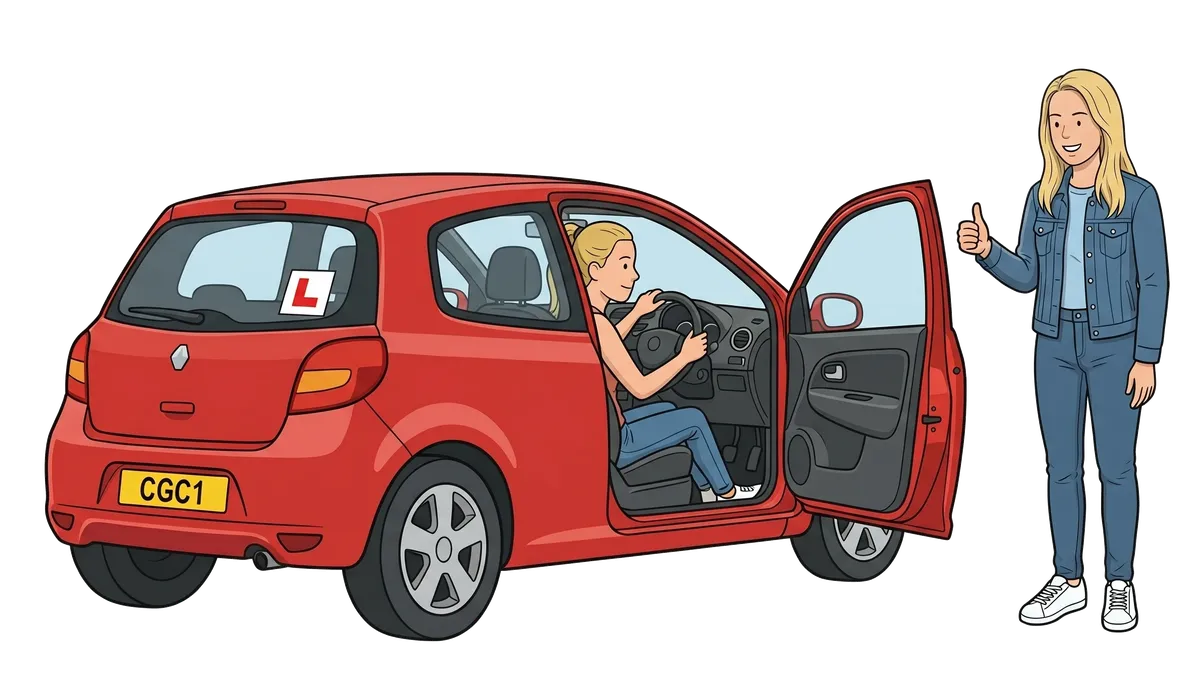
- Buy in hourly, daily, or weekly blocks to match your real plan, with cover for supervised practice only - not solo driving or commuting.
- Quote, buy, and get your certificate typically emailed to your phone in minutes.
How To Compare Quotes
Practice cover hangs on the supervisor and the declared use type. Grab your provisional licence and the reg, then get started above.
Share Your Details
Add your provisional licence number, date of birth, and a short driving history so Go Shorty's UK insurers can rate your practice quote accurately.
Add The Practice Car
Enter the registration, make, model, and overnight postcode of the car you'll be practising in. Most policies cap vehicle value at around £50,000.
Compare Cover Levels
Review Go Shorty's comprehensive, third party fire and theft, and third party only options. Practice policies are typically issued comprehensive by default.
Weigh Up The Block
Pick the block that fits your real plan. An hour suits a single run with a parent, while a weekly block often works better when you're stacking sessions across a fortnight.
Set Your Start Time
Choose when cover begins, pay direct with Go Shorty, and save your certificate to your phone before you set off on the first practice run.
Cover Levels Explained
Pick third party only and a single parked-car nudge could leave you paying for the bodywork. Here's how the tiers compare.
| Feature | Comprehensive | Third Party, Fire & Theft | Third Party Only |
|---|---|---|---|
| Damage to the Car You're Practising In | Yes | No | No |
| Third-Party Liability | Yes | Yes | Yes |
| Fire and Theft | Yes | Yes | No |
| Windscreen Cover | Optional | No | No |
| Personal Injury Benefit | Yes | No | No |
| Roadside Recovery | Optional | Optional | No |
| Replacement Vehicle | Optional | No | No |
Please note that policy features, benefits, terms and conditions vary among Go Shorty's specialist short-term insurers, so always check the policy wording before your first practice run.
Cover Tip: Practice cover applies during supervised practice only. Drive solo to grab a takeaway or pop to a friend's house and the cover typically does not respond, plus you could pick up to six penalty points on your provisional licence. Keep a qualifying supervisor in the front passenger seat for every minute the policy is live.
What Affects The Cost?
Underdeclare your annual mileage and a claim could be reduced for misrepresentation. Practice cover starts from around £19 an hour (as at May 2026).
| Key Factor | Impact on your price |
|---|---|
| Driver Age | Learners aged 17 typically attract a higher loading (an uplift to reflect perceived risk) than learners in their early 20s. Go Shorty's UK insurers price age tightly because crash data shifts sharply across the provisional-licence years. |
| Block Length | A one-hour block tends to carry the lowest absolute price but the highest per-hour cost. Stretching to a weekly block often works out cheaper per hour when you plan multiple sessions across a fortnight. |
| Vehicle Group and Value | Lower insurance groups and lower market values usually attract a lower premium. Go Shorty's learner practice cover typically caps vehicle value at around £50,000, so a parent's family hatchback normally qualifies without trouble. |
| Overnight Postcode | Where the car sits overnight matters more than where you practise. Urban postcodes with higher theft rates typically cost more than rural ones, even when the actual practice routes are the same. |
| Supervisor Profile | A supervisor aged 25 or over who's held a full UK licence for at least three years usually meets Go Shorty's rule. Longer licence-held years could ease the price further. |
| Use Type Declared | Practice cover is rated for supervised practice between lessons, not test-day runs or solo driving. Quote the use type accurately, because a mismatched declaration could affect a claim later. |
Price Insight: The quotes you get will depend on your own details. Your age, the overnight postcode of the car, its insurance group, and the block length all shape the underwriter's view. Two 17-year-olds practising in the same model can land different prices because postcode risk and car-group data rate the car, not just the driver.

Ways To Lower Your Premium
Renew on autopilot for a full week when you only plan to drive twice and you pay for idle hours. Here are practical levers.
Plan Practice In Blocks
Most learners need around 22 hours of supervised private practice to reach test standard. Map two or three sessions across a fortnight and a weekly block often beats single hourly buys on the per-hour rate.
Match The Supervisor To The Rule
Go Shorty's UK insurers typically favour a supervisor aged 25-plus who's held a full UK licence for three years or more. Longer licence-held years on the supervisor could ease the quote.
Pick Lower-Group Family Cars
A group 1 to 8 hatchback typically prices lower than a higher-group estate or SUV. Most learner practice policies cap vehicle value at around £50,000, so the family runaround usually fits.
Park Off-Street Where You Can
A driveway overnight beats kerbside on the underwriter's risk model. Quote the postcode where the car actually sleeps, not where you'll be practising on the day.
Be Accurate On Use Type
Practice cover is for supervised practice, not for test day or solo errands. Buy a separate test-day policy for the test itself, and never use a practice block to nip out alone.
Buy A Day Or Two Ahead
Same-day cover can carry a small loading. Booking a session a day or two before you actually drive could give a more competitive quote and gives you time to check the certificate.
Saving Tip: Plan in blocks, not single hours. Most learners need around 22 hours of private practice to feel test-ready, so a weekly learner block typically beats four separate hourly buys on per-hour cost. Raising your voluntary excess (the amount you pay yourself on a claim) can lower the premium - keep it to a figure you could comfortably cover.
What Our Expert Says
You're somewhere in the middle of learning to drive and you want more wheel time than the instructor slot gives you. That's the standard practice-cover scenario, and it's a sensible move.
Two common patterns. You've done 20 hours with the instructor and want to top up between paid lessons in mum or dad's car. Or you're between formal lessons for a fortnight, the weekend looks dry, and you fancy a quiet country-road session with a parent who'll supervise. A standalone learner policy keeps that practice off their annual cover, so a kerb scuff during reverse parking does not erase years of their No Claims Discount (NCD).
Plan the next stage early. Cover stops the moment you pass your test, so line up young driver car insurance for after you pass and check the rules on supervisors and provisional licences on the GOV.UK learning to drive pages.
Insurance Expert & Co-founder of Clean Green Cars

Common Questions
How Many Hours Should I Practise Before My Test?
Around 45 hours of professional lessons plus roughly 22 hours of supervised private practice is the figure widely cited by driving schools to reach test standard. It is a guide, not a legal minimum. Some learners pass with fewer hours, and others need more, so an honest chat with your instructor about where you sit is the best way to plan the next block of practice.
Can I Use Practice Cover To Drive On My Own?
No. Learner practice cover applies only while a qualifying supervisor sits in the front passenger seat. Driving solo on a provisional licence is illegal under UK law and could add up to six penalty points to your licence, plus a fine. The cover typically does not respond if you drive solo, so a knock could leave you paying out of pocket.
Can I Use Practice Cover Between Driving Lessons With My Instructor?
Yes, that is exactly what it is designed for. Your instructor's dual-control car is covered by their own policy, but your provisional licence is not. Short-term practice cover from Go Shorty lets you top up the hours behind the wheel with a parent or another qualifying supervisor (aged 25-plus with three years on a full UK licence) in the same week, so the skills you learned on Wednesday's lesson are fresher by Saturday.
What's The Difference Between Practice Cover And An Annual Policy?
An annual policy runs for twelve months and rolls into a full-licence product once you pass. Go Shorty's practice cover runs in hourly, daily, or weekly blocks (from around £19 an hour as at May 2026) for supervised practice on a provisional licence, then ends. If you only practise a few hours a week in a parent's car, paying for twelve months of cover rarely adds up.
Will A Claim On My Practice Cover Affect The Car Owner's No Claims Discount?
In most cases, no. Practice cover from Go Shorty's UK insurers is a standalone policy, so a claim on the practice policy is designed not to feed into the owner's annual cover or their No Claims Discount (NCD). That separation is the main reason families reach for short-term practice cover rather than adding a provisional driver to the existing policy.
Who Can Supervise Me During Practice?
A supervisor must be aged 21 or older and have held a full UK driving licence in the same category for at least three years. Go Shorty's learner policies typically tighten this to 25-plus, in line with most UK underwriters. The supervisor must stay within the drink-drive limit and be in a position to take control of the car if needed.
Can I Use Practice Cover On My Driving Test Day?
Practice cover is rated for supervised practice, not for the test itself. A separate driving test insurance policy is the appropriate product for the test slot, because Go Shorty's test-day learner cover typically includes around three hours of post-pass grace to drive home. Quoting an incorrect use type on test day could affect a claim, so match the policy to the journey.
What Happens After I Submit My Details For Practice Cover?
Clean Green Cars introduces you to Go Shorty (FRN 751221) for short-term learner practice cover. You compare quotes from their UK insurers, confirm the practice car (valued under around £50,000), the supervisor's eligibility, and the start time, then buy direct. Your certificate usually lands by email within minutes and the policy goes live from the time you set, so you can be on the road for the next session that same hour.

Search & Compare Quotes From UK Learner Driver Practice Insurance Providers

Useful Resources
- GOV.UK - Learning To Drive - The official rules on lessons, supervisors, and what provisional licence holders can do on UK roads.
- GOV.UK - Provisional Driving Licence - How to apply for the licence you need before any practice cover can be issued.
- DVSA - Book Your Driving Test - The official booking service for the practical car driving test, including fees and rules.
- askMID - Motor Insurance Database - Check the car you're practising in is recorded as insured on the official MID register before each session.
- FCA Financial Services Register - Look up Go Shorty (FRN 751221) to confirm authorisation before you buy.