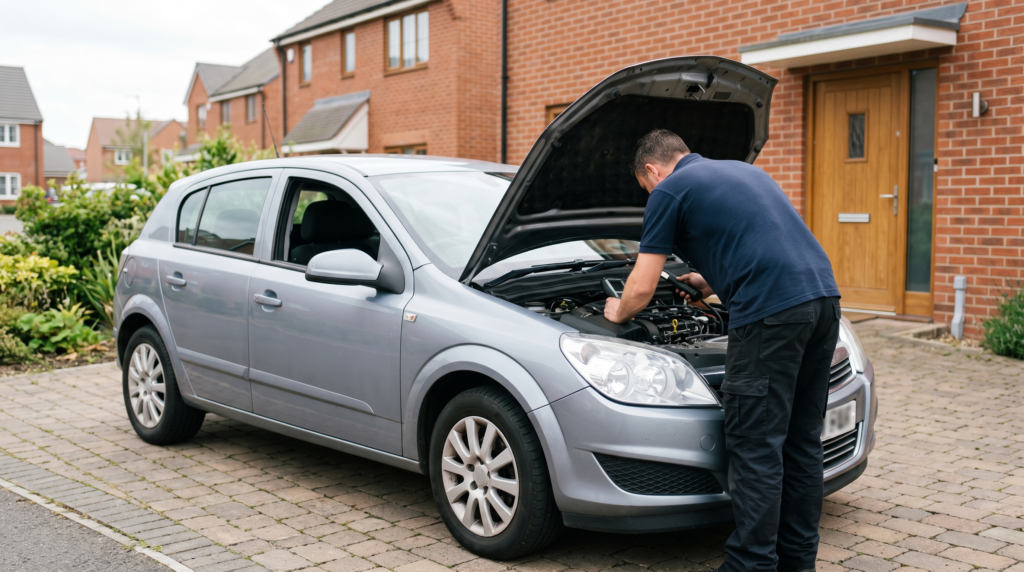
Where Home Start Sits In Breakdown Cover
Ordinary roadside assistance often begins only after the vehicle is a stated distance from home. Home start is designed for faults at home or within that near-home zone.
The name is not a universal promise. Each provider defines the radius, eligible vehicles, attendance rules and outcomes in its own wording.
At Home, Near Home And Away From Home
The location of the breakdown can determine which benefit responds. A driveway fault may use home start, a fault just outside the radius may use roadside assistance and a distant breakdown may involve roadside recovery.
Measure the policy definition from the address it specifies, not from a guessed neighbourhood boundary.
Compare Radius, Response And Recovery Together
A generous radius is only one part of useful cover. Check whether attendance is available at any time, where the vehicle can be taken if it cannot be fixed and whether onward travel is included.
A policy that attends at home but offers limited recovery may suit one driver and leave another with a difficult garage journey.
| Breakdown Location | Likely Benefit | Wording To Check |
|---|---|---|
| At the registered home | Home start may respond | Check waiting periods and parts |
| Within the near-home radius | Provider definition controls | Confirm how distance is measured |
| Outside the radius | Roadside assistance may respond | Check recovery destination |
| Known fault before purchase | Often excluded or restricted | Arrange repair rather than assuming cover |
Faults That Need A Closer Wording Check
Flat batteries, punctures, lost keys, running out of fuel and recurring faults can be treated differently. A call-out may be included while replacement parts are charged separately.
Some policies expect a serviceable spare wheel or repair kit. Pre-existing faults and poor maintenance may be excluded, so disclose what has already happened.
Vehicle Cover Or Personal Cover
Vehicle-based cover follows the named vehicle when an eligible person drives it. Personal cover may follow the named member in eligible vehicles.
Check age, weight and vehicle-type limits, especially for vans, motorbikes, older cars or vehicles used for work. Household members are not automatically included unless the membership says so.
Waiting Periods And Call-Out Limits
New cover may not respond immediately to a fault that already exists. Check any initial waiting period, annual call-out allowance and rules for repeat attendance.
Also look for excesses or additional charges. Buying cover beside an already immobile car would not normally turn that known problem into an insured event.
Build A Like-For-Like Home Start Comparison
Write down the real parking location, likely drivers and recovery needs before comparing. Then match the radius, repair attempt, recovery destination, call-out limit and exclusions.
Keep the policy wording after purchase. The comparison should reflect how the vehicle is used rather than the most familiar product name.
Is Home Start Worth Adding?
It may be useful if your car is often parked at home and you could not easily move it to a garage. It may matter less if another service already covers near-home faults.
Check the near-home radius and recovery destination before paying for the add-on.
Compare those limits with the rest of your breakdown cover, not as a stand-alone product name.
Claim Detail Priority Chart
This chart shows the details most useful to prepare before making a car insurance claim.
Prepare facts and evidence first. Let the insurer decide how the policy applies.
FAQs
How close to home does home start apply?
The distance varies by provider. Read the policy definition rather than assuming a standard radius.
Does home start include a new battery?
Attendance may be covered, but parts or a replacement battery may cost extra.
Can home start cover a flat tyre?
It may, subject to the policy and whether suitable repair equipment or a spare is available.
Is home start the same as roadside assistance?
No. Home start addresses faults at or near home, while roadside assistance usually applies farther away.
Is the driver or vehicle covered?
Either model may be available. Check whether the policy is personal or vehicle based.