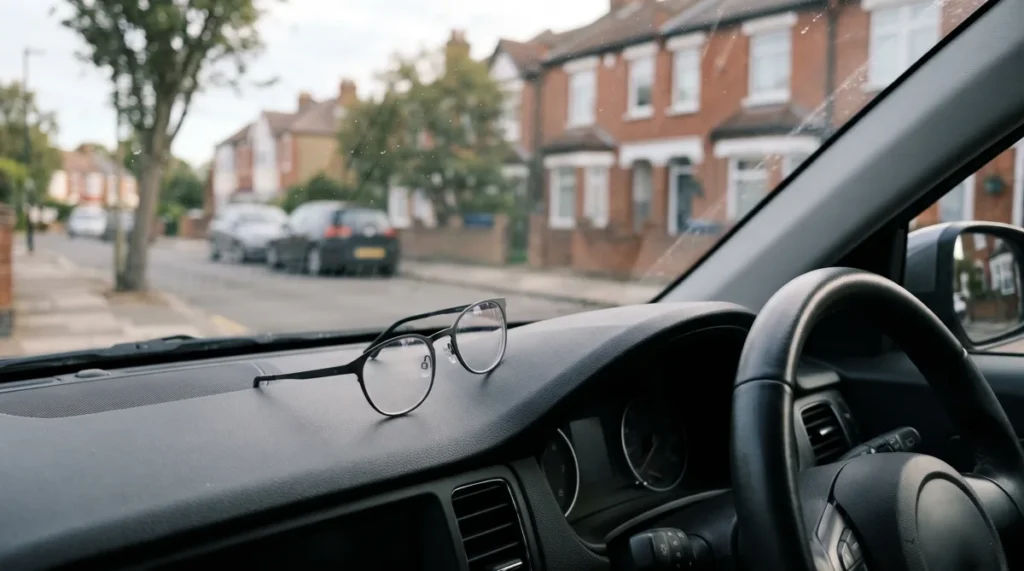
What's Changing
Police are reminding drivers of the eyesight rules. Warwickshire Police says it's supporting a national campaign that reminds motorists to check their eyesight and make sure they meet the legal vision standards for driving. The campaign is called Operation Insight.
The legal standard has three parts. You must be able to read a number plate from 20 metres away, about the length of five parked cars. You also need a visual acuity of at least decimal 0.5 (6/12), measured on the Snellen scale. And you need an adequate field of vision, which your optician can tell you about and test.
You can wear glasses or contact lenses for the number plate check if you use them for driving. If you need them to meet the standard, you must wear them every time you drive.
When It Starts And Who It Affects
Operation Insight runs from 26 October to 8 November 2026. It aims to raise awareness of the importance of good vision for road safety.
Driving when your eyesight can't meet the standard, with or without glasses, is an offence under the Road Traffic Act 1988. If police suspect your eyesight isn't good enough, they can ask you to take the test at the roadside, using the same glasses or lenses you were driving with. Refusing the test is an offence too.
Drivers who fail to meet the standard could face a fine of up to £1,000, three penalty points and a possible ban. Under Cassie's Law, police may revoke your licence straight away if you fail the roadside number plate test and the officer considers you unsafe to keep driving. If it ends in a conviction, here's more on car insurance with an MS70 eyesight conviction.
In an earlier police campaign, 1.7% of drivers stopped failed the test, according to figures in the Department for Transport's consultation on mandatory eyesight testing for older drivers, which ran from 7 January to 11 May 2026. That consultation has closed. It's a proposal, not law.
What It Means For Your Car Insurance
The campaign is about road safety. We couldn't find an official source that says how failing a roadside eyesight test affects your cover or your price, so check with your insurer if it applies to you. If you get points or a conviction, check with your insurer what you need to tell them.
Some eyesight conditions also need reporting to the DVLA. You must tell DVLA about an eyesight problem that affects both eyes, or your remaining eye if you only have one. Being short or long sighted, or colour blind, doesn't count.
If you're an older driver, here's more on car insurance for older drivers.
What To Do Now
Check yourself against the legal standard before your next drive. Police advise a sight test at least every two years, or sooner if you notice any changes in your vision.
Does Your Eyesight Meet The Driving Standard?
From GOV.UK's driving eyesight rules and police advice, checked 29 October 2026.
The Legal Standard
- Read a number plate from 20 metres (about 5 parked cars)
- Visual acuity of at least decimal 0.5 (6/12) on the Snellen scale
- An adequate field of vision
Every Time You Drive
- Wear your glasses or contact lenses if you need them to meet the standard
Keep On Top Of It
- Have a sight test at least every two years, or sooner if your vision changes
- Tell DVLA about an eyesight problem affecting both eyes (not short or long sight, or colour blindness)
You can wear glasses or contact lenses for the number plate check if you use them for driving.
If you're not sure whether something about your eyesight needs telling to your insurer, ask them.
You can compare car insurance quotes when you're ready.
FAQs
Can Police Take Your Licence Away For Bad Eyesight?
Yes, they can. Under Cassie's Law, police may revoke your licence straight away if you fail a roadside number plate test and the officer considers you unsafe to keep driving. It isn't automatic for everyone who fails.
Can I Wear Glasses For The Number Plate Test?
Yes. You can wear glasses or contact lenses if you use them for driving. If you need them to meet the standard, you must wear them every time you drive.
Does Failing A Roadside Eyesight Test Affect My Car Insurance?
It depends on your insurer. We couldn't find an official source that says how failing the test affects your cover or price, so ask them. If you get points or a conviction, check with your insurer what you need to tell them.