




























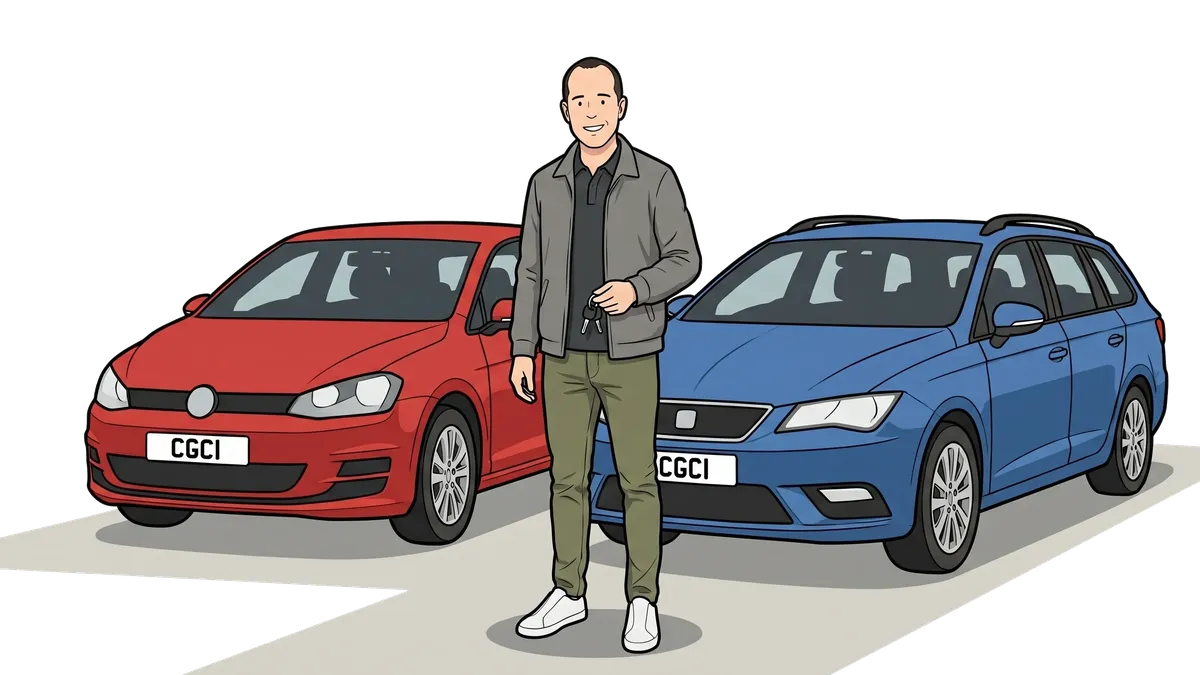
Why Compare Family Fleet Insurance?
Every Car, One Renewal
Three cars on three renewal dates means three chances to forget one. Clean Green Cars introduces you to specialist brokers who put the whole household on one date.
No-Claims Stays Protected
A family policy should not flatten the no-claims each driver built up. Clean Green Cars introduces you to specialist brokers who track no-claims per car, not one shared pot.
Young Drivers Cost Less
Parents, a partner and an adult child home from university rarely fit one standard quote. Clean Green Cars introduces you to specialist brokers who price mixed-age households properly.
Family Fleet Insurance At A Glance
- One policy covers every car at the same household address on a single renewal date.
- Specialist brokers can keep each car's own no-claims discount rather than pooling it.
- Family members can be added as named drivers across the cars they actually use.
- A car can usually be added mid-term when a household grows or replaces a vehicle.
- Get family fleet quotes from specialist brokers above.

How Fleet Cover Works
One Address
Cover assumes every car is kept at the same home address, not spread across separate households.
Individual No-Claims
Each car can usually keep the no-claims it earned, unlike a single shared policy.
Named Family Drivers
Parents, partners and adult children can be listed on the cars they drive.
Multi-Car Or Fleet
A two-car household may suit a multi-car deal, while three or more often fits the wider fleet insurance range. A single car may prefer standard car insurance.
Setting Up Your Fleet Policy
Car And Address List - List every car kept at the household with registration, value and main use. A clear list helps specialist brokers match the family to the right markets.
Driver Details - Provide each family member's age, licence and any convictions. Age terms vary by scheme, and younger family members are usually added as named drivers case by case.
No-Claims Proof - Gather the no-claims history for each car. On a family fleet this can often still count individually rather than being pooled. A growing two-car household may start with small fleet insurance, and a member with a work car can check company fleet insurance.
Cover Levels Explained
Pick the lowest cover level and one written-off family car could leave a working parent without transport overnight. Here's what each level could include.
| Feature | Comprehensive | Third Party, Fire & Theft | Third Party Only |
|---|---|---|---|
| Accidental damage to family cars | Included | Not included | Not included |
| Fire and theft of insured cars | Included | Included | Not included |
| Injury or damage to third parties | Included | Included | Included |
| Per-car cover level choice | Optional | Optional | Optional |
| Individual no-claims kept per car | Often included | Often included | Sometimes |
| Windscreen and glass cover | Often included | Sometimes | Not included |
| Replacement vehicle while off road | Optional | Optional | Not included |
| Breakdown and recovery | Add-on | Add-on | Add-on |
Please note that policy features, benefits, terms and conditions vary among insurance providers, so always check the policy wording.
Cover Tip: On a family fleet you can usually set the cover level per car. Comprehensive on the daily-commute car the household cannot lose, third party fire and theft on a low-value second car, often prices better than one level across all of them. Ask the broker to split the schedule by how each car is actually used.
What May Not Be Covered
A single exclusion can leave a household down to one car for school and work. Here's what a family fleet policy may not include.
Standard Exclusions
- Undeclared drivers - A claim may be declined where the family member driving was not listed on that car.
- Different addresses - Cars not kept at the stated household address may not be covered on a family fleet policy.
- Unroadworthy vehicles - A claim is likely to be declined where a family car was not kept roadworthy.
Important Limitations
- Business use not declared - Using a family car for work deliveries when only social and commuting use was declared may not be covered.
- Lapsed database entry - Failing to keep the Motor Insurance Database current can cause problems at claim time.
Extras Worth Considering
Skip the wrong extra and one off-road family car could strand the morning routine. Here's what's worth considering.
May help keep a household mobile by providing a like-for-like car while one is off the road.
May be needed if a roadside failure could strand a parent on the school run or commute.
May help a driver keep their earned no-claims on their car after a single claim.
May help cover the shortfall between a payout and replacing a written-off family car.
What Affects The Cost?
Underdeclare who really drives each car and a future household claim could be cut for misrepresentation. Here's what shapes the price.
| Key Factor | Impact on Your Price |
|---|---|
| Number and value of cars | More cars and higher values typically raise the household premium, though one policy can simplify it. |
| Youngest driver in the household | A new or teenage driver usually moves a family fleet price more than any other single factor. |
| Each car's claims history | A recent at-fault claim on one car can shape the terms across the schedule. |
| No-claims kept per car | Preserving each car's own no-claims often eases the price more than pooling it. |
| How each car is used | A daily commute car tends to cost more than a low-mileage weekend car. |
| Named-driver mapping | Listing each driver only on the cars they use usually costs less than everyone on everything. |
The quotes you get will depend on your own details, the cars at the household and each car's claims record. For context, the ABI average UK motor premium was around £560 (Q1 2026), though a family fleet is priced on every named driver and each car's history, not one figure.
Price Insight: On a family fleet the youngest or newest driver usually sets the tone for the whole quote. Keeping a new teenage driver on the oldest, lowest-value car rather than a parent's newer one often does more for the renewal than any other single change.

Ways To Cut Your Premium
Renew on autopilot and a three-car household can quietly pay more than a fresh family fleet comparison. Here's how to cut that back.
Map Drivers To Cars
Listing each family member only on the cars they actually use usually holds the household premium down.
Place New Drivers Carefully
Keeping a teenage driver on the oldest, lowest-value car rather than a newer one can ease the whole quote.
Keep No-Claims Per Car
Preserving each car's own no-claims record often beats pooling it on a single policy.
Consolidate Renewals
Putting every household car on one date avoids duplicate policies and gives brokers a clearer risk.
Keep Details Tidy
Accurate driver and mileage data prevents loadings that come from cautious assumptions.
Saving Tip: Match each named driver to the car they genuinely use most rather than listing everyone on everything. A family fleet that lists a new driver only on the car they actually drive, not all three, usually holds the premium down across the whole household.
How To Compare Quotes
A family fleet needs every car and household driver listed before an accurate premium can be calculated. Get started above when it's ready.
List The Cars
Note every car kept at the household with registration, value and main use.
List The Drivers
Add each family member with age, licence and which cars they actually drive.
Gather No-Claims Proof
Pull each car's no-claims history so it can count individually on the family fleet.
Compare Specialist Brokers
Use the form above so Clean Green Cars can introduce you to specialist brokers for family fleets.
Check The Cover
Confirm named drivers, per-car cover levels and the excess before you accept terms.
What Our Expert Says
Family fleets trip up in a place that has nothing to do with the cars. It's who gets listed on what.
A common pattern is a household putting every family member on every car because it feels safer, then watching a new teenage driver lift the price on all three vehicles instead of one. The opposite trap also bites: leaving a regular driver off to compare prices, which can mean a declined claim if they were driving when it mattered. The honest version, every driver on the cars they actually use, almost always prices better than either extreme. Keeping the Motor Insurance Database current is a legal duty under Continuous Insurance Enforcement, and households swapping cars between members forget it more than businesses do.
List who really drives what. The schedule rewards honesty here.
Insurance Expert & Co-founder of Clean Green Cars

Common Questions
What Is The Difference Between Family Fleet And Multi-Car?
A family fleet puts every car at one household on one policy and one renewal date, while a multi-car deal keeps separate policies merely discounted together. Both must still sit on the Motor Insurance Database, but a family fleet usually preserves each car's own no-claims rather than pooling it.
Can A Family Get Fleet Insurance?
Yes. A household with three or more cars at one address can take a family fleet policy through specialist brokers, where mainstream insurers often steer families to a multi-car discount and the ABI average motor premium sat around £560 (Q1 2026).
Can I Keep My No-Claims On A Family Fleet?
Often yes. Specialist brokers can track each car's own no-claims individually on a family fleet, rather than pooling it into one shared household bonus, against an ABI average motor premium of around £560 (Q1 2026).
Can My Adult Child At University Be Covered?
Usually as a named driver on the family fleet. An adult child home from university can be added to the car they use, and they must appear on the Motor Insurance Database under Continuous Insurance Enforcement like every household driver.
Do All The Cars Have To Be At One Address?
Generally yes. A family fleet assumes every car is kept at the same household address, and each must sit on the Motor Insurance Database under Continuous Insurance Enforcement, so a car based elsewhere may need separate cover.
Is A Family Fleet Cheaper Than Separate Car Policies?
Often. One household policy can beat three separate car policies on admin and pricing, against an ABI average motor premium of around £560 (Q1 2026), though each driver still sets the price.
Can I Add A Car MID-Term?
Usually yes. Replace or add a household car and most family fleet policies absorb it without a new contract, but the Motor Insurance Database must be updated under Continuous Insurance Enforcement.
What Happens After I Submit My Details?
Clean Green Cars introduces you to specialist brokers who cover family fleets of cars at one household address. They contact you with quotes to compare, with no obligation to buy.

Search & Compare Quotes From UK Family Fleet Insurance Providers

Useful Resources
- GOV.UK Vehicle Insurance - The official rules for driving insured on UK roads.
- ABI Motor Insurance Guidance - Consumer guidance on motor insurance cover, claims and choosing a policy.
- askMID - Check if a vehicle appears on the Motor Insurance Database.
- Motor Insurers' Bureau - Information about the Motor Insurance Database and uninsured driving rules.