



























Why Compare Hazardous Goods Fleet Insurance?
Cover The Spill Risk
A spill can cost far more to clean up than the vehicle is worth. Clean Green Cars introduces you to brokers who place cover built for dangerous goods work.
Keep ADR Drivers Working
ADR-certified drivers move between tankers and box vehicles across shifts. Clean Green Cars introduces you to brokers who set any-driver cover for ADR fleets.
Pay Less Across The Fleet
Separate policies on each hazardous-goods vehicle mean scattered renewals. Clean Green Cars introduces you to brokers who could lower the total cost on one policy.
Hazardous Goods Fleet Insurance At A Glance
- Covers two or more vehicles carrying classified dangerous goods under one ADR-aware fleet policy
- Specialist brokers can reach underwriters who accept the hazard classes you carry, so cover matches the actual load rather than a generic haulage rating
- Any-driver options could let ADR-certified drivers cover routes without adding each name to the policy first
- Cover can be arranged alongside separate pollution and goods-in-transit protection, closing the gap motor cover leaves on a spill
- A fleet no-claims record builds across the vehicles and could improve renewal terms as the operation grows
- Get hazardous goods fleet quotes from specialist brokers above
How Fleet Cover Works
ADR Use Class
Carrying classified dangerous goods needs a use class that reflects ADR loads and route restrictions.
Named-Driver Basis
ADR-certified drivers are often written on a named list rather than open any-driver terms.
Pollution Exposure
Spill and contamination clean-up is a distinct exposure that a standard motor fleet may not address.
Minimum Vehicle Count
Fleet markets usually open from around two to five vehicles, so smaller ADR box-van operators can qualify.
Setting Up Your Fleet Policy
Vehicle Schedule - List every tanker and box vehicle with registration, make, ADR equipment status and the hazchem classes each is approved to carry.
Driver Details - Provide each driver's age, licence type, ADR certification and claims history, since dangerous-goods markets weigh driver competence heavily.
Proof Of Trading - Have your operator licensing, DGSA arrangements and three to five years of claims history ready, as specialist brokers use these to place an ADR fleet.
What Does ADR Fleet Insurance Cover?
Pick third party only and a written-off tanker could halt a contract with no payout. Here's what each cover level could include.
| Feature | Comprehensive | Third Party, Fire & Theft | Third Party Only |
|---|---|---|---|
| Damage to your own dangerous goods vehicles | Yes | No | No |
| Fire and theft protection | Yes | Yes | No |
| Damage to other people's vehicles or property | Yes | Yes | Yes |
| Injury to other road users | Yes | Yes | Yes |
| Carriage of declared ADR hazard classes | Often accepted when declared | Sometimes | Sometimes |
| Any-driver cover for ADR-certified drivers | Often available | Sometimes | Rarely |
| Pollution and clean-up costs | Usually excluded, needs separate cover | Excluded | Excluded |
| The dangerous goods load itself | Usually excluded, needs goods-in-transit cover | Excluded | Excluded |
| Windscreen and glass repair | Often included | Rarely | No |
| Protected fleet no-claims discount | Sometimes available | Rarely | No |
Please note that policy features, benefits, terms and conditions vary among insurance providers, so always check the policy wording.
Cover Tip: Ask the broker to confirm the hazard classes you carry are declared on the schedule. A fleet policy rated for one ADR class may not respond to a claim involving a load it was not told about.
ADR Tanker And Fuel Distributors
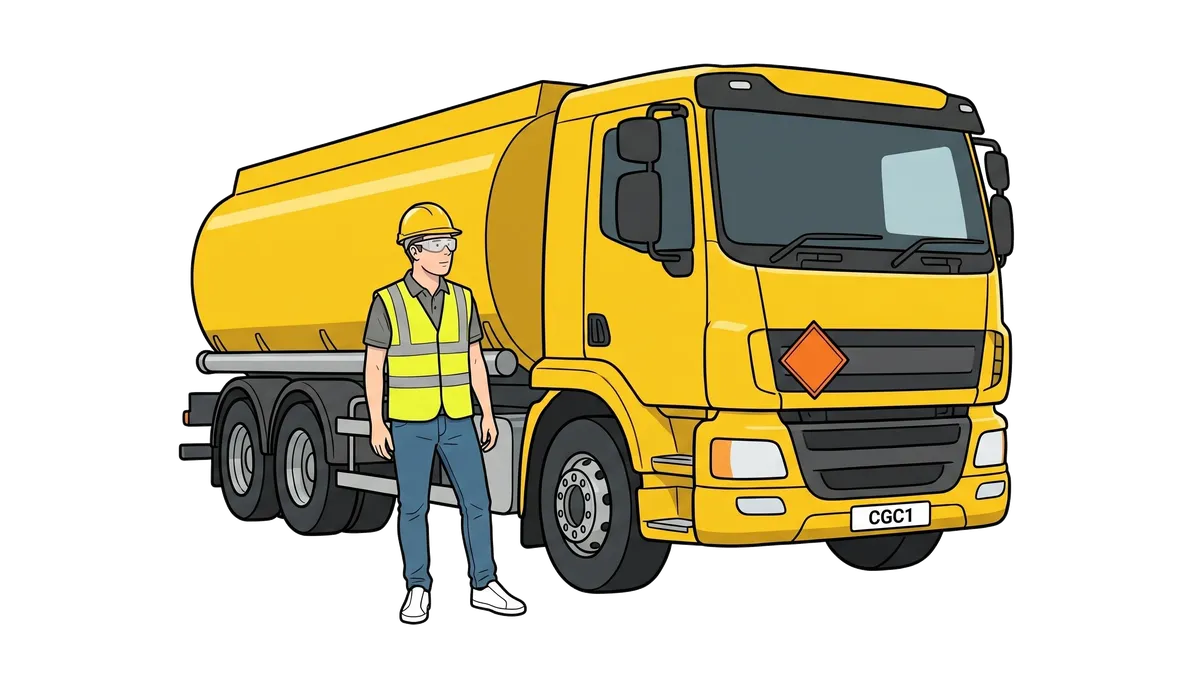
Operators running two or more tankers carrying fuels or chemicals can cover the fleet under one ADR-aware policy, with pollution and goods cover arranged alongside the motor protection.
Chemical And Industrial Carriers
Carriers moving classified chemicals and industrial goods need cover matched to their hazard classes, with the spill exposure closed by separate environmental cover.
General Haulage With ADR Work
Hauliers running some ADR loads alongside standard freight may need a blended arrangement. Haulage fleet insurance covers the non-hazardous side of a mixed operation.
Heavy-Vehicle Dangerous Goods Fleets
Operators running HGV tankers and rigids share the heavy-vehicle rating context. Lorry fleet insurance covers the heavy-vehicle side where relevant.
What May Not Be Covered
A single exclusion could mean a spill clean-up claim is declined after a routine delivery. Here's what these policies usually may not cover.
Standard Exclusions
- Pollution and Clean-Up Costs - The cost of cleaning up a spill, decontaminating a road or watercourse and any environmental damage is usually outside the motor policy. Separate environmental impairment cover is needed for that exposure.
- The Dangerous Goods Load Itself - The classified goods carried are not covered by motor insurance. A separate goods-in-transit arrangement is needed to protect the value of the load.
- Carriage of Undeclared Hazard Classes - If a vehicle carries a hazard class not declared on the policy, your insurer may decline a claim arising from that load. The schedule must reflect what is actually carried.
- Drivers Without Valid ADR Certificates - A driver carrying dangerous goods above threshold quantities without a valid ADR vocational certificate could give your insurer grounds to decline a claim. Certificate checks are important.
- Vehicles Not Declared on the Policy - Adding a new tanker or box vehicle without telling your broker could mean that vehicle has no cover at all. Always update the fleet schedule first.
Important Limitations
- Wear, Tear and Mechanical Breakdown - Routine mechanical failure and general wear are not insured events. Breakdown assistance is a separate optional extra rather than part of the core fleet policy.
- Use Outside the Territorial Limits - Cover is typically limited to Great Britain unless foreign-use cover is arranged. International ADR carriage may need its own extension.
- Policy Conditions Not Met - Claims where a policy condition has not been met, such as a required tanker inspection not carried out, may be reduced or declined. Read the conditions on the schedule carefully.
Optional Extras Worth Adding
Skip the pollution and goods cover and a spill clean-up bill could land entirely outside your motor policy. These optional extras could be worth considering.
May help cover spill clean-up, decontamination and pollution liability, which the motor policy excludes. Often the most important extra for a dangerous goods fleet, so confirm the limit with your broker.
May help cover the value of the classified load carried, which motor cover does not insure. Worth adding for any operator carrying high-value or high-volume dangerous goods.
May help cover roadside recovery for any vehicle in the fleet, which matters when an ADR vehicle stranded with a live load cannot simply wait. See breakdown assistance options.
May help cover legal costs if the operation needs to dispute fault after an incident or recover uninsured losses from another driver.
May help provide a benefit if an ADR driver is injured while carrying dangerous goods on fleet business.
May help monitor route compliance and driving across the fleet and provide data that supports a lower premium at renewal. Some underwriters reward fitted approved devices.
What Affects The Price?
Underdeclare the hazard classes the fleet carries and a claim could be reduced for misrepresentation. Here are the factors that shape the quote.
| Key Factor | Impact on your price |
|---|---|
| Hazard classes carried | Higher-risk classes such as explosives, gases and flammable liquids generally rate higher than lower-hazard goods, because the consequences of an incident are greater. Declaring the actual classes accurately is essential. |
| Vehicle types and values | Tankers and specialist ADR-equipped vehicles cost more to repair or replace than basic box vans, which is reflected in the premium. A mixed fleet is rated by vehicle. |
| Driver ADR certification and experience | Fleets where every driver holds a current ADR vocational certificate and strong experience often rate more keenly than those relying on minimal compliance. |
| Routes and distances | Long-distance and tunnel-restricted routes can rate higher than short local runs. The roads and regions the fleet covers feed directly into the risk. |
| Claims and incident history | A fleet with recent spills or at-fault claims usually pays more. A clean, documented record could help your broker secure stronger terms. |
| Number of vehicles | More vehicles usually means a larger total premium, though fleet discounts often apply as the fleet grows and a single policy replaces several. |
| Safety and compliance controls | Evidence of a Dangerous Goods Safety Adviser, vehicle test records and driver checks reads as a managed risk and can support keener terms. |
| Overnight parking and depot security | Vehicles and loads kept in a secured depot often rate better than those left exposed, because theft and tampering risk is lower. |
Price Insight: The quote you get will depend on your own fleet details, so an operator who records ADR driver certificates and runs a DGSA review could see steadier renewal terms. Brokers who handle dangerous goods fleets know which controls underwriters reward.

Ways To Cut Your Premium
Renew on autopilot and a dangerous goods fleet premium can drift well above a fresh comparison. Here are practical ways to influence what you pay.
Keep ADR Certificates On File
Documented ADR vocational certificates for every driver show underwriters the fleet is compliant, which can support keener terms at renewal.
Use A Dangerous Goods Safety Adviser
A DGSA review and report demonstrates audited risk management. Some underwriters price a fleet with a documented DGSA more keenly than one without.
Declare Hazard Classes Accurately
Listing the actual classes carried avoids paying for risk you do not run and keeps a claim from being challenged over an undeclared load.
Maintain Vehicle Test Records
Up-to-date tanker and ADR vehicle test records reduce the chance of a claim being declined on a condition and read as a controlled fleet.
Build And Protect Fleet No Claims
A fleet no-claims record builds across the vehicles over time and could meaningfully reduce the renewal premium, with protected options limiting one claim's impact.
Improve Depot Security
Keeping vehicles and loads in a secured depot lowers theft and tampering risk that underwriters often reflect in keener terms.
Saving Tip: Keeping ADR certificates, vehicle test dates and a DGSA report on file and sharing them at renewal can help. Some underwriters price a documented, audited dangerous goods fleet more keenly than one without records.
How To Compare Quotes
Quoting an ADR fleet takes longer than one vehicle, but a specialist broker does the legwork. Get started above.
Share Your Fleet Details
Provide the vehicle list - registrations, types, values and approximate annual mileage per vehicle. Note how many ADR-certified drivers you run. A broker handles the rest of the fleet insurance setup.
Declare The Hazard Classes Carried
Tell the broker which ADR classes the fleet carries - fuels, chemicals, gases - and the typical routes, so the policy is rated for the actual load rather than a generic haulage risk.
Choose Your Cover Level
Select comprehensive, Third Party Fire and Theft (TPFT) or Third Party Only (TPO) based on vehicle values and risk appetite. Comprehensive is standard for most active ADR fleets.
Arrange Pollution And Goods Cover
Ask the broker to set up separate environmental impairment and goods-in-transit cover for the spill and load exposures, then review extras like breakdown and legal cover.
Compare Quotes And Decide
Specialist brokers introduced through Clean Green Cars compare dangerous goods underwriters and present the options. Review cover, excesses and conditions before choosing, not just the headline price.
What Our Expert Says
Hazardous goods fleets are one of the harder risks to place, and the operators who run them are not all the same. A fuel distributor running rigid tankers on local forecourt deliveries, a chemical carrier moving drummed goods on trunk routes, and a gas supplier on tunnel-restricted runs each face a different version of the same problem. Most mainstream fleet insurers will not quote any of them.
The exposure all three underestimate is pollution. A hazardous goods motor policy covers the vehicle and third-party injury, but picture a fuel tanker that jackknifes and splits on a wet A-road: the diesel running into a verge drain, the contractor decontamination, the road closure costs and the lost load all fall outside motor cover. For the chemical carrier it's a drum breach in a yard. For the gas supplier it's a cylinder release. In every case a single clean-up can dwarf the value of the truck. Separate environmental impairment and goods-in-transit cover is what closes that gap, and it's worth arranging before the first incident, not after.
Underwriters also look closely at compliance. ADR certificates, vehicle test records and a Dangerous Goods Safety Adviser review all read as a managed risk. The GOV.UK guidance on driving dangerous goods and special loads sets out the framework that sits alongside the fleet cover.
Insurance Expert & Co-founder of Clean Green Cars

Common Questions
What Insurance Does A Hazardous Goods Fleet Need?
A hazardous goods fleet needs motor cover that accepts the ADR classes carried, plus separate pollution and goods-in-transit cover for the spill and load exposures motor insurance excludes. The right combination depends on the goods.
Does ADR Fleet Insurance Cover Pollution Clean-Up?
No. The cost of cleaning up a fuel or chemical spill sits outside the motor policy. A dangerous goods fleet needs separate environmental impairment cover alongside the vehicle cover to protect that exposure.
Do Drivers Need An ADR Certificate To Be Covered?
Generally, yes. Drivers carrying dangerous goods above threshold quantities must hold a valid ADR vocational certificate. A claim involving an uncertified driver on a qualifying load could be declined.
How Much Does Hazardous Goods Fleet Insurance Cost?
There is no fixed price. A dangerous goods fleet quote depends on the hazard classes carried, vehicle types and values, driver ADR experience and claims history. A specialist broker compares dangerous goods underwriters for competitive terms.
What Is An ADR Certified Vehicle?
An ADR vehicle meets the construction and equipment standards for carrying its dangerous goods class, with the right markings and safety kit. A hazardous goods fleet policy should be rated for the ADR vehicles actually run.
How Many Vehicles Do You Need For A Dangerous Goods Fleet Policy?
Most specialist brokers can arrange dangerous goods fleet cover from two vehicles upward, though some underwriters set a minimum of three. Your broker can confirm the minimum for an ADR operation of your size.
Is The Dangerous Goods Load Covered By Motor Insurance?
No. The classified load itself is not covered by the fleet motor policy. A separate goods-in-transit arrangement is needed to protect the value of the dangerous goods carried.
What Happens After I Submit My Details?
Clean Green Cars introduces you to specialist brokers offering hazardous goods fleet cover for ADR-certified drivers and dangerous goods vehicles. You compare the quotes they return, check the cover and conditions, and choose what suits your operation.

Search & Compare Quotes From UK Hazardous Goods Fleet Insurance Providers

Useful Resources
- GOV.UK Driving Dangerous Goods - Official guidance on moving dangerous goods and special loads.
- GOV.UK Transporting Dangerous Goods - Government guidance and rules for dangerous goods transport.
- HSE Carriage of Dangerous Goods - Health and Safety Executive guidance on ADR carriage requirements.
- GOV.UK Vehicle Insurance - The official rules for driving insured on UK roads.