
Compare DG60 Car Insurance Quotes
- Cover Still In Reach
- Prices May Ease
- Cover To Suit You
- One Form Does It

DG60 Conviction: Points, Ban And Years On Your Licence
You may be able to get car insurance after a DG60 once your ban has ended and you've passed the extended driving test, usually through specialist brokers who search for insurers that consider serious convictions. Fewer insurers may quote, and prices may be much higher. A DG60 stays on your licence for 11 years from conviction.
- Points 3–11 For the code, but the court normally records a ban instead.
- On your licence 11 years From the date of conviction.
- Ban 5 years+ At least 5 years, plus an extended driving test, for offences on or after 28 June 2022.
- Insurers may see it 5 years The first 5 of the 11 years (30 months if you're under 18).
It's dealt with in the Crown Court, and the maximum sentence is life imprisonment for offences on or after 28 June 2022.
What Is A DG60 Motoring Conviction?
DG60 is the endorsement code for causing death by careless driving with a drug level above the limit. It applies when someone dies because of careless or inconsiderate driving, and the driver had one of the specified drugs in their body above its legal limit.
It sits alongside CD50, which covers causing death by careless driving when unfit through drugs. Unlike CD50, a DG60 doesn't need proof that the drug impaired your driving. GOV.UK's guide to drug driving and the law says the maximum penalty for causing death by careless driving under the influence of drugs is life imprisonment.
DG60 Conviction Penalties: Prison, Ban And Extended Test
A DG60 can only be dealt with in the Crown Court. The Sentencing Council's guideline for deaths under the influence gives a maximum of life imprisonment for offences on or after 28 June 2022, or 14 years before that, and an offence range of 26 weeks to 18 years in custody.
The court must also ban you, unless it finds special reasons, and order an extended driving test. For offences on or after 28 June 2022 the minimum ban is 5 years, or 6 years if, in the 10 years before this offence, you were convicted of causing death by careless driving under the influence (any form); before that date it was 2 years, or 3 years for a repeat. If you go to prison, the ban is extended to take account of the time in custody.
When Does A DG60 Become Spent?
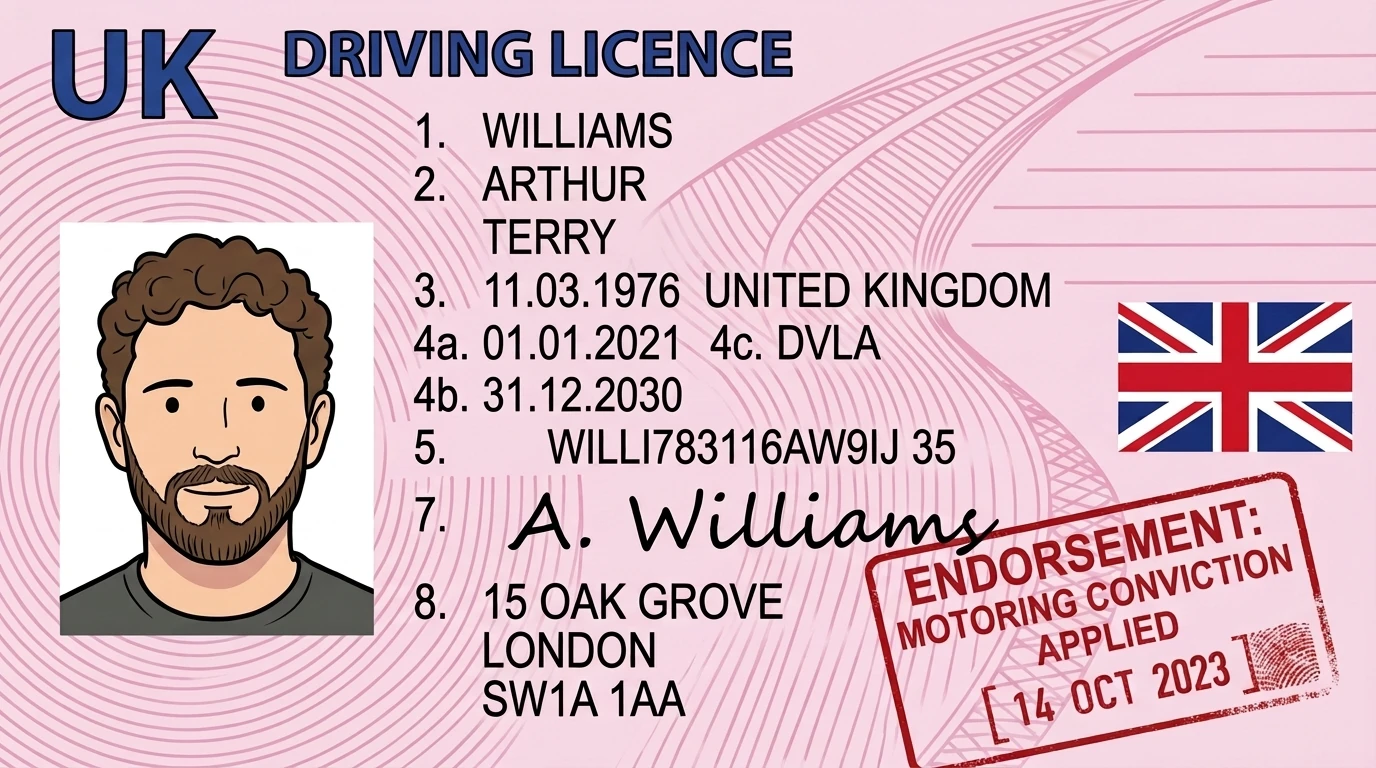
For an adult in England and Wales, the endorsement on its own is spent 5 years from conviction. But a DG60 also brings a long ban and an extended test, and the court can impose a prison sentence too. When there's more than one penalty, the longest rehabilitation period decides when the conviction is spent.
Prison Sentences And The Spent Date
A prison sentence of 1 year or less is spent 12 months after the sentence, including any licence period, ends. A sentence of more than 1 year and up to 4 years is spent 4 years after it ends.
More Than 4 Years In Prison
Causing death by careless driving under the influence of drink or drugs is on the Sentencing Code's list of serious offences. Government guidance says a prison sentence of more than 4 years for one of these offences means the conviction is not treated as spent under the Rehabilitation of Offenders Act 1974. The same applies to a life sentence or an extended sentence for dangerous offenders.
The Extended Driving Test
A ban that lasts until you pass a test isn't spent until you've passed it. GOV.UK says the extended practical test lasts at least 60 minutes, and you'll need a new provisional licence and a theory test too.
Sources: GOV.UK rehabilitation periods, Rehabilitation of Offenders Act guidance and the Sentencing Code's serious offences list, checked 14 October 2026.
This information is based on our understanding of current law and insurance practice at the time of writing. Rules, penalties and rehabilitation periods can change and may apply differently depending on individual circumstances.
Other Conviction Codes Linked To Causing Death By Careless Driving
| Code | Offence | Points | On licence |
|---|---|---|---|
| CD50 | Causing death by careless driving when unfit through drugs | 3–11 | 11 years |
| CD80 | Causing death by careless, or inconsiderate, driving | 3–11 | 4 years |
| DG10 | Driving or attempting to drive with drug level above the specified limit | 3–11 | 11 years |
| DG40 | In charge of a vehicle while drug level above specified limit | 10 | 4 years |
Can You Get Car Insurance After A DG60 Conviction?
Yes, once you can legally drive again. Specialist brokers can look for insurers that consider a DG60, though not every insurer will quote. Each insurer sets its own rules on which convictions it asks about, and our guide to drug driving convictions and cover covers the general rules.
Questions every drug driver asks, such as how prescribed medicines are treated and getting back on the road, are covered under drug driving insurance.
Getting Back On The Road After A DG60 Ban
You can't drive at all during the ban. DVLA sends a reminder 56 days before it ends, so you can apply for a new provisional licence. Once the ban is over and you have that licence, you can drive as a learner, insured and under learner conditions, to prepare for the extended test. GOV.UK says you can legally drive as soon as you've passed the practical test.
Do You Have To Tell Your Insurer About A DG60?
Yes, whenever the insurer's questions cover it, until it's spent. Give the code, conviction date, ban length, test date and any prison sentence exactly as your paperwork shows. If you get it during a policy, MoneyHelper says you don't have to declare it until you renew, unless your policy says you must.
What Cover Can You Get With A DG60 Conviction?
Car insurance after a DG60 comes in the same three levels as any policy: comprehensive, third party, fire and theft, and third party only. Comprehensive may still be available through specialist brokers, though some insurers may only offer the lower levels or ask for a higher excess.
Going back to a van or a motorbike? Those insurers may ask about a DG60 too, so see van cover after a DG60 or motorbike insurance after a DG60.
Please note that policy features, benefits, terms and conditions vary among insurance providers, so always check the policy wording.
Cover Tip: Make sure the cover matches how you'll use the car once you're driving again. MIB says business trips beyond your commute need business use, and making deliveries needs hire and reward cover.
Telling Your Insurer About A DG60 Conviction
Insurers may be able to find out about a DG60 during the first 5 of the 11 years it stays on your record, and you'll need to answer their questions accurately for as long as it's unspent. It helps to know how long convictions need declaring for car insurance.
- Answer The Conviction Questions Accurately - Under the Consumer Insurance (Disclosure and Representations) Act 2012, what an insurer can do about a wrong answer depends on whether it was careless, or deliberate or reckless. MoneyHelper says an insurer can reject a claim if it has reason to believe you didn't take reasonable care to answer its questions truthfully and accurately.
- Insurers May Be Able To See It For 5 Years - GOV.UK says insurers may be able to find out about an 11-year endorsement during its first 5 years, or the first 30 months if you're under 18. That's separate from when the conviction is spent.
- What Can Happen If Details Are Wrong - The Financial Ombudsman says an insurer might charge more, restrict the policy, settle a claim only in part, or cancel the policy as if it never existed, which means any ongoing claim will be declined.
- When A DG60 Is Spent - The endorsement is spent 5 years from conviction for an adult, but the longest period decides: a longer ban, the extended test or a prison sentence can push the date back. With a prison sentence of more than 4 years, the conviction is not treated as spent under the Rehabilitation of Offenders Act 1974.
How Does A DG60 Conviction Affect Your Insurance Price?
There's no single price for car insurance after a DG60. GOV.UK says a drug driving conviction means your car insurance costs will increase significantly. These are the things that can shape a quote.
| Key Factor | Impact on your price |
|---|---|
| How long ago it happened | A recent conviction may be priced higher. Don't assume the price falls at every renewal, as each insurer sets its own rules. |
| Whether it's spent | Until it's spent, insurers that ask about it will take it into account. A prison sentence can push the spent date back, or mean it's not treated as spent at all. |
| Other codes on your record | A DG60 alongside other codes may narrow the choice of insurers and raise the price further. |
| The car you choose | Its value, power and any modifications all count. MIB says unmodified cars are generally cheaper to insure. |
| Mileage, use and parking | Give a realistic mileage, the right type of use and where the car is kept. MIB says wrong or out-of-date details can leave you uninsured without realising. |
The quotes you get will depend on your own details.
Price Insight: Work out your spent date from every sentence on your paperwork: usually the latest of 5 years after conviction, the end of your ban and test, and the end of any prison rehabilitation period. Some sentences, such as more than 4 years in prison, mean it's not treated as spent at all. Until it's spent, answer honestly if an insurer asks about it.

How Can You Help Reduce Insurance Costs After A DG60 Conviction?
While it's unspent, a DG60 stays in a quote when insurers ask about it, but the details around it are yours to change.
-
Ask About A Black Box Policy
Ask whether a black box policy is offered with a DG60. MIB says telematics policies can reward safe driving with lower premiums over time.
-
Check The Insurance Group First
Check the group before you buy a car. MIB says lower-group cars are typically smaller, cheaper to repair and more affordable to insure.
-
Keep The Excess Affordable
Raise the voluntary excess only to a level you could pay if you claimed. MIB says a higher excess can reduce the premium.
-
Quote Before You Need Cover
MIB says quotes are likely to be lowest 20 to 26 days before your renewal is due, and starting early leaves time to compare.

Expert View On A DG60 Conviction
A DG60 follows driving in which someone died, and that stays with everyone involved. Insurance can feel like the least of it, but when the time comes to drive again, it's still possible to find cover.
A common mix-up is assuming the conviction is spent once it's been on your record for a while. Government guidance says the longest rehabilitation period decides, and for this offence a prison sentence of more than 4 years means the conviction is not treated as spent.
My rule of thumb: give the full picture once, in the same words every time: the code, the conviction date, the ban length, the extended test and any sentence. Consistent details mean the quotes you compare match the cover you get.
About this page


This page was written by Susan Difford, Co-Founder and Personal Lines Expert, and reviewed by Ian Beevis, Co-Founder and Insurance Expert. Updated 2 November 2026.
DG60 Conviction Insurance Questions
What's The Difference Between DG60 And CD50?
DG60 is causing death by careless driving with a drug level above the legal limit. CD50 is causing death by careless driving when unfit through drugs. Both carry 3 to 11 points and stay on your record for 11 years.
How Long Is The Ban For A DG60?
At least 5 years for offences from 28 June 2022 (2 years before that), or at least 6 years if, in the 10 years before this offence, you were convicted of causing death by careless driving under the influence (any form). You must also pass an extended driving test to get your licence back, and an immediate prison sentence extends the ban to take account of the time in custody.
As of October 2026. Source: Sentencing Council: Causing death by careless driving under the influence, legislation.gov.uk: Road Traffic Offenders Act 1988, section 34.
Will A DG60 Ever Be Spent?
A DG60 stays on your licence for 11 years from conviction. It depends on the sentence. In England and Wales it's never spent after a life sentence, an extended sentence or more than 4 years in prison. Otherwise it's spent when the latest of these ends: 5 years from conviction (2 years 6 months if you were under 18), the ban, which isn't over until you've passed the extended test, or the rehabilitation period for any prison sentence, which for an adult runs 1 or 4 years beyond the end of the sentence. Until then, you may need to declare it if an insurer asks.
As of October 2026. Source: GOV.UK: Rehabilitation periods, legislation.gov.uk: Rehabilitation of Offenders Act 1974, section 5, legislation.gov.uk: Sentencing Act 2020, Schedule 18, legislation.gov.uk: Road Traffic Offenders Act 1988, section 45A.
Is A DG60 A Criminal Record?
Yes. A DG60 is a Crown Court conviction, and GOV.UK lists a criminal record among the penalties for drug driving. See criminal record car insurance.
Can I Be A Named Driver With A DG60?
Possibly, once you can legally drive again. It depends on whether the main driver's insurer accepts a DG60 on the policy, and it may raise the price.
What Is The Maximum Sentence For A DG60?
Life imprisonment for offences from 28 June 2022, or 14 years before that. It can only be dealt with in the Crown Court, where the guideline range is 26 weeks to 18 years in custody, and the court can also impose an unlimited fine.
As of October 2026. Source: Sentencing Council: Causing death by careless driving under the influence, GOV.UK: Drug driving and the law.
How Much Does A DG60 Affect Car Insurance?
As at October 2026, Go.Compare's median annual premium for drivers with a drugs conviction was £1,314 (sales 1 March to 31 May 2026). That figure covers all drug driving convictions and isn't a price for causing death by careless driving with a drug level above the limit. Its median for drivers with no convictions was £381 (comprehensive cover, 1 January to 30 June 2026). A DG60 is likely to cost more, and cover is usually only available through specialist insurers.
As of October 2026. Source: Go.Compare convicted driver insurance data (updated 23 September 2026).
Are The Rules For A DG60 Changing?
Not yet. The government's motoring offences consultation (7 January to 11 May 2026) asked whether the 5 year minimum ban for this offence is right, and whether drivers under investigation for a serious driving offence that caused a death should have their licence suspended. No response had been published by 29 October 2026.
As of October 2026. Source: GOV.UK: Proposed changes to penalties for motoring offences.
Who Can Cover You With A DG60?
Specialist convicted driver brokers search for insurers that consider serious convictions, and you may be able to get quotes from some of them via the Clean Green Cars site. Mainstream comparison sites and insurers you approach direct may also quote, though some may not for a conviction as serious as a DG60. Each broker and insurer has its own range, so prices may differ and it may be worth comparing more than one route.
What Happens After I Submit My Details?
Clean Green Cars introduces you to specialist brokers who consider DG60 convictions. They contact you with quotes based on your details, and you're under no obligation to accept any quote.
What To Have Ready Before Comparing Quotes With A DG60 Conviction
Have these to hand before you get quotes.
- Your DG60 offence date and conviction date
- Your ban start and end dates
- The date you passed the extended driving test
- Any prison sentence and its end date
- The car's registration, mileage and where it's kept overnight
Get Quotes For A DG60 Conviction

Sources For DG60 Conviction Facts
- GOV.UK: drug driving law - the maximum penalty for causing death under the influence of drugs (checked 14 Oct 2026).
- GOV.UK: endorsement codes and penalty points - DG60 points and years on your record (checked 14 Oct 2026).
- Sentencing Council: causing death by careless driving under the influence - the maximum sentence, minimum ban and extended test (checked 14 Oct 2026).
- GOV.UK: rehabilitation periods - when endorsements, bans and prison sentences are spent (checked 14 Oct 2026).
- Financial Ombudsman: misrepresentation - what an insurer can do if an answer is wrong (checked 14 Oct 2026).
- MoneyHelper: insurance if you have a criminal conviction - specialist policies, spent convictions and convictions you get during a policy (checked 15 Oct 2026).
- MoneyHelper: if your insurance claim is rejected - when an insurer can reject a claim over an answer given without reasonable care (checked 15 Oct 2026).