What's Changing
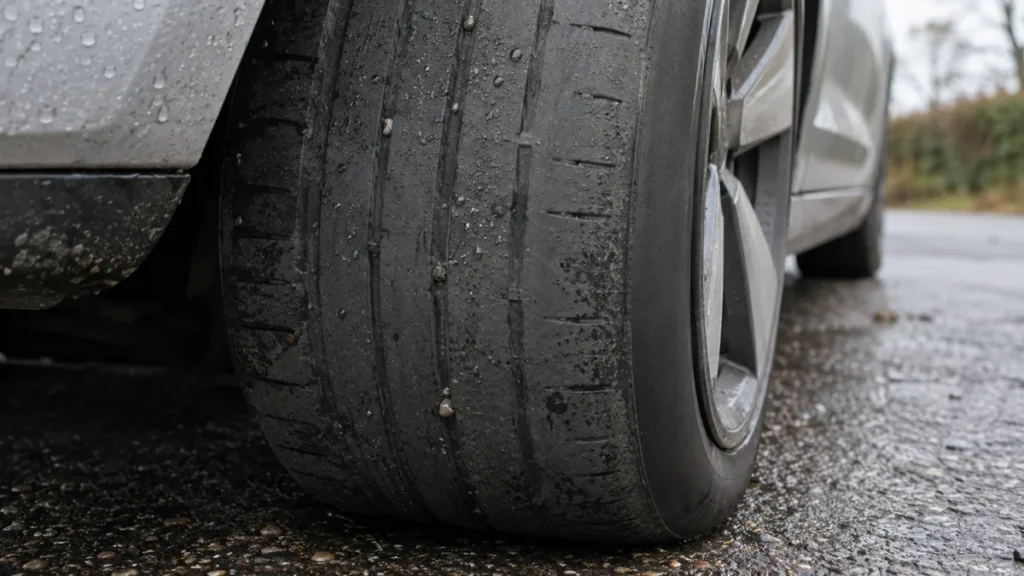
The rules on tyres are the same for every car, electric or not. The Highway Code says cars must have a tread depth of at least 1.6 mm across the central three-quarters of the tread and around the entire circumference.
The 1.6 mm figure is a legal minimum, not a target. It has to be met across the central three-quarters of the tyre and all the way round, so one worn patch is enough to fall short. Check the whole tyre, not just the part you can see from the driver's seat.
If you want to know how insurance for your car fits in, that comes further down. First, the tyre rules.
When It Starts And Who It Affects
The tyre rules apply now, as of 9 November 2026, and they apply to every car on the road. That includes electric cars, hybrids and anything else with a plug or a petrol cap. The 1.6 mm figure is the same for cars, light vans and light trailers.
The Highway Code also says tyres should be free from certain cuts and other defects. It adds that some vehicle defects can attract penalty points.
In short, the same legal minimum applies whatever powers your car. Driving with a bad tyre is not a small matter, either. GOV.UK says you can be fined up to £2,500, banned from driving and given 3 penalty points for driving a vehicle in a dangerous condition.
Quick Tyre Check For Your Car
What the Highway Code and the MOT manual say to look for.
Tread
- At least 1.6 mm across the central three-quarters of the tread
- At least 1.6 mm around the entire circumference
Damage
- Free from certain cuts and other defects
- No ply or cord visible without touching the tyre
From the Highway Code, Annex 6, and the DVSA MOT inspection manual, section 5. Checked 9 November 2026.
What It Means For Your Electric Car Insurance
The tyre rules are about the law and the MOT. Your insurance is a separate question, and no official source says how insurers treat a tyre defect. So check with your insurer if you're unsure how it could affect you.
The penalty points are sourced, though. GOV.UK lists 3 penalty points for a defective tyre, under the endorsement code CU30. If points do end up on your licence, ask your insurer whether you need to tell them. Only your insurer can say how a fine or points would affect your policy, so ask rather than guess.
You can read more about insurance for electric cars, including what may affect the price.
What To Do Now
A few minutes with the car parked on level ground is enough for a first check of all four tyres.
- Measure the tread. Check it's at least 1.6 mm across the central three-quarters of each tyre and all the way round.
- Look for damage. Check each tyre for cuts and other defects.
- Watch for exposed cord. The MOT manual says any ply or cord you can see without touching the tyre fails the MOT. Details are in the MOT manual tyre checks.
- Ask your insurer. Check with them if you're unsure how a tyre fine or penalty points could affect your cover.
- Mind your MOT. Here's more on whether car insurance is valid without an MOT.
You can compare electric car insurance quotes when you're ready.
FAQs
Is The Legal Tyre Tread Depth Different For Electric Cars?
No. The Highway Code sets 1.6 mm across the central three-quarters of the tread and around the whole tyre for cars, light vans and light trailers. An electric car follows the same rule, and the MOT manual fails a tyre with cord showing, whatever powers the car. Measure all four tyres, not just the front pair.
How Many Penalty Points Can You Get For A Defective Tyre?
3. GOV.UK lists endorsement code CU30, using a vehicle with defective tyres, at 3 penalty points. Driving in a dangerous condition can also bring a fine of up to £2,500 and a ban. That applies to an electric car in the same way as any other, so check each tyre for cuts as well as tread.
Will A Tyre Defect Affect My Car Insurance?
It depends on your insurer. No official source says how insurers treat tyre defects, so ask yours directly how penalty points, or a claim after a defect, would be handled. If you drive an electric car, mention that when you ask, so the answer fits your policy.