







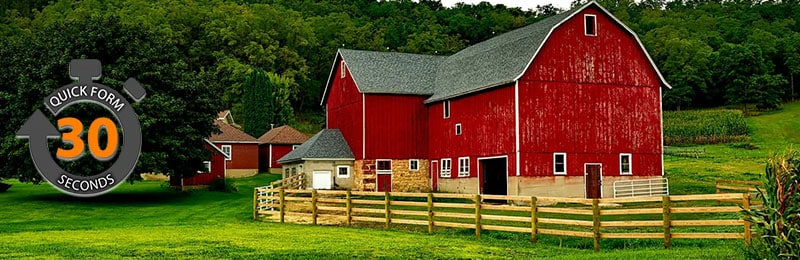
Why Compare Farmer Car Insurance?
Rural Postcode Rating
Village and farm postcodes price very differently to urban ones. Compare insurance providers that handle low-density rural addresses honestly rather than defaulting to nearest-town rating.
Multi-Vehicle Household
A farm pickup and a family car often suit different policies. Compare how UK insurance providers handle two-vehicle farming homes side by side.
Honest Mileage Recognised
Many farming households genuinely drive under 6,000 miles a year. Compare insurance providers that reward an accurate low-mileage declaration.
Farmer Car Insurance At A Glance
- Who It Helps - Working farmers, smallholders, tenant farmers, farm workers and agricultural contractors looking at car insurance for the household car.
- Rural Postcode Rating - Most providers factor postcode density and local claims data, so a genuine village address typically rates differently to the nearest market town.
- Multi-Vehicle Household - Many farming homes run a family car alongside a separate farm pickup or 4x4 (the agricultural vehicle is typically a separate policy).
- Honest Annual Mileage - Genuine low mileage under 6,000 a year is a material fact you'll need to declare accurately under CIDRA 2012.
- Compare Quotes - See UK insurance providers that rate rural farming households.
Is It Different For Farmers?
It's the same legal car insurance product, but rural farming life shapes how providers price the household car:
- Rural Postcode Reality - Village and farm addresses rate on local claims and theft data, not the nearest urban centre
- Multi-Vehicle Households - A working pickup or 4x4 typically sits on a separate agricultural policy, while the family car runs on standard motor cover
- Genuine Low Mileage - Households where most work happens on the land may legitimately drive under 6,000 miles a year on the family car
- Named Driver Setups - Married farming couples often share driving across vehicles, so a named driver setup may suit better than two separate policies
Cover Levels Explained
Pick third party only and a rural single-vehicle bump could leave a farming household without transport during lambing. Here's what each level includes.
| Feature | Comprehensive | Third Party, Fire & Theft | Third Party Only |
|---|---|---|---|
| Liability to third parties | ✓ | ✓ | ✓ |
| Fire and theft | ✓ | ✓ | ✗ |
| Accidental damage to your own car | ✓ | ✗ | ✗ |
| Windscreen cover | ✓ | Sometimes | ✗ |
| Personal accident cover for the driver | ✓ | ✗ | ✗ |
| In-car audio and entertainment | ✓ | ✗ | ✗ |
| Courtesy car while yours is repaired | Often included | ✗ | ✗ |
| EU third-party cover for short trips | ✓ | ✓ | ✓ |
| EU full UK-level cover for short trips | Often included | ✗ | ✗ |
| Uninsured driver promise (no-claims protected) | Often included | ✗ | ✗ |
Please note that policy features, benefits, terms and conditions vary among insurance providers, so always check the policy wording.
Cover Tip: If you own a farm-work pickup or 4x4 alongside the family car, get them quoted as separate policies on the same household address. A working farm vehicle and a school-run estate rate very differently, and bundling them on one multi-car policy may or may not beat two single policies depending on the rural postcode and the secondary driver setup.
What May Not Be Covered
A single exclusion can leave a between-fields trip uninsured. Here's what a farming household policy typically doesn't cover.
Standard Exclusions
- Driving while disqualified or unlicensed - No motor policy covers driving without a valid licence or while disqualified, and a claim in those circumstances would be refused outright.
- Wear, tear and mechanical failure - Routine wear, mechanical breakdown and gradual deterioration sit outside motor insurance and are usually handled by a separate breakdown or warranty product.
- Undeclared use of the vehicle - Using the family car for a purpose not declared on the policy, such as paid agricultural haulage, sits outside cover and can lead to a refused claim.
Important Limitations
- Off-road and farm-track driving - Standard motor cover applies to public roads. Driving the family car across fields or private farm tracks typically falls outside the policy and any damage would not be covered.
- Carrying farm goods or livestock for hire - A family car policy doesn't cover transporting goods or animals for payment. That activity typically needs goods-in-transit or Hire and Reward cover instead.
- Undeclared low annual mileage as a misstatement - Guessing a very low figure to chase a cheaper quote rather than declaring honest household mileage can invalidate cover under CIDRA 2012 disclosure duty.
Important: These are not exhaustive exclusions - every insurance provider sets its own terms, limits and conditions. Always check the full policy wording for the complete list of what is and is not covered.
Extras Worth Considering
Skip courtesy car cover and a single rural repair could leave a farming household without transport for a week. Here are extras worth considering.
Roadside and recovery support matters more when the nearest garage is ten miles away and a stranded car can delay feed runs or market trips.
Helps fund the legal costs of recovering uninsured losses such as your excess or personal injury after a non-fault accident on a country road.
A like-for-like courtesy car keeps a rural household mobile while repairs run, rather than a small standard hatchback that may not suit the access road.
Pays a fixed sum to the driver or family if a serious injury follows a covered accident, on top of any liability settlement.
What Affects The Cost?
Rural postcode, farm-track parking, annual mileage and vehicle group each shape an agricultural household premium. Here are the factors that shape a farmer quote.
| Key Factor | Impact on your price |
|---|---|
| Home postcode | Rural village and farm postcodes typically rate on lower local theft and claims density, though limited repair networks can push some quotes back up. |
| Annual mileage | Many farming households genuinely drive under 6,000 miles a year on the family car, and an honest low figure typically pulls the premium down. |
| Overnight parking location | A secure farmyard or private driveway can lower the price, while a roadside village spot in a higher-risk lane may push it up. |
| Vehicle insurance group | An estate, hatchback or older 4x4 used as the family car tends to sit in lower groups than newer SUVs, feeding into the rating. |
| Use class declared | Social, domestic, pleasure plus commuting suits a household car, while business travel to markets or supplier visits typically needs Class 1 business use. |
| Years of no-claims discount | Each protected no-claims year typically cuts the premium, and a long NCD often matters more than the rural postcode itself. |
| Named drivers on the policy | Adding a low-risk spouse on a married farming couple's policy can lower the price, while a young farm helper usually raises it. |
| Voluntary excess | Raising the voluntary excess reduces the headline premium, but only set it at a level the household could realistically pay after a claim. |
| Rural breakdown distance | Some providers factor distance from the nearest approved repair network, and a remote farm postcode can lift repair-cost loadings on quotes. |
| Cover tier chosen | Comprehensive can quote lower than third-party fire and theft for some rural households, so always compare all three tiers side by side. |
The quotes you get will depend on your own details.
Price Insight: Postcode often weighs heavier than occupation on a final quote. A farming household in a low-density rural postcode with a secure on-property parking spot may price below an equivalent driver in a market-town terrace, even where the headline mileage is similar.

Ways To Cut Your Premium
Renew on autopilot and a long claim-free farming household can drift £40-£100 higher year on year. Here are ways to cut what you pay.
Declare Honest Low Annual Mileage
If most farm work happens on the land, the family car may genuinely cover under 6,000 miles a year, and an accurate declaration can pull the premium down.
Keep The Working Farm Vehicle On A Separate Policy
A farm pickup or 4x4 typically rates better on an agricultural policy. Trying to stretch standard motor cover across both vehicles rarely beats two appropriate single policies.
Add A Low-Risk Spouse As Named Driver
Married farming couples sharing the family car can often lower the price by adding the lower-risk partner as a named driver, provided that person is not the main user.
Consider A Multi-Car Household Policy If You Run Two Family Cars
Some farming households run a main family car and a second runabout. See multi-car cover for how a household discount may apply.
Park Overnight On The Farm Or In A Secure Yard
A genuine on-property overnight parking declaration may reduce the premium compared with a roadside village spot. Declare your real parking location accurately.
Pay Annually Rather Than Monthly
Paying the full annual premium upfront avoids the finance charge that providers add to monthly instalments, often saving a meaningful sum.
Saving Tip: If your annual mileage is genuinely under 6,000 because most farm work happens on the land rather than between sites, declaring that honest figure may help bring the premium down. Underdeclaring at quote stage is materially different from declaring real low miles. Only the latter holds up under CIDRA 2012 (the duty under the Consumer Insurance (Disclosure and Representations) Act not to misrepresent material facts).
How To Compare Quotes
Comparing farmer car insurance takes minutes with postcode, vehicle, annual mileage and overnight parking ready. Get started above.
Share Your Details
Enter postcode, vehicle, mileage and overnight parking honestly so quotes reflect your real farming-household profile.
Declare Rural Specifics
Flag a genuine rural postcode, on-property overnight parking and any business use such as market runs or supplier visits.
Compare Cover And Price
Look at comprehensive, TPFT and third party only side by side, then check excess, courtesy car and breakdown for rural reach.
Choose And Buy
Pick the cover, excess and payment terms that suit a farming household. Buy directly with the provider.
Receive Your Documents
The provider emails your certificate and policy schedule, typically within minutes of payment clearing.
What Our Expert Says
The biggest misconception among farming households is that there's a separate "farmer car insurance" product. There isn't. The family car runs on standard motor cover, while a working pickup or 4x4 used on the land typically sits on a separate agricultural policy. What changes for farmers is the rating context, not the product.
The all-driver average sits at £560 (ABI Motor Premium Tracker, Q1 2026), but the more important number for many farmers is postcode and honest mileage. A genuine rural address with secure on-property parking and a real sub-6,000-mile annual figure typically rates very differently to a market-town terrace. Under-declaring mileage to chase a lower premium is a CIDRA 2012 (the duty not to misrepresent material facts) risk that could see a claim reduced or refused later.
A common approach for farming couples is to separate the household car from the working farm vehicle entirely, rather than trying to bundle them. The two vehicles rate on different risk patterns, and asking one policy to span both rarely beats two appropriate single policies.
Insurance Expert & Co-founder of Clean Green Cars

Common Questions
Is There A Separate Car Insurance Product For Farmers?
No. The family car runs on standard motor insurance. A working farm pickup or 4x4 used on the land typically sits on a separate agricultural policy instead.
Does A Rural Postcode Affect My Premium?
Yes. Most providers factor postcode density and local claims data, so a low-density village or farm address typically rates differently to the nearest market town.
Can I Declare Genuine Low Mileage Without Risk?
Yes, if it is honest. Many farming households genuinely drive under 6,000 miles a year on the family car. Declaring the real figure under CIDRA 2012 keeps cover valid.
Do I Need Business Use For Market Or Supplier Visits?
Often yes. Travelling to markets, suppliers or agricultural meetings in the family car typically requires Class 1 business use rather than standard commuting cover.
Can A Tenant Farmer Insure The Household Car Separately?
Yes. The household car policy is independent of any farm business cover. Tenant farmers commonly run a personal motor policy alongside separate agricultural insurance.
Does Driving On Private Farm Tracks Affect Cover?
Standard motor insurance applies to public roads. Damage from driving the family car across fields or private farm tracks typically falls outside the policy.
Can I Add My Spouse As A Named Driver On A Farming Policy?
Yes. Adding a low-risk experienced partner as a named driver can lower the price, provided that person is not actually the main user of the car.
What Happens After I Submit My Details?
Clean Green Cars introduces you to UK insurance providers offering cover for rural farming households. You compare prices and policy features returned, then buy directly from the chosen insurance provider.

Search & Compare Quotes From UK Farmer Car Insurance Providers

Useful Resources
- ABI - Motor Insurance Premium Tracker Q1 2026 - quarterly average premium data confirming the £560 all-driver benchmark for Q1 2026.
- Legislation.gov.uk - Consumer Insurance (Disclosure and Representations) Act 2012 - the CIDRA 2012 duty to take reasonable care not to misrepresent material facts at quote.
- GOV.UK - Vehicle Tax Rate Tables - the official tax classification tables including agricultural vehicles and rural-use categories.
- ABI - Choosing Motor Insurance - plain-English guide covering use classes, disclosure duties and how to pick an appropriate level of cover.