














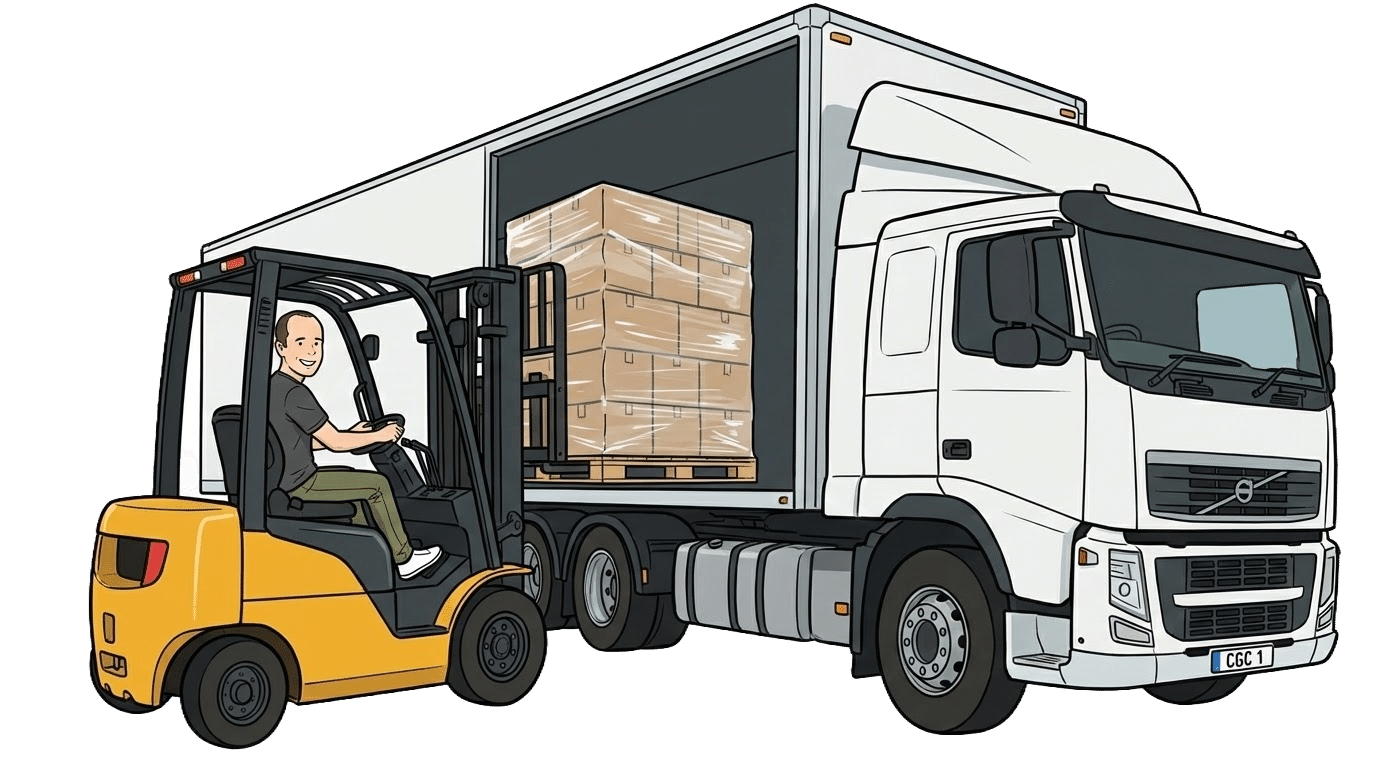
Why Compare Goods In Transit Insurance?
Goods In Transit Insurance At A Glance
- Goods in Transit (GIT) insurance can cover items you carry for customers against damage, theft, and loss during transport, subject to policy terms, conditions, and exclusions.
- GIT insurance is separate from your vehicle insurance and typically does not form part of standard motor cover unless specifically included. It can be bought as a standalone policy or bundled with your truck insurance.
- At the time of writing (April 2026), the Road Haulage Association (RHA) Conditions of Carriage typically cap liability at around £1,300 per tonne of gross weight under standard Road Haulage Association (RHA) Conditions of Carriage (contractual terms that limit how much compensation a haulier must pay if goods are lost or damaged).
- Click the green button above to compare Goods in Transit insurance quotes from specialist brokers.
Who Needs Goods In Transit Insurance?
Moving goods without appropriate cover could leave you personally liable for compensation if goods are lost or damaged and you have accepted responsibility under a transport contract (a legal agreement defining responsibility between you and your customer). The following are examples of businesses and operators who typically may need Goods in Transit insurance.
Tip: If you also need cover for your vehicle and breakdown and recovery, check whether bundling your truck and GIT policies with one broker could reduce your overall cost.

What Does Goods In Transit Insurance Cover?
Choosing between standalone cover and a bundled add-on changes what protection your cargo gets. Here's how the two options typically compare.
| Feature | Standalone GIT Policy | Bundled With Truck Policy |
|---|---|---|
| Cover for goods during transit | Yes | Yes |
| Cover during loading and unloading | Usually included | Sometimes included |
| Per-consignment limit | You usually select the amount (subject to insurer approval) | Often lower limits |
| Own goods and hire and reward | Both available | May be restricted |
| Cross-border cover | Available as add-on | Rarely included |
| Claims process | Direct to GIT insurer | Through truck policy |
| Overnight cover | Secure location required | Varies by policy |
What Goods In Transit Insurance Does Not Cover
A rejected claim could cost more than the premium you saved by not checking the small print. Here are some of the exclusions and limitations that catch operators out most often.
- Inadequate Packaging – Your insurer may refuse a claim if goods were not packed properly for the type of transport. Fragile items need appropriate cushioning and restraint.
- Inherent Vice – Damage caused by the natural behaviour or condition of goods rather than an accident. This includes perishable food spoiling due to its own nature rather than a transit incident.
- Wear and Tear – Gradual deterioration during transit is excluded. Your policy covers sudden events like accidents and theft, not slow degradation.
- Deliberate Damage by the Sender – If the sender packs dangerous or prohibited items without telling you, your insurer could refuse the claim.
- War, Terrorism, and Sanctions – Losses caused by conflict, terrorist acts, or deliveries to sanctioned destinations are typically excluded from standard policies unless specifically added.
- Contraband and Prohibited Goods – Illegal items and goods you are not licensed to carry are never covered.
- Overnight Vehicle Storage – Many policies exclude or limit cover for goods left in an unattended vehicle overnight. Check whether your policy requires a secure compound or alarmed vehicle.
- Restricted Cargo Types – Precious metals, cash, jewellery, hazardous materials, and livestock are often excluded or need separate declaration. Your policy schedule should list exactly what is covered.
- Excess Amounts – Every claim has an excess you pay first. Higher-value loads may carry a higher excess. Check your per-consignment excess before accepting a job.
- Geographic Limits – A UK-only policy will not cover loads crossing into Europe. You may need a CMR extension for international routes.
- Vehicle Security Requirements – Your insurer may require specific locks, alarms, or tracking devices. Failing to meet these conditions could invalidate a claim (meaning the insurer may refuse to pay compensation).
Standard Exclusions
Important Limitations
Optional Extras For Goods In Transit Insurance
A standard GIT insurance policy may not cover spoiled refrigerated cargo, cross-border shipments, or the legal costs from a disputed claim. Here are the extras that may help fill those gaps.
Tip: If you subcontract any deliveries, check whether your policy covers goods once they leave your vehicle. A gap here could leave you paying for someone else's mistake.
Covers your liability under the CMR Convention when carrying goods across international borders. Required if you run European routes and your domestic policy does not include it.
Pays for spoiled goods if your refrigeration unit breaks down during transit. Standard GIT insurance policies often exclude mechanical failure of cooling equipment.
Covers goods stored in a warehouse or depot between legs of a journey. Useful for operators who use distribution hubs rather than delivering direct.
Protects you if a subcontractor you hire to carry goods damages or loses them and you remain contractually responsible (legally accountable under your transport agreement). Without it, you may be liable for goods you never physically handled.
Covers goods while they are on display at trade shows or events, not just during the journey itself.
Raises the maximum payout for a single load above your standard policy limit. Worth considering if you occasionally carry high-value shipments.
How Much Does Goods In Transit Insurance Cost?
Two operators carrying similar cargo could get very different Goods in Transit insurance quotes based on details they might not expect. Here are the factors that affect your price.
| Cost Factor | Impact on Your Premium |
|---|---|
| Per-consignment limit | Higher limits usually mean a higher premium |
| Annual aggregate limit | The total cover ceiling across all shipments affects your cost |
| Type of goods | High-theft items like electronics or tools could push the price up |
| Vehicle security | Alarms, trackers, and deadlocks could bring your price down |
| Overnight storage | A locked garage or gated yard could lower the price compared to on-street parking |
| Operating area | High-crime areas could mean higher quotes |
| Claims history | Even one theft claim could push your renewal price up |
| Annual mileage | More miles on the road means more exposure to risk |
| Driver experience | Newer drivers or those under 25 might see higher quotes |
| European travel | Cross-border haulage typically adds to your cost |
Tip: Check whether your per-consignment limit covers your largest typical load. Underinsuring could leave you exposed if a high-value shipment is lost.

How To Reduce Goods In Transit Insurance Costs
According to Munich Re, around 40% of recorded UK cargo thefts happen at unsecured roadside parking or rest areas. Your premium reflects the risk your insurer sees in your operation. Here are practical ways to help make your GIT quote more attractive without cutting your cover.
Tip: If you run a lorry fleet, ask whether a fleet-wide GIT policy could cost less than insuring each vehicle's cargo separately.
How To Compare Goods In Transit Insurance Quotes
Many operators stick with their renewal because comparing feels complicated. Here's how to get specialist GIT quotes, typically in a few minutes. Get started above.
What Our Expert Says
The biggest mistake operators make is assuming their vehicle policy covers the cargo. It usually does not. Your truck insurance protects the vehicle. GIT protects what is inside it.
The Road Haulage Association (RHA) Conditions of Carriage limit your liability to roughly £1,300 per tonne. That could leave a significant gap if you carry high-value goods.
NaVCIS recorded over 1,800 UK freight crime incidents in 2025, with estimated losses reaching tens of millions of pounds. Always check the Unattended Vehicle Clause. Many rejected GIT claims fail because the vehicle was left unlocked, even for a few seconds during a delivery stop.
- Ian Beevis, Insurance Expert & Insurance Expert & Co-founder of Clean Green Cars

Common Goods In Transit Insurance Questions
What Is Goods In Transit Insurance?
Goods in Transit (GIT) insurance covers items you carry against damage, theft, and loss during transport. It protects the cargo, not the vehicle.
Do I Need Goods In Transit Insurance?
It is not a legal requirement, but many commercial contracts require proof of GIT cover. Without it, you could be personally liable for damaged or stolen cargo.
How Much Does Goods In Transit Insurance Cost?
Costs depend on your cover limits, cargo types, and claims history. You can get an accurate figure by comparing Goods in Transit insurance quotes from specialist brokers.
What Is Not Covered By Goods In Transit Insurance?
Standard exclusions usually include inadequate packaging, inherent vice, wear and tear, and prohibited goods. Overnight storage and restricted cargo types may also be excluded.
Does Goods In Transit Cover Loading And Unloading?
Many policies cover goods during loading and unloading as part of the transit period. Check your policy wording to confirm where cover starts and ends.
Is Goods In Transit Insurance A Legal Requirement?
No, UK law does not typically require it. However, most customers and freight exchanges require proof of GIT cover before they will release goods to you.
Does Goods In Transit Cover Goods Left In A Vehicle Overnight?
Some policies cover overnight storage in a locked vehicle, but many exclude or limit it. Check whether your insurer requires a secure compound or alarm system.
What Happens After I Submit?
Clean Green Cars introduces you to specialist brokers who handle cargo cover. You could receive quotes within hours on a working day, with no obligation to proceed.

Search & Compare Quotes From UK Goods In Transit Insurance Providers

Useful Resources
These official sources cover the rules for carrying goods commercially in the UK and internationally.
- Road Haulage Association (RHA) - Industry body for UK road haulage operators, including guidance on conditions of carriage and liability limits.
- GOV.UK - Being a Goods Vehicle Operator - Official guidance on operator licensing, vehicle standards, and legal requirements for carrying goods.
- Logistics UK (formerly FTA) - Trade body for the logistics sector with guidance on compliance, training, and best practice.
- GOV.UK - International Road Haulage - Rules for UK operators carrying goods across borders, including permits and CMR requirements.