




























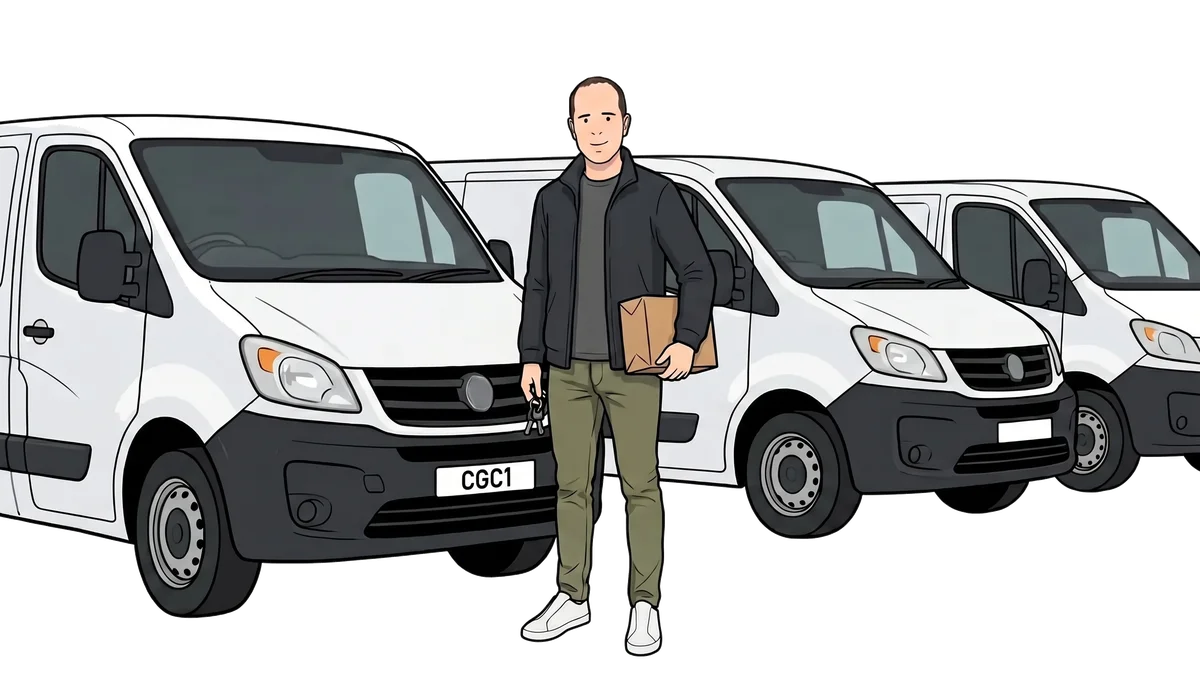
Why Compare Delivery Vehicle Fleet Insurance?
Quotes That Fit Your Rounds
Delivering your own stock is carriage of own goods, which mainstream quotes often misclassify. Clean Green Cars introduces you to specialist brokers who rate scheduled delivery rounds properly.
Stop Juggling Single Policies
A delivery operation outgrows separate van cover quickly. Clean Green Cars introduces you to specialist brokers who put every delivery vehicle on one schedule.
Built For A Shared Rota
Delivery staff swap vans between rounds and shifts. Clean Green Cars introduces you to specialist brokers who can arrange any-driver terms for a delivery fleet.
Delivery Vehicle Fleet Insurance At A Glance
- One policy can cover every own-goods delivery van on a single renewal date.
- Specialist brokers can set the carriage of own goods use class so scheduled rounds are covered correctly.
- Any-driver terms can let delivery staff move between vans across shifts.
- Stock carried for delivery can usually be built into the fleet schedule.
- Get delivery fleet quotes from specialist brokers above.

How Delivery Fleet Cover Works
Use Class
Cover is set for carriage of own goods, delivering your own stock, not carrying third-party loads for payment.
Mixed Vans
Small panel vans and larger Luton vans can share one schedule. A smaller operation can start with small fleet insurance.
Driver Basis
Any-driver or named-driver terms depending on how rounds are staffed across shifts.
Related Cover
The wider fleet insurance range covers other trades, while paid third-party parcel work needs courier fleet insurance instead.
Setting Up Your Delivery Policy
Vehicle And Round Schedule - List every delivery van with registration, value and the rounds it runs. Clear detail helps specialist brokers match the fleet to the right markets.
Driver Details - Provide ages, licences and any convictions for everyone who delivers. Most delivery fleet policies set a minimum driver age of 21, often 25 for broad any-driver terms (ABI, as at 2026).
Stock In Transit Needs - Note the typical value of your own goods carried per van. This sets whether stock cover sits inside the policy or as an add-on.
Cover Levels Explained
Pick the lowest cover level and one written-off Luton could stall a scheduled round while you fund a replacement. Here's what each level includes.
| Feature | Comprehensive | Third Party, Fire & Theft | Third Party Only |
|---|---|---|---|
| Accidental damage to delivery vans | Included | Not included | Not included |
| Fire and theft of insured vehicles | Included | Included | Not included |
| Injury or damage to third parties | Included | Included | Included |
| Carriage of own goods use class | Included | Included | Included |
| Any-driver or named-driver basis | Optional | Optional | Optional |
| Own stock in transit | Add-on | Add-on | Not included |
| Replacement vehicle while off road | Optional | Optional | Not included |
| Breakdown and recovery | Add-on | Add-on | Add-on |
Please note that policy features, benefits, terms and conditions vary among insurance providers, so always check the policy wording.
Cover Tip: Delivery fleets often mix owned vans with ones on contract hire. If a leased Luton is written off, the motor settlement goes to its value, but the leasing company may still want the outstanding balance, so check whether gap cover sits on the contract-hire vans in the schedule and not only the owned ones before you accept comprehensive across the whole delivery fleet.
What May Not Be Covered
A single exclusion can leave a damaged own-stock loss sitting entirely on a delivery business. Here's what a delivery fleet policy usually may not include.
Standard Exclusions
- Hire and reward work - Carrying third-party goods for payment on an own-goods policy may not be covered.
- Undeclared drivers - A claim may be declined where the driver sat outside the agreed basis or age terms.
- Unroadworthy vehicles - A claim is likely to be declined where a delivery van was not kept roadworthy.
Important Limitations
- Stock and own goods - Goods carried are usually excluded from the motor section unless carriage of own goods is added.
- Lapsed database entry - Failing to keep the Motor Insurance Database current can cause problems at claim time.
Add-Ons Worth Considering
Skip the wrong extra and a load-damage incident could fall outside your motor cover. Here's what's worth considering.
May help cover your own stock carried for delivery, which the motor section often excludes.
May be needed if a roadside failure could break a timed delivery slot or scheduled round.
May help keep rounds running by providing a like-for-like van while one is off the road.
May be worth arranging separately, as motor cover does not extend to wider delivery liability.
What Affects The Cost?
Underdeclare your round mileage or your driver list and a future claim could be cut for misrepresentation. Here's what shapes the price.
| Key Factor | Impact on your price |
|---|---|
| Round mileage and area | Wider delivery areas and higher mileage usually cost more than tight local rounds. |
| Own-goods value carried | Higher per-van stock cover typically adds to the premium but closes a common load-loss gap. |
| Driver ages and shifts | Younger staff or a broad shared rota often push the price up on any-driver terms. |
| Claims history | Three to five years of delivery claims shape your terms. A clean record often eases renewal. |
| Vehicle mix and values | Larger Luton vans usually raise the premium against small panel vans, though a fleet spreads risk. |
| Driver basis chosen | Broad any-driver cover usually costs more than a named-driver list on a delivery fleet. |
The quotes you get will depend on your own details, the vans on the schedule and your delivery claims record. For context, over 5 million vans were licensed in Great Britain at the end of 2023 (DfT, as at 2023) against an ABI average motor premium of around £560 (Q1 2026).
Price Insight: Delivery firms that start carrying goods for other businesses to fill empty return runs quietly cross from own goods into hire and reward without re-rating, then face a cut claim. Telling a specialist broker before you take that work usually costs less than discovering it at claim time. A wider trade fleet can also compare commercial fleet insurance.

Ways To Cut Your Premium
Renew on autopilot and a delivery fleet can quietly pay hundreds more per van than a fresh comparison. Here's how to cut that back.
Match Drivers To Rounds
Keeping newer drivers off the larger Lutons often reduces an any-driver loading on a delivery fleet.
Set Real Goods Limits
Insuring own stock to the value actually carried per van, not a round number, avoids paying for unused cover.
Raise The Voluntary Excess
A higher voluntary excess can lower the premium, but keep it to a level the business could absorb per van.
Consolidate Renewals
Moving every delivery van onto one date avoids duplicate policies and gives brokers a clearer risk.
Keep Claims Tidy
Accurate round and use-class data prevents loadings that come from cautious assumptions.
Saving Tip: Declare the real own-goods value your vans carry rather than rounding up to a safe number. A retailer insuring £18,000 of stock when each van rarely carries above £6,000 is paying a goods premium on cover it never uses across every van on the schedule.
How To Compare Quotes
A delivery fleet needs a full van, round and driver schedule before an accurate premium is set. Get started above when it's ready.
Build The Schedule
List every delivery van with registration, value and round, plus all drivers and licences.
Confirm The Use Class
State that vans deliver your own stock so cover is set as carriage of own goods, not hire and reward.
Note Goods Needs
Record the typical own-goods value carried per van so stock cover can be priced correctly.
Compare Specialist Brokers
Use the form above so Clean Green Cars can introduce you to specialist brokers for delivery fleets.
Check The Cover
Confirm the driver basis, per-van goods limit and excess before you accept terms.
What Our Expert Says
Delivery fleets trip over one line. Own goods versus hire and reward.
A common pattern is a retailer insuring its vans for carriage of own goods, then agreeing to drop a supplier's pallets on the way back to use an empty return run. That paid third-party work is hire and reward, a different use class, and a claim arising from it can be cut or declined. There's also the stock gap: the motor section pays for the van, not the goods inside, so a damaged-load claim falls flat unless carriage of own goods was added. Keeping the Motor Insurance Database current is a legal duty under Continuous Insurance Enforcement, and delivery fleets cycle vans fast enough to slip.
Keep the use class honest. The moment a return run earns money, the cover question changes.
Insurance Expert & Co-founder of Clean Green Cars

Common Questions
How Does Delivery Fleet Insurance Work In The UK?
One policy covers every own-goods van on a single renewal, priced on rounds, drivers and claims against an ABI average motor premium of around £560 (Q1 2026). Specialist brokers set the carriage of own goods use class.
Is Own-Goods Delivery The Same As Hire And Reward?
No. Delivering your own stock is carriage of own goods. Carrying third-party loads for payment is hire and reward, a different use class, and mixing them without declaring can invalidate a claim (ABI, as at 2026).
What Insurance Do You Need For Delivery Vehicles?
Business-use motor cover set for carriage of own goods, on a fleet basis if you run several vans. With over 5 million vans licensed in 2023 (DfT, as at 2023), specialist brokers arrange this routinely.
Does It Cover The Goods Being Delivered?
Not automatically. The motor policy covers the van, not the stock inside. Carriage of own goods is usually added so a four-figure damaged-load claim is not declined (ABI, as at 2026).
Can Delivery Staff Share Vans Across Shifts?
Yes, with any-driver terms, usually set at a minimum driver age of 21 or 25 (ABI, as at 2026). It suits a shared delivery rota, though a named list costs less.
How Do Convictions Or Young Drivers Affect Cost?
They typically raise the premium. A driver with a conviction or under 25 on a larger Luton usually loads the price more than an experienced delivery driver (ABI, as at 2026).
How Many Vans Make A Delivery Fleet?
No legal minimum exists, but most insurers treat five or more vans as a fleet. With 341,455 new LCVs registered in 2023 (SMMT), specialist brokers arrange delivery fleet cover from as few as two vans.
What Happens After I Submit My Details?
Clean Green Cars introduces you to specialist brokers who cover delivery fleets running own-goods rounds. They contact you with quotes to compare, with no obligation to buy.

Search & Compare Quotes From UK Delivery Vehicle Fleet Insurance Providers

Useful Resources
- GOV.UK Vehicle Insurance - The official rules for driving insured on UK roads.
- ABI Motor Insurance Guidance - Consumer guidance on motor insurance cover, claims and choosing a policy.
- askMID - Check if a vehicle appears on the Motor Insurance Database.
- Motor Insurers' Bureau - Information about the Motor Insurance Database and uninsured driving rules.