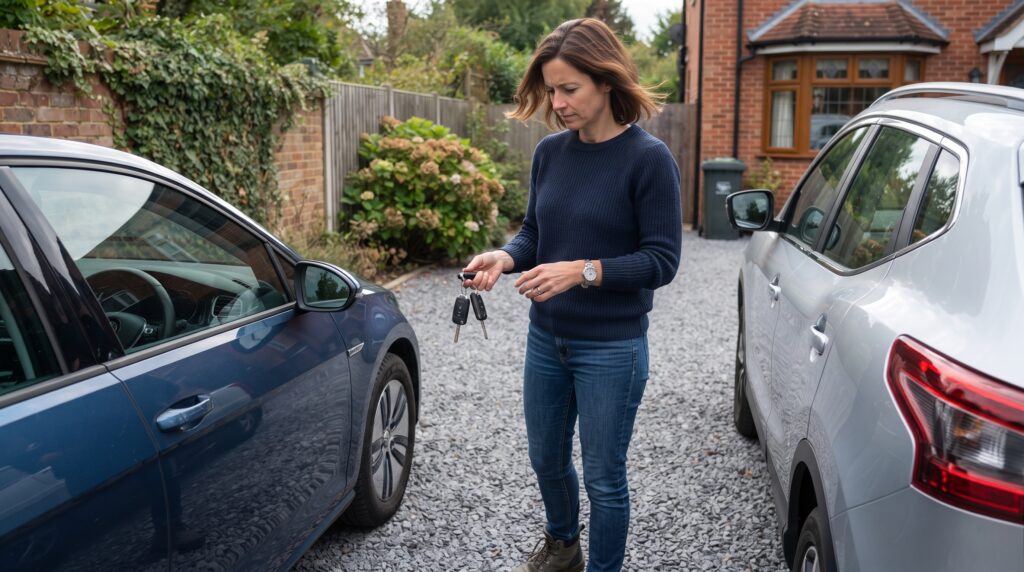
Fixed NHS Commute Vs Patient Visits
A normal commute usually means driving from home to one regular workplace and back. For many hospital-based NHS staff, that may be the main journey to declare.
Community nursing can be different. If you use your own car to travel between patient homes, clinics, GP surgeries or NHS sites, that can move beyond ordinary commuting.
When Business Use May Be Needed
Business use may be needed when the car is part of your working day, not just the way you get to work. Insurers can define commuting and business use slightly differently, so describe your work pattern clearly when comparing quotes.
| Driving pattern | What it usually means | Quote detail to prepare |
|---|---|---|
| One fixed NHS workplace | You drive to one hospital, clinic or office and back. | Commuting use, workplace address and parking details. |
| Patient visits in your own car | You drive between homes or appointments as part of your shift. | Business use, work mileage and area covered. |
| Multiple NHS sites | You travel between clinics, offices or health centres. | Business use, typical journeys and annual mileage. |
| Occasional work errands | You sometimes use the car for work tasks beyond commuting. | How often it happens and whether it is part of your role. |
| Pool car or employer vehicle | You use a vehicle provided for work journeys. | Check the employer's cover and keep your own policy matched to your personal car use. |
Why Use Class Matters For Community Nurses
Use class helps an insurer understand how the car is driven. A community nurse who drives between visits may cover different roads, times and mileage from someone who parks at one hospital all day.
That does not need to be scary. It simply means the quote should match the way you use the car. When the details are clear, you can compare prices and features more confidently.
Details To Have Ready Before You Compare
Before you compare car insurance for NHS staff, gather the details that help providers price the quote properly.
- Your closest accurate job title, such as community nurse or district nurse
- Your usual workplace or base
- Whether you drive to patient homes, clinics or multiple NHS sites
- Your estimated annual mileage
- How much of that mileage is work-related
- Where the car is parked during shifts and overnight
- Any named drivers or household cars
Mileage claims and insurance are separate checks. GOV.UK has guidance on vehicles you use for work, but your insurer still needs the driving pattern that matches your policy.
What If Your Role Changes?
NHS roles can change over time. You might move from ward work to community visits, start covering extra clinics or take on bank shifts in a new area.
If your driving pattern changes, update the details before your next quote or renewal. That keeps the comparison useful and helps you choose a policy that fits how you now use the car.
How This Links To NHS Staff Discounts
Some NHS staff search for discounts first, but use class can matter just as much. A discount is only useful if the quote also reflects your real driving.
You can read the wider guide to NHS car insurance discounts, then compare quotes with your work pattern entered clearly.
FAQs
Do community nurses always need business car insurance?
Not always. It depends how your insurer defines commuting and business use, and how you use your own car. Driving only to one fixed workplace may be classed as commuting, while regular trips between patient homes or NHS sites are often treated as business use.
Is commuting cover enough for a community nurse?
Commuting may be enough if you only drive to one regular workplace and back. If you use your own car for patient visits or multi-site work, compare quotes with that extra use included.
What mileage should community nurses declare?
Use a realistic annual mileage figure and include regular work driving if the car is used for patient visits or site-to-site travel. A more accurate mileage figure helps the quote reflect how the car is actually used.
Can district nurses get NHS staff car insurance discounts?
District nurses may be able to find NHS staff car insurance discounts or occupation-aware pricing. The final quote can also be shaped by mileage, use class, parking and driving history.
Should community nurses compare specialist NHS car insurance?
It is worth comparing car insurance for NHS staff if your work pattern is more complex than a fixed commute. Enter your NHS role, business use and mileage so the quotes reflect your driving.