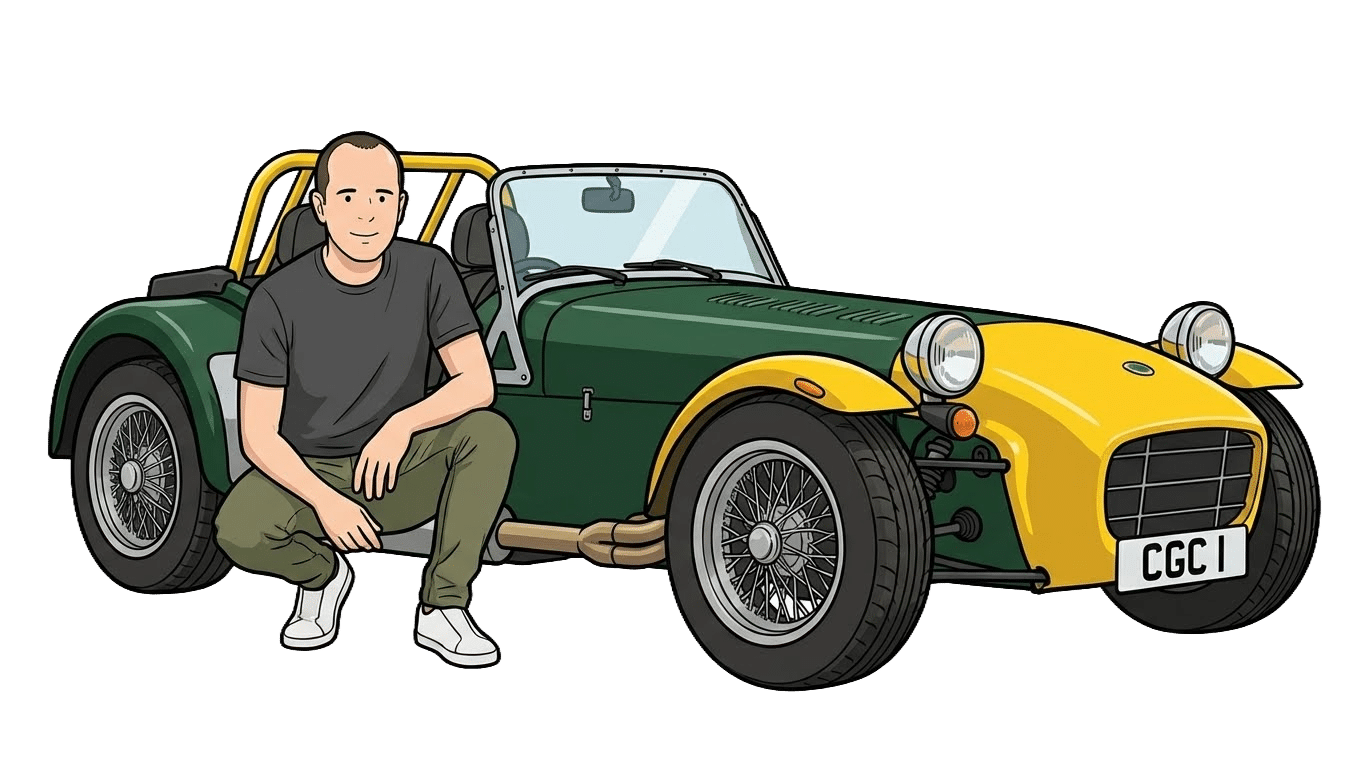
Why Compare Kit Car Insurance?
Agreed Value Varies Between Brokers
not every specialist broker endorses agreed value as a contractual commitment. Some treat it as a general intention. Clean Green Cars connects you to brokers who offer a fully documented agreed value endorsement, so your payout is fixed if you ever claim.
Track Day Terms Differ A Lot
some brokers include non-competitive circuit use within a standard road policy. Others charge a meaningful add-on or require a separate policy entirely. Clean Green Cars puts you in touch with brokers who can show you the track day terms side by side, not buried in small print.
Q-Plate Appetite Is Not Universal
some specialist insurers are comfortable with Q-plates. Others apply a loading or decline to quote. Via Clean Green Cars, you reach brokers with genuine kit car experience who won't penalise your vehicle just for its registration type.
- Your kit car has no manufacturer list price, so standard insurers can't price it reliably.
- Specialist brokers use agreed value and your build records to set a figure that reflects your vehicle.
- Q-plates and IVA-registered vehicles don't have to mean higher premiums when you use the right broker.
- You need a full modification declaration from day one - undeclared changes are the top reason kit car claims get declined.
- Click the green button above to compare specialist kit car quotes today.
Do I Need Car Insurance?
If your kit car is registered for road use, the Road Traffic Act 1988 s.143 applies to you just as it does to any other driver. You need at minimum third party cover before you drive on a public road. The difference is that a standard insurer's quoting system can't handle an agreed value, a Q-plate or an IVA-registered vehicle. That's why specialist brokers are the only practical route for most kit car owners. If you also own a classic car, you'll find the agreed value approach familiar - our guide to classic car insurance explains how agreed value policies work in detail.
- Road Use Needs at Least Third Party Cover - driving your kit car on a public road without insurance risks a fixed penalty, vehicle seizure and an IN10 endorsement on your licence.
- Agreed Value Protects Your Investment - without it, a total loss payout defaults to market value, which could be far less than your parts and labour cost.
- Build-Phase Cover Protects Your Project Before IVA - specialist policies can cover a partly built kit car against fire, theft and accidental damage while it sits in your garage before IVA inspection.
- Laid-Up Cover Suits Seasonal Use - if your kit car is stored over winter, laid-up cover (fire and theft only, no road risk) keeps it protected at a lower cost than a full road policy. You might also consider a temporary car insurance policy for very short periods of road use.
Choosing an unsuitable level of cover could leave you out of pocket after a total loss or accident. Here's what each level of kit car insurance may include. Please note that policy features, benefits, terms and conditions vary among insurance providers, so always check the policy wording.
| Feature | Comprehensive | Third Party, Fire and Theft | Third Party Only |
|---|---|---|---|
| Damage to your kit car | Yes | No | No |
| Fire and theft protection | Yes | Yes | No |
| Damage to other people's property | Yes | Yes | Yes |
| Injury to other people | Yes | Yes | Yes |
| Agreed value cover | Often included with specialist brokers | Rarely | No |
| Declared modifications covered | Yes - when fully declared | Sometimes | No |
| Windscreen repair | Often included | Rarely | No |
| Personal accident cover | Often included | Sometimes | No |
| Track day add-on available | Yes - as optional extra | No | No |
| Laid-up cover option | Yes - fire and theft only | Yes - fire and theft only | No |
Cover features depend on insurer terms, your IVA status, declared changes to your vehicle and the agreed value confirmed at inception.
Cover Tip: When you agree a valuation, keep your full build record including parts receipts and a note of labour hours. Without it, your insurer may question the figure if you ever need to claim.
A declined claim is a costly shock, especially when you've invested years into your build. Here are the exclusions and limitations most likely to catch kit car owners out.
Standard Exclusions
- Undeclared Modifications - Any change you haven't told your insurer about - engine swaps, turbo conversions, roll cages, suspension upgrades, aftermarket brakes - could give your insurer grounds to decline a claim. Your kit car needs a full modification list, not a partial one.
- Competitive Motorsport Use - Track day add-ons cover non-competitive circuit sessions only. If your kit car takes part in timed events, hillclimbs, sprints or circuit racing, you'll need a separate motorsport policy. A road policy with a track day endorsement doesn't extend to competitive use.
- Use Beyond Your Declared Purpose - Most kit car policies are written for social, domestic and pleasure use. Using your vehicle for hire and reward, courier work or regular commuting outside your declared use class could give your insurer grounds to decline a claim.
- Vehicles Not Yet IVA Registered - Your kit car can't be insured for road use until it has passed the Individual Vehicle Approval (IVA) test and received a registration. Build-in-progress cover is available during construction, but road risk doesn't apply until you have a valid registration plate.
- Mechanical or Electrical Failure - Component failure - including engine or gearbox failure and electrical faults - isn't covered under a standard motor policy. Kit car insurance isn't a warranty product and may not cover the cost of your mechanical repairs.
Important Limitations
- Agreed Value Without a Policy Endorsement - A club valuation alone doesn't create an agreed value policy. Your insurer needs to explicitly endorse the agreed value figure on your policy document at inception. Without that endorsement, a total loss claim could default to market value, which may be far less than your build cost.
Optional Extras Worth Adding
May be needed if you take your kit car to non-competitive circuit sessions, subject to policy limits and conditions. Cover is often for accidental damage to your own vehicle only, as circuit operators apply their own terms on track.
May help cover your kit car for fire and theft during storage over winter or between seasons, depending on your policy terms. Your road risk is suspended, which keeps the cost lower than a full policy.
May help cover your part-assembled vehicle and components against fire, theft and accidental damage during the build phase before IVA registration is possible, subject to policy limits and conditions.
May be needed if specialist tools used during your build - engine hoists, fabrication equipment and diagnostics - are stolen from your garage, subject to the terms of your kit car cover.
May help cover your legal costs if a third party brings a claim against you after an accident, subject to policy limits and conditions. Useful if a dispute arises over fault or damage value.
What Affects The Cost Of Kit Car Insurance?
Kit car premiums are hard to benchmark because no two builds are identical. Around 4,000 kit cars are registered for road use in the UK each year (as at 2024), and each one is assessed on its individual specification. The quotes you get will depend on your own details, your agreed value and your declared use.
| Key Factor | Impact on Your Price |
|---|---|
| Agreed value | Higher agreed values mean higher premiums. Your insurer's maximum payout is fixed at the start, so an accurately evidenced value keeps things fair both ways. |
| Driver age and experience | Kit cars are often performance vehicles. If you or your named drivers are under 25, you could face a noticeable loading on your quote. |
| Engine specification | A turbocharged or supercharged unit could attract a higher rate than a naturally aspirated engine of similar size. Power output matters as much as displacement. |
| Track day use | Adding a track day endorsement to your road policy costs more but is often much cheaper than arranging a separate motorsport policy for occasional circuit use. |
| Annual mileage | Many kit car owners drive fewer than 3,000 miles a year. Declaring an accurate low mileage reflects your reduced on-road exposure and could bring your price down. |
| Security measures | A Thatcham-approved tracker or immobiliser and secure garage storage could reduce your theft premium. Some insurers require these for high agreed value vehicles. |
| Claims history | Your overall claims record across all vehicles counts, not just previous kit car policies. A clean record could help you get a more competitive quote. |
| Key Factor | Impact on your price |
|---|---|
| Agreed Value | Higher agreed values attract higher premiums because the insurer's maximum payout is fixed at inception. Accurate valuation is important - overvaluing won't reduce the premium in proportion and may trigger a value check. |
| Driver Age and Experience | Kit cars are often performance vehicles and young or inexperienced drivers could face a noticeable loading. Named driver policies with older primary drivers can help manage this. |
| Engine Specification | Engine displacement, power output and turbocharged or supercharged units all affect your premium. A naturally aspirated unit will often attract a lower rate than a turbocharged engine of similar size. |
| Track Day Use | Adding a track day endorsement to your road policy costs more but is often much cheaper than arranging a separate motorsport policy for occasional circuit use. |
| Annual Mileage | Many kit car owners drive fewer than 3,000 miles a year. Declaring an accurate low mileage reflects your real on-road exposure and could bring your price down. |
| Security Measures | A Thatcham-approved tracker or immobiliser and secure garage storage could reduce your theft premium. Some insurers require these for high agreed value vehicles. |
| Claims History | Your overall claims record across all vehicles counts, not just previous kit car policies. A clean record could help you get a more competitive quote. |
The quotes you get will depend on your own details, the agreed value of your build and your declared use and changes.
Price Insight: The ABI reported an average UK comprehensive motor insurance premium of around £621 (as at Q4 2024). A well-declared, low-mileage kit car with an experienced primary driver can often come in below that figure. A high-powered, turbocharged build with a young named driver could sit well above it.

Ways To Help Reduce Your Kit Car Premium
Declare A Realistic Annual Mileage
If your kit car does 1,000-3,000 miles a year, declare that accurately. It reflects your real on-road exposure and could bring your price down compared to a standard mileage estimate.
Fit A Tracker Or Immobiliser
A Thatcham-approved GPS tracker or immobiliser reduces theft risk. Specialist kit car insurers recognise these devices, and fitting one proactively avoids a condition of cover issue later.
Name Older Drivers On The Policy
If younger family members will sometimes drive your kit car, putting an older, experienced driver as the primary named driver could produce a lower overall premium than listing a younger driver first.
Switch To Laid-Up Cover In Winter
If your kit car is stored for several months, switching to laid-up cover (fire and theft only, no road risk) for that period could cut your annual cost. You only pay for full cover when you actually drive.
Compare At Renewal, Every Year
Standard comparison sites rarely include kit car specialists. Specialist brokers price these vehicles more accurately and could offer a better rate than a generic aggregator quote. Don't auto-renew. Get quotes above to see what the market offers this year. Owners of other specialist vehicles such as motorbikes face similar niche pricing challenges - see our motorbike insurance guide for comparison.
Tip: Keeping a detailed build record - parts receipts, build photos and any club inspection certificates - not only supports an agreed value claim but can show a specialist broker your vehicle has been built to a high standard. Compare quotes above and Clean Green Cars connects you to brokers who already know what your kit car needs.
How To Compare Kit Car Insurance Quotes
Finding specialist kit car cover doesn't have to mean calling round for days. Clean Green Cars helps connect you with brokers who handle kit cars every day. Get started above - it takes just a few minutes.
Gather Your Build And Modification Records
Before you start, collect your IVA certificate, V5C registration document, a full modification list including any donor vehicle details, and your agreed valuation basis - parts receipts, a club valuation or an independent assessment. Start at the top of this page to begin.
Enter Your Vehicle Details
Enter the make, base kit, engine specification, registration type (standard, age-related or Q-plate) and your agreed value figure. The more accurate your details, the more accurate the quotes you'll receive.
Select Your Cover And Use
Choose your cover level - Third Party Only (TPO), Third Party, Fire and Theft (TPFT) or Comprehensive. Indicate your intended use: road only, occasional track days, annual mileage and whether the car is seasonal.
Review Specialist Broker Quotes
Specialist brokers with kit car experience will assess your vehicle and return quotes. Compare the agreed value figure, cover level, track day terms if you need them, and any conditions such as security requirements.
Confirm Your Policy And Conditions
Before you accept any quote, check that the agreed value is endorsed on the policy document and that all your declared changes are explicitly listed. Set your start date to avoid any gap in cover if you're switching from an existing policy.
What Our Expert Says
Kit car insurance is one of the areas where a specialist broker makes the biggest practical difference. Generalist quoting systems can't handle an agreed value, a Q-plate or an IVA-registered vehicle with a declared engine swap. The quote either comes back wrong or doesn't come back at all.
The agreed value conversation is where most kit car owners run into problems. A common pitfall is treating the agreed value as a formality rather than a properly evidenced figure. If a claim arises and your insurer questions the agreed value, having receipts and build records makes the settlement process far less contentious. Without documentation, you could find the figure is disputed at the worst possible time.
Track day add-ons are worth examining carefully. Non-competitive circuit use is very different from competitive motorsport, and the policy wording matters. Some endorsements exclude damage caused during specific session types. Reading the track day section of your policy document before you drive onto the circuit is worth 10 minutes of your time. You can find more on IVA requirements on the GOV.UK vehicle approval pages.
Insurance Expert & Co-founder of Clean Green Cars
Common Kit Car Insurance Questions
Do I Need Special Insurance For A Kit Car?
Yes. Standard car insurance systems can't handle agreed value, Q-plates or IVA-registered vehicles reliably. Specialist brokers with kit car experience are the right route for almost all kit car owners.
What Is Agreed Value And Why Does It Matter?
Agreed value fixes your settlement amount at the start of your policy. Without it, a total loss claim defaults to market value, which could be far less than your parts and labour cost.
Can I Insure A Kit Car With A Q Plate?
Yes. Specialist kit car brokers can cover Q-plate vehicles where a generalist insurer might decline. A Q-plate doesn't make your kit car uninsurable, but it does limit your pool of willing insurers.
Is Track Day Use Covered On A Standard Kit Car Policy?
Non-competitive track day use can often be added as an endorsement. Competitive motorsport - including timed events and circuit racing - requires a separate motorsport policy and isn't covered under a standard road policy.
Can I Get Kit Car Insurance During The Build Phase?
Yes. Specialist build-in-progress policies cover your components and part-assembled vehicle against fire, theft and accidental damage during construction, before your IVA registration comes through.
What Happens If I Don't Declare All Modifications?
Undeclared changes give your insurer grounds to decline a claim. You need to disclose every engine, suspension, bodywork and equipment modification at inception and whenever you make further changes.
How Much Does Kit Car Insurance Cost?
Your premium depends on your agreed value, engine spec, annual mileage, driver age and whether you need track day cover. A specialist broker can give you an accurate quote for your specific build. You can find useful background on the ABI website.
What Happens After I Submit My Details?
Your details are passed to specialist brokers with kit car experience. They'll assess your vehicle and return quotes based on your agreed value, declared changes and intended use. You're not committed to any quote that comes back.

Search & Compare Quotes From UK Kit Car Insurance Providers

Useful Resources
- Individual Vehicle Approval (IVA) - GOV.UK - official DVSA guidance on the IVA process, test requirements and how to register your kit car for road use.
- Q Registration Marks - GOV.UK - DVLA guidance on Q-plates and when they are issued to vehicles where age can't be established.
- Kit Car Magazine - the UK's leading kit car publication with build guides, IVA advice, event listings and community resources for kit car builders and owners.