














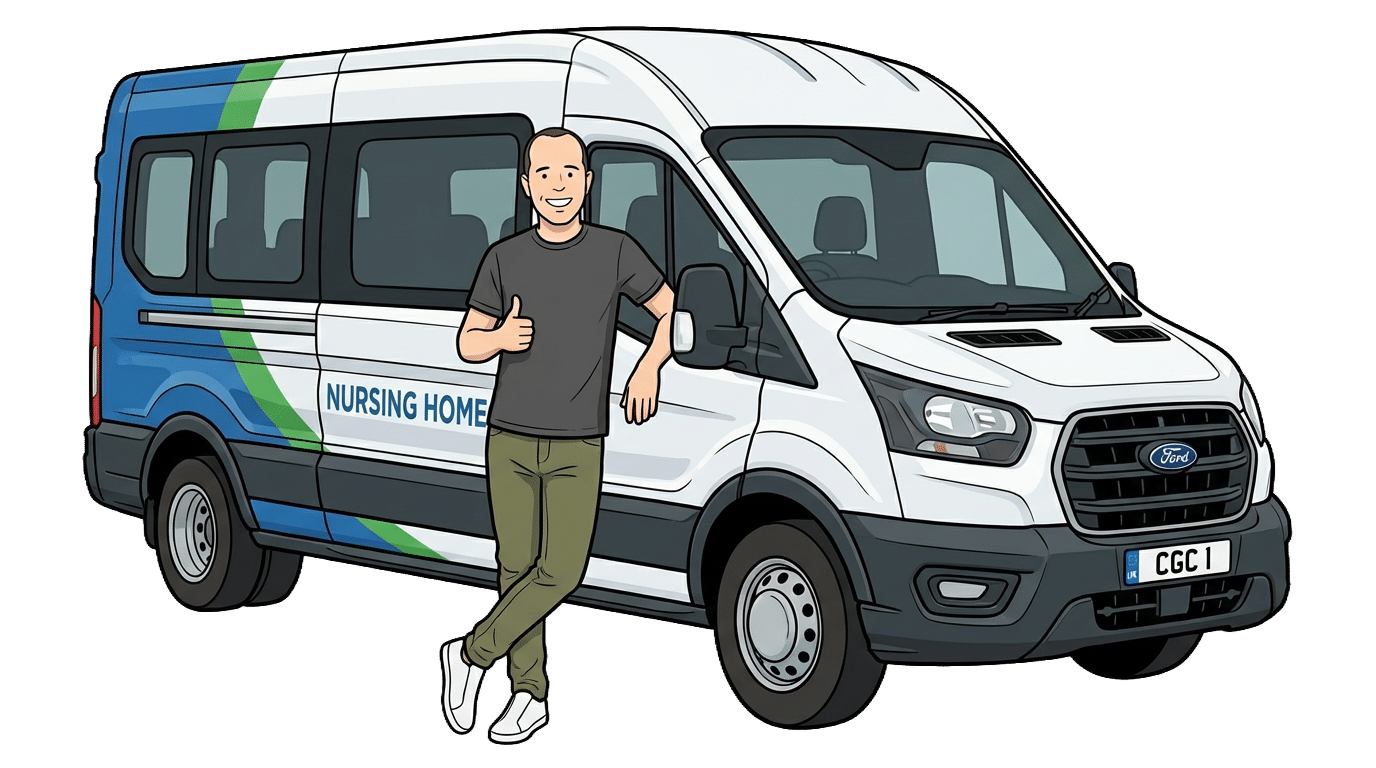
Why Compare Care Home Minibus Insurance?
Care Home Minibus Insurance At A Glance
- Any Driver cover lets your staff and volunteers drive without naming each one.
- Your wheelchairs, ramps, and oxygen tanks can be covered on board when listed on your policy.
- Your Section 19 Permit status affects which policies you qualify for.
- Comprehensive, Third Party Fire and Theft, and Third Party Only options are available for care home vehicles.

Who Needs Care Home Minibus Insurance?
A standard van policy won’t cover passenger transport. Here is who typically needs a specialist minibus insurance policy.
Tip: If your home uses volunteers as drivers, check they are listed on your policy. An unlisted volunteer behind the wheel could void your cover entirely.

Care Home Minibus Cover Levels Compared
Choosing the wrong level of cover could leave you paying out of pocket. Here is what each level of care home minibus insurance could include.
| Feature | Comprehensive | Third Party, Fire and Theft | Third Party Only |
|---|---|---|---|
| Damage to your vehicle | Yes | No | No |
| Fire and theft protection | Yes | Yes | No |
| Damage to other people’s property | Yes | Yes | Yes |
| Injury to other people | Yes | Yes | Yes |
| Passenger liability | Often included | Rarely | No |
| Windscreen repair | Often included | No | No |
| Any Driver cover | Optional | Optional | Optional |
| No-claims bonus protection | Optional | Optional | Rarely |
| Breakdown assistance | Sometimes included | Optional | Optional |
What Care Home Minibus Insurance Won't Cover
A single exclusion could mean your whole claim gets rejected. Here is what care home minibus insurance usually won’t cover.
- Unlicensed Drivers – Your insurer won’t pay if the driver didn’t hold a valid D1 at the time.
- Drivers Not on The Policy – If your policy names drivers and someone else drives, your cover could be void.
- Commercial Use Without A Permit – Charging fares without the right permit could invalidate your policy entirely.
- Wear and Tear – Gradual damage to your tail lift or ramp over time isn’t covered.
- Unlisted Equipment – Wheelchairs and oxygen tanks not listed on your policy may not be covered.
- Alcohol or Drug Impairment – Your insurer won’t pay out if the driver was impaired at the time of the accident.
- Vehicle Left Unsecured – If your minibus is left unlocked and items are stolen, your insurer could reject the claim. This catches more homes out than you’d expect, especially during morning handovers.
Standard Exclusions
Important Limitations
Optional Extras for Care Home Minibus Insurance
Your standard policy covers the basics. These extras fill the gaps that matter most for care home transport.
Tip: Breakdown cover is worth considering if your minibus takes residents to hospital appointments. A breakdown on the way to a medical visit could leave vulnerable passengers stranded.
Protects wheelchairs, ramps, and oxygen tanks on board.
Pays for repair or replacement if your lift breaks.
Covers legal costs if another driver disputes fault.
Extra protection if someone is injured near your vehicle.
A replacement vehicle while yours is off the road.
Pays out if your driver is seriously hurt.
What Does Care Home Minibus Insurance Cost?
Your quote depends on your home, your drivers, and how you use the minibus. Here are the key factors that could affect your premium.
| Key Factor | Impact on Your Price |
|---|---|
| Driver age and experience | Younger or less experienced drivers could raise your price |
| Claims history | Previous claims on your home’s policy often push costs up |
| Minibus size and value | A 9 seater usually costs less than a 16 seater. Older vehicles may cost less but parts can be harder to source |
| Number of drivers | More drivers on your policy could increase your price |
| Cover level chosen | Comprehensive costs more than TPO but covers your own vehicle too |
| Equipment listed on policy | Tail lifts and medical kit add value and may affect your price |
| Permit type | A Section 19 Permit could affect which insurers will quote and at what price |
| Annual mileage | Homes doing long daily runs could pay more than those with short local trips |
| MiDAS training | Drivers with MiDAS (Minibus Driver Awareness Scheme) training could get a lower quote |
Tip: If your care home runs more than one minibus, ask about fleet pricing. Some brokers offer a discount when you insure multiple vehicles on a single policy.

How To Save Money on Care Home Minibus Insurance
Care home minibus insurance can add up, especially with multiple drivers and wheelchair access modifications. These tips could help bring your quote down.
Tip: Specialist brokers understand care home transport. Compare quotes above to find brokers who cover Section 19 vehicles and wheelchair-accessible minibuses.
How To Compare Care Home Minibus Insurance Quotes
Getting a quote for care home minibus insurance takes a few minutes. Here is how the process works. Get started above when you are ready.
What Our Expert Says
Many care homes get turned down by standard van insurers. The problem isn't the home. Standard van policies simply weren't built for passenger transport, volunteer drivers, or medical kit on board. Charities face similar challenges when insuring their transport.
A common mistake is not telling your insurer about volunteer drivers. If a volunteer isn't listed and clips a gate, your insurer could refuse the whole claim. Check the GOV.UK guide on Section 19 Permits (a licence that lets not-for-profit groups carry passengers without going fully commercial) to understand your legal position before you renew.
The right broker won't just find you a price. They'll check your permit type, your driver list, and whether your tail lift is listed on the policy. That's the kind of detail that saves you from a rejected claim.
– Susan Difford, Insurance Expert & Co-founder of Clean Green Cars

Care Home Minibus Insurance Questions
Do I Need Special Insurance for a Care Home Minibus?
Yes. Standard van insurance does not cover passenger transport or volunteer drivers. You need a policy designed for care home minibus use.
Can Volunteers Drive Our Care Home Minibus?
Yes, but they must be covered on your policy. Any Driver cover is the simplest way to include volunteers without naming each one individually.
Does Care Home Minibus Insurance Cover Wheelchair Accessible Vehicles?
Yes. Specialist policies can cover wheelchair ramps, mobility equipment, and personal belongings for passengers who need accessible transport.
What Is a Section 19 Permit and Do I Need One?
A Section 19 Permit lets your care home carry passengers without operating as a commercial service. Check the GOV.UK Section 19 Permit guidance to see if your home qualifies.
Is Public Liability Included in Care Home Minibus Insurance?
Passenger liability is often included in Comprehensive policies. Public liability as a broader cover is usually a separate add-on worth considering for care settings.
Do Drivers Need a D1 Licence for a Care Home Minibus?
Drivers usually need a D1 licence category for minibuses with 9 or more seats. Some older licences issued before 1997 include D1 automatically. Check your drivers’ licences before arranging cover.
How Much Does Care Home Minibus Insurance Cost?
Prices vary based on your drivers, vehicle age, mileage, and equipment fitted. Getting quotes from several brokers could help you find a better price for the cover your home needs.
What Does Comprehensive Care Home Minibus Insurance Cover?
Comprehensive policies usually cover accidents, theft, fire, and passenger liability. Some also include windscreen damage and loss of use while your minibus is off the road.

Search & compare quotes from UK Nursing Homes and Care Homes Minibus Insurance Providers

Useful Resources
The rules around care home minibus use, permits, and driver licences can be complex. These official sources can help you understand your legal position before you compare quotes.
- GOV.UK – Section 19 and 22 Permits – Official guidance on permits for not-for-profit passenger transport, including care homes.
- GOV.UK – Driving Licence Categories – Explains the D1 licence category required to drive a minibus legally.
- MiDAS – Minibus Driver Awareness Scheme – Information on MiDAS training for minibus drivers, which could help your home’s insurance position.
- Community Transport Association – The UK trade body for community and care transport operators, with resources on permits and best practice.

