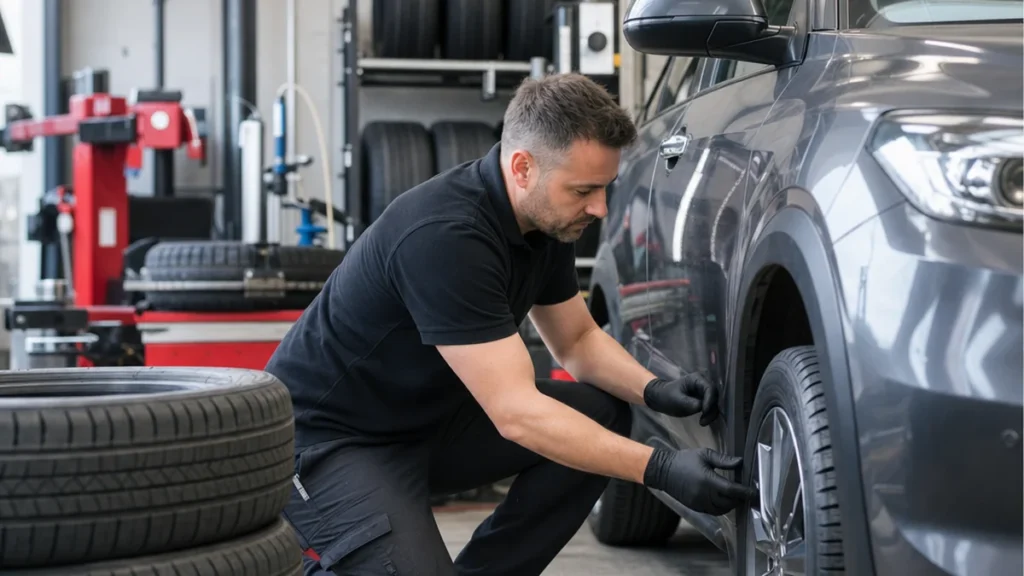
Why Tyre Fitting Needs A Trade-Specific Check
Tyre fitting can look simple from the outside, but the insurance details can vary quickly. A mobile fitter working from a van, a garage fitting tyres on site and a business that also moves customer vehicles may not need the same setup.
The main question is what the business actually does. The quote should reflect whether the fitter drives customer vehicles, stores stock, works at the roadside, employs staff or operates from premises.
Cover Areas To Check
Use this table to prepare the main details before comparing.
| Cover area | Why it may matter |
|---|---|
| Road risk | May be needed if the business drives customer or trade vehicles. |
| Public liability | Can matter if work causes injury or damage to a third party. |
| Products liability | Relevant where fitted parts or workmanship are part of the risk. |
| Tools and equipment | Tyre machines, compressors and mobile kit may need limits. |
| Stock | Tyres, valves and parts may need cover on site or in a van. |
| Employers liability | May be needed where staff are employed. |
| Premises | A workshop, yard or retail unit can add property and liability risks. |
Mobile Fitting Versus Premises Work
Mobile tyre fitting can bring different questions from a garage-based setup. The insurer may want to know where work takes place, whether roadside work is included, how tools are secured and where the van is kept overnight.
Premises-based fitting may focus more on customer areas, stock, equipment, staff, fire and theft risk, and whether customer vehicles are moved on or off site.
Details To Prepare Before Comparing
Before using the tyre fitter insurance page, gather the details that could shape the quote.
- Whether the business is mobile, premises-based or both.
- Full-time or part-time trading.
- Whether customer vehicles are driven.
- Driver details, claims and convictions.
- Tools, machinery and stock values.
- Where vans, tools and stock are kept overnight.
- Whether staff are employed.
- Whether the business also repairs, services or sells vehicles.
Ian's note: Tyre fitting is not only about the van or workshop. The bigger quote questions are often tools, customer vehicles, public liability and whether the business works away from its own premises.
When To Compare Tyre Fitter Cover
Use the tyre fitter page when the business needs insurance shaped around tyre fitting, mobile fitting or related motor trade work. This article is a checklist to help prepare the quote details, not a substitute for reading the policy wording.
FAQs
Do tyre fitters need motor trade insurance?
They may need motor trade insurance if they drive customer vehicles, move trade vehicles, work from business premises or carry out paid tyre-fitting work. The exact cover depends on the setup.
Does mobile tyre fitting need different insurance?
It can. Mobile fitting may involve a work van, portable tools, roadside or driveway work, public liability and different overnight storage risks.
Is public liability important for tyre fitters?
It can be important because tyre fitting may involve customer vehicles, members of the public, customer premises and work that could cause injury or damage if something goes wrong.
Does tyre fitter insurance cover tools?
Tools and equipment may need their own cover section or limit. Check whether mobile equipment, machinery, compressors, stock and overnight storage are included.
What if a tyre fitter also does repairs?
The quote should reflect all business activities. Repair, servicing, sales, recovery or valeting work can change the risk and may need to be declared.